


By Mehmet Enes Beşer
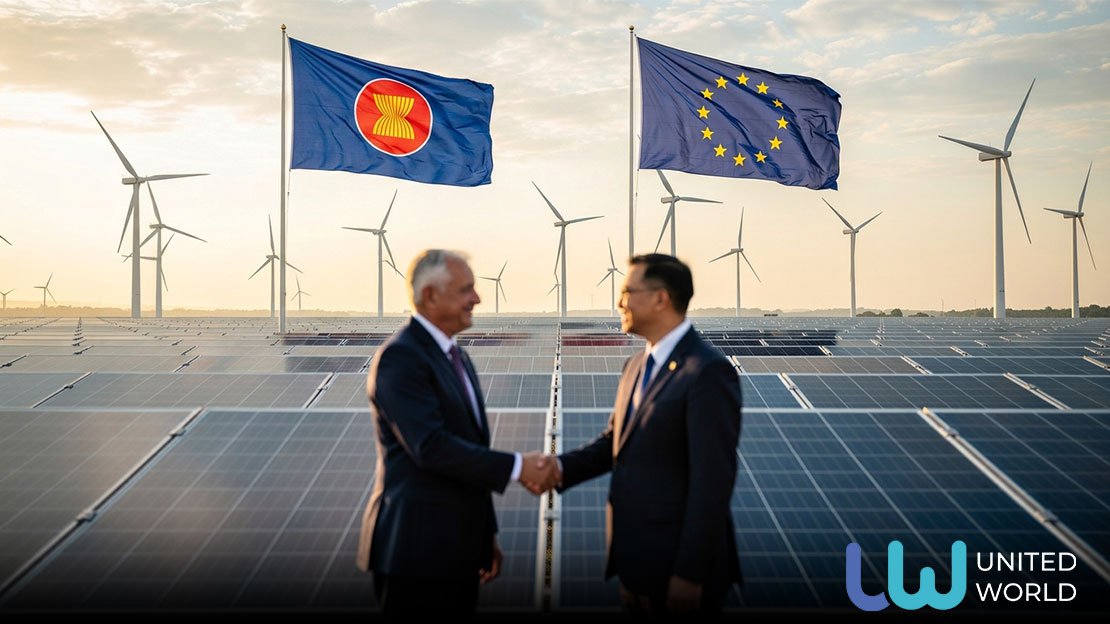
The ongoing energy transition worldwide is characterized by an increased reliance on inter-regional cooperation to not only decrease the carbon footprint of energy production but also improve the efficiency, resilience, and socio-economic aspects of regional energy production and use. One of the promising partnerships that emerged recently involves collaboration between the European Union (EU) and the Association of Southeast Asian Nations (ASEAN). Despite geographical remoteness, political differences, and dissimilarities in energy mixes, both regions face the pressing need to increase the share of renewables in their respective energy portfolios. Being a good example of such energy transition, the EU’s long experience in integrating renewables into a complex multi-state system can provide substantial lessons for ASEAN as it seeks to unify its policy, build necessary trans-boundary infrastructure, and balance competing interests. Energy cooperation between these two blocs evolves not from capacity-building or developmental aid initiatives but rather from a mutual exchange of experiences, technologies, and institutional design principles that would facilitate a joint transition towards a low-carbon future.
While ASEAN aims to increase the share of renewable energy in its energy mix up to 23% in 2025, progress achieved by the region remains inconsistent among its members. Heterogeneity exists both in terms of ambition and technological and infrastructural readiness. For example, Thailand and Vietnam have managed to make some progress in developing wind and solar energy production; at the same time, Cambodia, Myanmar, and Laos still rely on hydroelectricity and struggle to diversify their energy portfolio. Fossil fuels, primarily coal, account for significant baseload capacity in big economies like Indonesia and the Philippines but pose risks of becoming stranded assets and producing excessive long-term CO2 emissions. In comparison, the EU is already an established world leader in renewable energy production.
Thanks to instruments like the European Green Deal, the EU has formulated decarbonization goals for its policymakers, accelerated green finance, and implemented various policies and technologies for effectively increasing the presence of renewable energy in the internal energy market. Cross-boundary electricity trading has been fostered by the EU internal energy market, and measures such as capacity markets, balancing services, and smart interconnectors mitigate the issue of intermittency of wind and solar energy. This makes ASEAN’s efforts to establish a regional electricity market using the ASEAN Power Grid (APG) initiative and prioritizing cross-border integration increasingly relevant. Harmonization of regulatory frameworks may well be one of the key vectors of ASEAN–EU collaboration in this regard. The experience that the EU accumulated on the road to unification of its electricity market can provide a good lesson on how such collaboration can facilitate cross-border flow of renewable energy in ASEAN by lowering risks and fostering infrastructure development.
The APG project in ASEAN is still in its infancy stage but shows great promise.
While individual countries already conduct cross-border trades with neighboring countries, such as Laos with Thailand and Malaysia with Singapore, these transactions suffer from geographic limitations, lack of capacity, and operational synchronicity. The institutional structure of the EU—namely organizations such as ENTSO-E—can provide an example for ASEAN on how to create an institution for managing the regional grid, conducting cross-border balancing activities, and facilitating joint grid planning. Existing institutions in ASEAN, such as the ASEAN Centre for Energy (ACE), could be used as an instrument for promoting collaboration with ASEAN countries’ energy agencies in organizing technical meetings and creating integrated roadmaps. Smart grids and energy systems are another field that needs to receive considerable attention from ASEAN in its collaboration with the EU.
The EU’s development of smart metering, demand-side response technologies, and integrated information systems allows for more efficient functioning of its power system and higher levels of penetration of renewable energy. Given that ASEAN is now piloting some of its smart-grid projects in such urbanized centers as Singapore and Jakarta, closer collaboration on this matter would greatly benefit the region. ASEAN would gain valuable experience on how to apply new technologies to enhance its grid’s performance and sustainability. Expertise of the EU in the digital energy regulation sphere, cybersecurity, and data governance will help ASEAN countries leapfrog to smarter energy systems. Another important area for cooperation between the two regions is finance and investments.
The experience of the EU in such areas as green bonds, blended financing, and carbon prices can serve as useful input for ASEAN to formulate its own green financing initiatives. For instance, some ASEAN countries—Thailand and Indonesia among them—issued their own sovereign green bonds, but the sector is still relatively new. With proper involvement of the EU as its development bank partners and institutional investors, ASEAN can attract investment that would align with the goals of the climate agreement to finance the expansion of its grid infrastructure and renewables’ capacities. Jointly designed investment tools will lower the risks of doing business in ASEAN and allow investors to profit according to the ESG criteria. ASEAN and the EU would also benefit from working together in human capital development and training.
The EU has vast experience in organizing educational programs for energy engineers and grid operators that would facilitate the successful transitioning of the country. Training sessions organized around education in university settings, fellowships, and vocational exchanges can address skills gaps faced by ASEAN and create enduring institutional relationships. New generations of professionals can benefit greatly from exposure to the innovations occurring in Europe. Just as important, both regions will benefit from engaging in dialogue regarding the social aspect of the energy transition process.
The EU has undertaken serious steps to ensure a socially sustainable transition, namely by planning and protecting communities affected by the shift away from coal energy, retraining workers, and engaging local stakeholders in planning. Many ASEAN members that struggle with the economic and employment aspects of abandoning fossil fuels can find useful experiences in this matter and formulate context-based action plans. While the political and market realities are quite different in ASEAN and the EU, the climate imperative forces these blocs to collaborate pragmatically and be outcome-oriented. Instead of being viewed as recipients of development assistance from the EU, ASEAN and the EU can establish mutual benefits from the exchange, whereby experience with decentralization and rapid implementation in a challenging environment will serve as useful input for the EU’s energy resilience improvement plans.
Integration of renewables into national grids requires a lot more from a political, economic, and societal point of view besides technologies.
Greater cooperation between ASEAN and the EU can address all three aspects. Dialogue cannot be limited to summit meetings and memorandums; instead, it should engage engineers, regulators, financiers, and even ordinary citizens who will be affected by the process. Building a knowledge bridge based on a common goal and mutual respect will help the two regions transition to renewables more efficiently.