


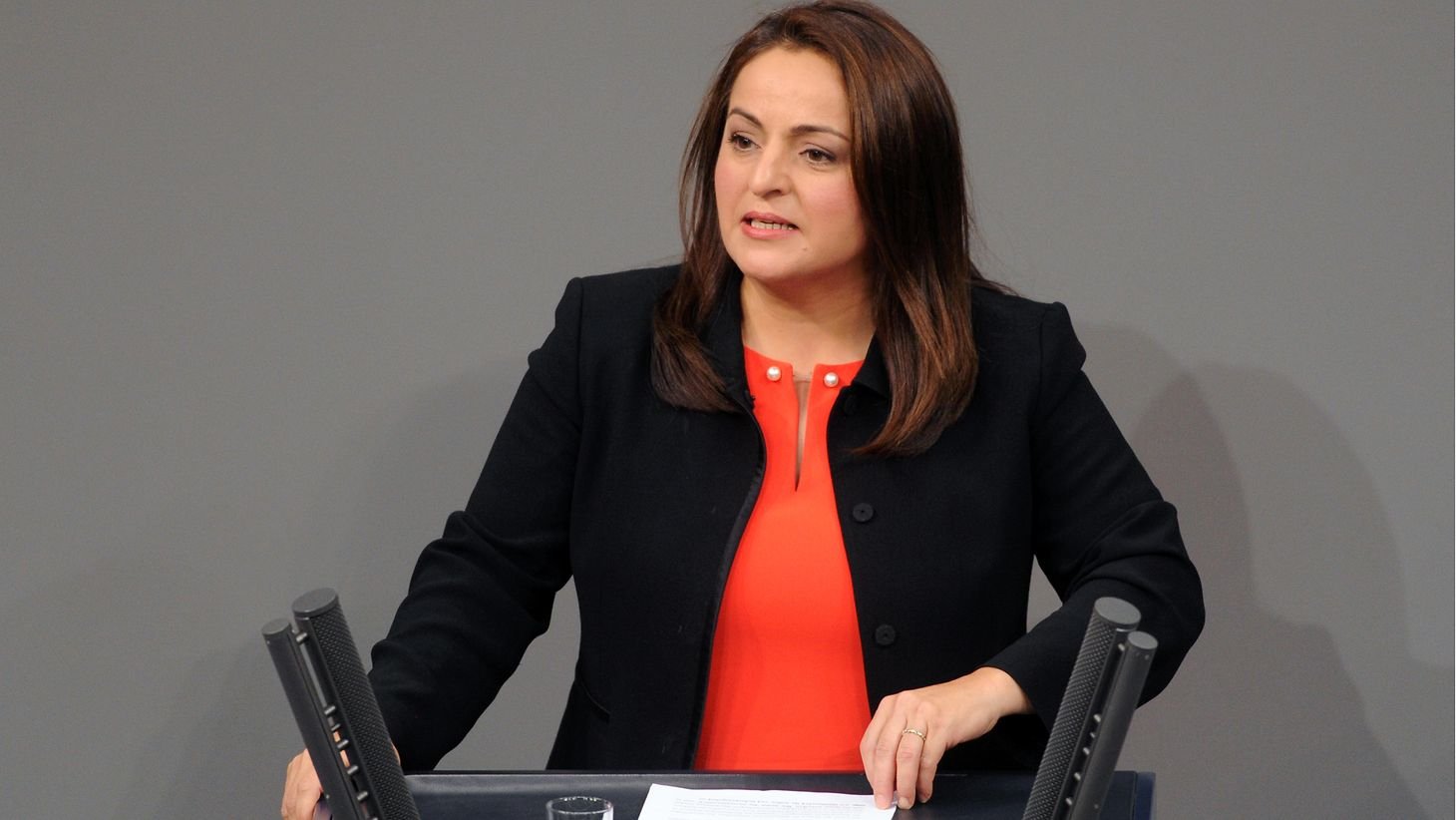
By Sevim Dagdelen *
At the NATO summit in Ankara on July 7 and 8, 2026, the military alliance set out to thoroughly discredit the myth of a community of values and defense. While Turkish President Erdoğan had hundreds of academics and journalists arrested beforehand to preemptively suppress protests against the military alliance’s meeting, NATO Secretary General Rutte described the recent attacks on Iran by NATO’s largest member, the USA, as “absolutely necessary.”
Vassalage relationship and US blackmail
In light of growing contradictions within NATO, stemming from both overstretched resources and the social costs of rearmament, it is crucial to acknowledge the persistent vassal relationship between European NATO members, including Türkiye and Canada, and the United States. Under US President Donald Trump, blackmail has become the tactic used to renew this vassal relationship. While President Trump threatens—for example, with the renewed annexation of Greenland or the withdrawal of US protection—Europeans must grapple with how to keep him satisfied. Meanwhile, the US has imposed its key demands on the Europeans without compromise.
Record military spending and war preparations
The massive increase in military spending by European NATO members is proving to be a veritable license to print money for the US arms industry, as well as for US investment funds like BlackRock, which hold significant stakes in German arms manufacturers such as Rheinmetall. Germany, for its part, is reporting record military expenditures of almost €125 billion to NATO this year. The German government intends to increase this figure to €140 billion by 2027. Over a third of the federal budget is spent on defense, and in just a few years, it is projected to be almost half. But can one still speak of rearmament in a country that spends half its budget on the military, or is it rather preparation for a major war?
It is fitting that the US has also completely prevailed in its dealings with Russia and Ukraine. NATO is laying the groundwork in Ankara for entering a war against Russia. Yet it is the Europeans who are being sent into the fray against the nuclear power Russia. It was agreed in advance that Ukraine would receive €140 billion over the next two years to continue the war. While the US has withdrawn its funding, Germany has become Kyiv’s largest financial backer.
The extent to which the NATO proxy war in Ukraine has already mutated into a NATO war against Russia was also evident in the statements made by NATO Secretary General Rutte during a meeting with Ukrainian Prime Minister Zelenskyy:
“It’s truly amazing. You’ve succeeded in hitting Russia’s energy and defense infrastructure deep within Russian territory.”
Attacks that would hardly be possible without the active assistance of NATO. In Ankara, NATO wants to take the next step, clinging to the dangerous illusion that it can force the nuclear power Russia to capitulate.
Exploitation of European allies
Trump’s policy of blackmail is driven by pragmatic considerations: to halt the decline of the US by exploiting its European allies. While the US has already achieved its goal with Russia, encouraging Europeans, and especially the Germans, to wage war against Moscow, Trump is seeking greater involvement from European NATO members in East and West Asia against China and Iran. His threats aim to secure greater European participation in the wars against Tehran, which he considers illegal under international law, as well as in the challenge to Beijing.
All previous experience shows that the USA will be successful here sooner or later, even if it costs the Europeans and the Germans their livelihoods.
* Sevim Dağdelen (born 4 September 1975) is a German politician and was from 2005 to 2025 a member of the German parliament, the Bundestag. She was elected for Left Party (die Linke) and switched in October 2023 to Bündnis Sahra Wagenknecht.
This article was previously published in German on Nachdenkseiten.de here. Translation to English with AI support by UWI.