


By Mehmet Enes Beşer
Whenever people bring up Türkiye’s industry, the conversation usually circles around the same comparisons. Germany comes up because of its reputation for engineering—no surprise there. Sometimes folks talk about South Korea and its big family-run companies. But honestly, China is the country everyone keeps their eye on. You can’t miss it; the size, the nonstop growth, the way China completely dominates manufacturing. There’s a reason people are obsessed with their model. But let’s be real: China’s playing with a whole different set of tools. The money, the resources, the pull—they’ve got things Türkiye doesn’t. Trying to follow China’s playbook move for move just doesn’t work. The situation is not the same, not even close.
Vietnam is different. Vietnam is not a romantic miracle, and it is not a perfect economy. But it may be the most practical comparative case for Türkiye’s production-centered future precisely because it is smaller, disciplined, and strategically consistent. Vietnam should be taken seriously in Turkish debates not merely because it exports a lot, but because it shows what state-guided integration into the world economy looks like when it is executed with sequencing, focus, and institutional continuity.
The first thing Vietnam forces Türkiye to confront is a simple truth: industrial transformation is not an identity question; it is an administrative and strategic one. Countries don’t “become” manufacturing powers by declaring slogans about national pride. They become manufacturing powers by deciding—over years, sometimes decades—what they will build, what they will import, what they will protect, what they will expose to competition, and what they will upgrade next. Vietnam’s rise really comes down to this: they followed a clear, disciplined path. Start with labor-intensive industries, focus on exports, invest in infrastructure, and then pick certain areas for upgrades. Simple, but it works.
Türkiye actually has a lot going for it. The country’s industrial base is already solid. Its location gives it an edge—if they play their cards right, they could really own the logistics game. Turkish workers can absolutely compete with the right training, and the country’s still a major player in textiles, machinery, home appliances, food processing, and auto supply chains.
But here’s where Türkiye stumbles: policy. Vietnam’s real magic trick is that their policies stay steady, even when politics gets noisy. Their institutions give businesses the confidence to invest because they know the rules won’t change overnight. Türkiye hasn’t nailed that part yet, and it shows.
Vietnam is not “open” in the naive sense of leaving everything to the market. It has been selectively open. It welcomed foreign production networks—but on terms that served a longer national trajectory. The trick was not just attracting investment; it was using investment to embed Vietnam into global value chains, build jobs at scale, and create an export discipline that became a national habit. Export discipline is the key phrase here. It means treating competitiveness as a system—exchange rate stability, logistics, customs efficiency, predictable regulation, and an obsession with being a reliable node in someone else’s supply chain until you can become a node with your own leverage.
Türkiye’s industrial policy, by contrast, often feels like a collection of bursts: a promising incentive package here, a sudden restriction there, a new priority announced without the institutional scaffolding to carry it. Investors and producers can live with tough rules. What they fear is shifting rules. Vietnam’s institutional continuity—imperfect, sometimes rigid, but consistent—has been one of its most underestimated advantages. Türkiye should pay attention not because it wants to replicate Vietnam’s political system, but because industrial strategy requires a degree of predictability that Türkiye has too often sacrificed to short-term political improvisation.
The most useful comparisons are sectoral, not philosophical. Vietnam matters for Türkiye because Vietnam’s best-known transitions are precisely in sectors where Türkiye already has capabilities—and also constraints.
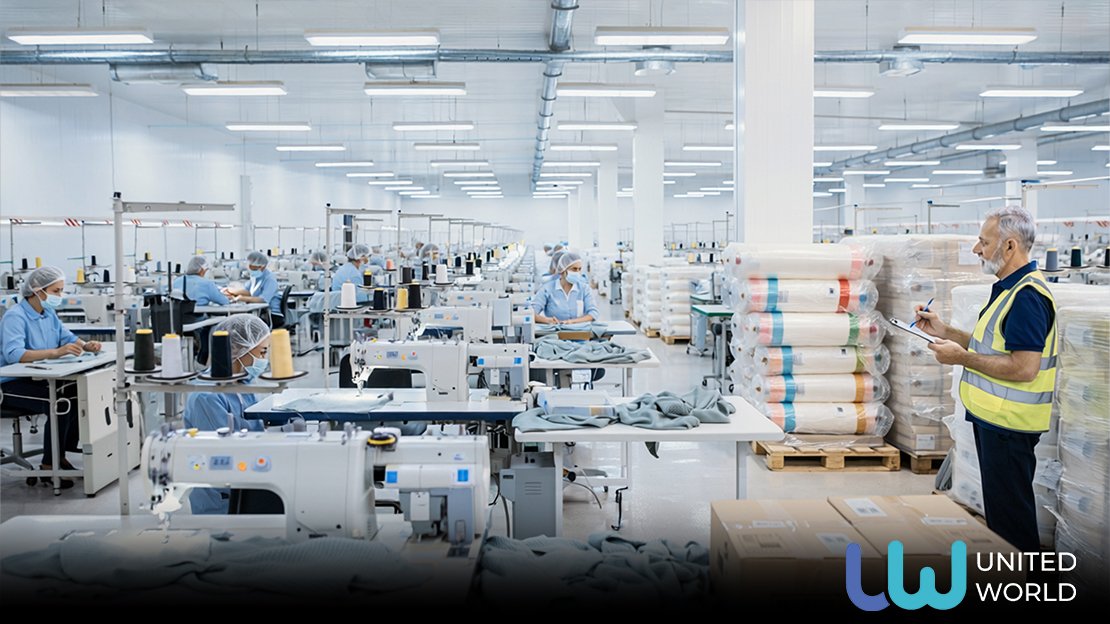
Let’s start with textiles. You hear a lot about Türkiye wanting to move past old-school, labor-heavy factories, but let’s be real — textiles are still a backbone of the country’s economy. They mean jobs, exports, and a foundation for all sorts of related industries, both before and after production. Vietnam’s textile story is not simply “cheap labor.” It is a story of integration into global apparel networks, scaling, and then gradually building a broader ecosystem of suppliers, logistics, and compliance capacity. Vietnam learned how to become indispensable to major brands by being predictable and competitive. Türkiye, historically, has had a different advantage: proximity to Europe, speed-to-market, design and quality, and a more advanced industrial fabric in certain segments.
Türkiye’s real question isn’t “How do we beat Vietnam on cost?” That’s not even the right game. The focus should be system performance—think faster lead times, more reliable delivery, better energy efficiency, solid traceability, and moving up the ladder into higher-value technical textiles or branded, design-led products. Vietnam’s story makes this clear: when a country goes all-in on exports and clusters its production, an entire industry can turn into a national powerhouse. Türkiye could run with that kind of discipline, but it actually has some unique strengths of its own—like being closer to Europe, having a deep bench of suppliers, and a shot at leading the way on green standards, which are only going to matter more for reaching high-end markets.
Now, electronics. This is where Vietnam really pulls ahead and gives Türkiye a wake-up call. Vietnam shot up as a top spot for electronics assembly and export by slotting itself right into the global supply chains of major companies. In Türkiye, there’s a lot of talk about ramping up high-tech exports, but honestly, the road to high-tech doesn’t always start with inventing something new. Usually, you get there by joining in—by starting to produce, training your people in how modern manufacturing works, growing your network of local suppliers, and slowly grabbing more of the value chain, like testing, packaging, components, industrial software, and specialized materials.
Türkiye has smart people and resources to do much more, but what’s missing is that laser-focused, long-term strategy Vietnam used so well: dedicated manufacturing zones, infrastructure that actually fits what industry needs, and clear regulations so businesses feel secure enough to expand. The goal isn’t to chase after one big multinational company. It’s about creating the kind of environment where lots of global—and Turkish—companies see Türkiye as a safe, reliable base for serving Europe, the Middle East, North Africa, and Central Asia. That’s where Türkiye’s geographic advantage really starts to pay off.
The third sector is agro-processing, and it may be the most under-discussed. Vietnam’s agricultural economy did not remain trapped in raw commodity dependence; it pushed into processing, export branding, and value chain coordination. Türkiye’s agricultural potential is often spoken of romantically, but the real opportunity is industrial: modern storage, cold chains, standardized processing, traceability, packaging, and export logistics that turn farms into a competitive food industry. This is not only about rural development; it’s about building export resilience and lowering the vulnerability that comes from relying too heavily on a few industrial segments.
Vietnam’s experience here reinforces a crucial idea for Türkiye: upgrading is not a single leap. It is a ladder. And ladders are climbed through systems—ports, roads, energy reliability, vocational training, and institutions that coordinate across ministries rather than competing for turf.
This brings us to the part of Vietnam’s story that Türkiye should absorb most carefully: strategic use of international partnerships. Vietnam has not treated external partnerships as emotional alliances. It has treated them as development tools. It leveraged trade agreements, market access, and production networks to accelerate its industrial agenda. Türkiye has trade relationships too, but it often approaches them through a political lens rather than a value chain lens. “Who are we aligned with?” becomes more prominent than “What do we build together, and how does it upgrade our capabilities?”
A Türkiye that takes Vietnam seriously would reframe its own international partnerships around production. Which partners bring technology transfer? Which partnerships expand supplier networks? Which relationships create stable demand for upgraded products? Which agreements reduce logistics friction? This is what a production-centered foreign policy looks like. Vietnam’s rise shows that you can engage globally without dissolving sovereignty—if you treat integration as selective, sequenced, and state-guided.
None of this means importing the Vietnamese model mechanically. Türkiye is not Vietnam. It has different demographics, different political dynamics, different labor markets, different regional obligations, and a different economic structure. The point is not imitation. The point is principles.
Vietnam’s principles are not mysterious: export discipline, infrastructure investment, regional clustering, skills development aligned with industry, and a long-term strategy that makes investors believe tomorrow will not be arbitrarily different from today. These are not ideological principles. They are administrative ones.
Türkiye’s real challenge isn’t a lack of talented people or industry. The problem is that it keeps patching up deep issues with quick fixes—pushing out more credit, pumping up demand, dangling short-term incentives—while putting off the tougher jobs, like boosting productivity, building steady education-to-industry pathways, and making its institutions more reliable. Just look at Vietnam. Their rise didn’t come from sudden bursts of activity, but from years of steady, disciplined effort—stacking up small wins until they added up to something big.
So if Türkiye wants to set a lasting production agenda for the next decade, it needs to stop looking at Vietnam as some outlier and start seeing it as a reflection of what’s possible with a unified, long-term strategy. Vietnam shows that you don’t need China’s size. What you need is a smart plan—linking national goals with the realities of global production—and then sticking to it. The results? More leverage in the world, not less. That’s why Vietnam matters, and why Türkiye should pay close attention.
For Türkiye, that is not a distant lesson. It is an urgent one.