



Raphael Lemkin was a Polish-Jewish jurist who coined the term “genocide“ in 1944. Today, he is widely regarded as the intellectual architect of the United Nations Convention on the Prevention and Punishment of the Crime of Genocide. However, research conducted over the past two decades has demonstrated that Lemkin was not merely a legal scholar concerned with the Holocaust. An examination of his unpublished manuscripts reveals that he also considered numerous cases of colonial violence—from the colonization of the Americas to the Congo, from Tasmania to the Herero massacres —within the framework of genocide.
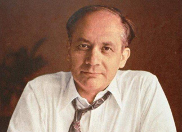
The central question, therefore, is this: Which massacres did Lemkin make visible, which did he fail to adequately address, and why? The inclusion of the alleged Armenian genocide among the atrocities that occupied a central place in Lemkin’s thinking has cast a shadow over his scholarly legacy. Although Lemkin’s theory of genocide provided an important conceptual tool for explaining colonial violence, it has been subject to substantial decolonial criticism for failing to apply this framework consistently, particularly with regard to Britain and certain other colonial powers. One of the formative events in Lemkin’s legal career was the Armenian question. In 1921, he followed the trial concerning the assassination of Talaat Pasha in Berlin and asked the following question:
“Can a man kill millions of people, and yet there exists no international law capable of punishing him?”
This event would later pave the way for the development of the concept of genocide.
Interpreting the Deportations as Genocide
Lemkin took a close interest in the assassination of Talaat Pasha in Berlin in 1921 and in the subsequent Tehlirian Trial.
In interviews and writings produced in later years, he explained that this case prompted him to ask the following question: if a state leader could not be held accountable for mass crimes, what should be the legal response under international law?
From this point onward, Lemkin regarded Talaat Pasha as one of the principal figures responsible for the events of 1915. This interpretation subsequently became one of the historical examples informing his concept of genocide. The more fundamental issue, however, is that, unlike the Jewish historian Bernard Lewis, Lemkin did not make direct use of the Ottoman archives.
Instead, he evaluated the events largely on the basis of Western diplomatic reports, contemporary publications, and post-war narratives. He did not engage in a sufficiently detailed discussion of the complexity of the Ottoman decision-making process. Nor did he closely examine Talaat Pasha’s own defenses or the Ottoman government’s security justifications. In this respect, his approach resembled the style of many American historians more than that of a jurist.
The Nazi Genocide of the Jews
The central focus of Lemkin’s thought was, of course, the genocide of the Jews. In Axis Rule in Occupied Europe (1944), he defined genocide not merely as the physical extermination of a people but as a broader process of social destruction encompassing the destruction of culture, the prohibition of language, economic dispossession, the forcible removal of children, and the destruction of religious institutions.
According to Lemkin, the German occupation was directed not only against the Jews but also against Poles, Roma, and other Slavic peoples as part of a broader policy of group destruction. For this reason, from the very beginning he conceived the concept of genocide in a much broader sense than simply mass killing.
In his unpublished notes, Lemkin discussed the massacres of the Herero and Nama in German South West Africa as one of the modern examples of genocide. This demonstrates that he also sought to conceptualize colonial violence within the framework of genocide.
The Belgian Congo
Lemkin likewise associated the extreme colonial violence committed during the reign of King Leopold II in the Belgian Congo with his concept of genocide.
On the other hand, according to Raphael Lemkin’s original and expansive definition of genocide, China’s policies toward the Uyghur Turks constitute genocide, although this remains debatable under the narrower legal definition embodied in the 1948 Genocide Convention. Lemkin understood genocide not merely as physical annihilation but as the systematic destruction of the conditions of existence and identity of a national or ethnic group in its physical, biological, and cultural dimensions.
Events Lemkin Overlooked
This issue requires careful consideration, for it is precisely here that decolonial historians direct their strongest criticism. As Dominik J. Schaller has demonstrated, while Lemkin harshly criticized Belgian and German colonialism in Africa, he tended to portray British colonial rule as comparatively more “moderate,” “honest,” and “civilizing.”
Although Lemkin devoted considerable attention to German colonialism—particularly the Herero and Nama massacres—and to the Belgian Congo, he did not examine comparable practices of the British Empire with the same degree of intensity. Decolonial historians interpret this as either an inconsistency or evidence of a hierarchical perspective operating within Europe itself.
The British concentration camps established during the Boer War had existed long before Lemkin reached adulthood, and information concerning them was available during the period in which he was developing his legal ideas. Nevertheless, in his published works he never transformed the British concentration camps of the Boer War into a detailed genocide case study comparable to his treatment of the Herero example. From a contemporary perspective, this has been interpreted as a clear double standard.
Likewise, the mass colonial violence carried out by the French colonial empire in Algeria, Madagascar, and West Africa does not occupy a central place in Lemkin’s writings. Contemporary decolonial scholarship regards this as a significant omission.
Furthermore, scholars such as Patrick Wolfe and Damien Short argue that settler colonialism is structurally inclined to produce genocide. Although Lemkin appears to have recognized this tendency intuitively, he never developed it into a systematic theoretical framework. Similarly, the enslavement of millions of Africans does not constitute one of the principal subjects of his analysis. Present-day decolonial historians likewise regard this as an important limitation.
Lemkin’s historical narrative was constructed largely within the framework of the European legal tradition. The systems of knowledge, indigenous legal traditions, and epistemologies of colonized peoples are not situated at the center of his analysis. For this reason, decolonial theorists criticize him for advancing what they describe as “a universalism confined within the limits of European legal thought.”
Perhaps the most controversial aspect of Lemkin’s work concerns his understanding of civilization. At times, he appears to have taken the following position:
Colonization is not inherently evil. The real problem arises when indigenous peoples are physically and culturally destroyed during the process of colonization.
In other words, some of his writings do not entirely exclude the possibility of a “benevolent” form of colonialism. His assessments of British colonial administration, in particular, have been criticized on these grounds. Contemporary decolonial scholarship, by contrast, argues the opposite: settler colonialism is inherently founded upon the displacement and elimination of Indigenous communities.
An interesting point emerges at this stage. During the drafting of the United Nations Genocide Convention, several elements that Lemkin strongly advocated—such as the destruction of culture, the prohibition of language, and the elimination of religious institutions, all of which he regarded as components of cultural genocide—were ultimately omitted from the final text. These omissions resulted from political negotiations among the participating states. Consequently, the legal definition adopted by the United Nations is considerably narrower than Lemkin’s original conception of genocide.
Most contemporary scholarship arrives at the same conclusion. On the one hand, Lemkin regarded the colonization of the Americas, the Herero massacres, the atrocities in the Congo, and the cultural destruction of Indigenous peoples as integral parts of the history of genocide.
On the other hand, he did not entirely reject the European idea of a “civilizing mission” and, in certain cases, was capable of evaluating particular colonial administrations in positive terms. For this reason, his thought contains an inherent tension.
Conclusion
From the perspective of decolonization, Raphael Lemkin’s intellectual legacy should neither be dismissed outright nor regarded as immune from criticism.
First, by conceptualizing genocide not merely as mass killing but as the systematic destruction of cultural, political, economic, and social institutions, Lemkin provided a powerful theoretical framework for understanding colonial violence. In this respect, his work was well ahead of its time.
Second, however, he did not apply this framework consistently to European colonialism. In particular, he employed a comparatively more favorable language when discussing the British Empire and did not examine the Atlantic slave trade or many French and British colonial practices with the same level of analytical attention. This constitutes an important limitation, one that contemporary decolonial scholarship has justifiably emphasized.
Ultimately, the central issue is not simply Lemkin’s formulation of the concept of genocide, but rather which historical episodes of mass violence he rendered visible and which he left outside his analytical framework. Although the concept of genocide offers an important legal and political framework for analyzing colonial violence, decolonial scholars argue that Lemkin did not apply this framework equally to all colonial empires. Within this context, the fact that the Armenian question constituted one of the formative influences on Lemkin’s legal thought is likewise frequently identified in the literature as a problematic aspect of his intellectual legacy.
References
Lemkin, Raphael. Axis Rule in Occupied Europe. Washington, D.C.: Carnegie Endowment for International Peace, 1944.
Moses, A. Dirk (ed.). Empire, Colony, Genocide: Conquest, Occupation, and Subaltern Resistance in World History. New York: Berghahn Books, 2008.
Schaller, Dominik J. “Colonialism and Genocide: Raphael Lemkin’s Concept of Genocide and Its Application to European Rule in Africa.”
Gallito, Hilary. “A Usable Past: Raphael Lemkin on the Intersection of Colonialism, Religion, and Genocide.”
Docker, John. “Are Settler-Colonies Inherently Genocidal? Re-reading Lemkin.”
Palmer, J. “Genocide, Occupation, Extinction: A Conceptual Constellation in the Thought of Raphael Lemkin.”