


By Mehmet Enes Beşer
People often call ASEAN the “central” player in the region — a forum that helps Southeast Asia avoid getting caught up in the games of bigger powers. But behind the rituals of summit diplomacy, one problem keeps coming back, and ASEAN has never really cracked it: leadership. Not charismatic, personality-driven leadership, but the sort that can set a direction, bring everyone together to act, and take responsibility when the region hits a crisis. So, the real question isn’t whether ASEAN holds meetings or puts out statements or builds new mechanisms. It’s whether ASEAN has enough political weight to turn all that process into decisions that matter, and to deliver results, fast and credibly, when it counts.
The root of this leadership dilemma is in ASEAN’s design. From the beginning, the group was set up to make sure no one state dominated, and that national sovereignty came first. Consensus and non-interference aren’t just box-ticking exercises—they keep a patchwork of nations working together. At first, these principles gave ASEAN its staying power. But as the years ticked by, they also started dragging the group’s feet when it needed to act fast. When the issues are minor, slow and steady looks like calm stability. But once the stakes are high, that same careful process looks more like paralysis. Leadership becomes glaringly important in tough times — and those are often the moments that reveal how little there really is.
One big reason for all of this: ASEAN’s structure leads to what you might call “rotating responsibility.” The chair changes every year. Agendas shift. This design stops any one country from taking over. But it also shortens the region’s attention span. Every chair wants a unique theme, every summit promises something new, and the work needed to harmonize rules, build up enforcement muscle, or actually prevent conflicts often falls by the wayside. Plus, when you compare ASEAN’s Secretariat with other regional organizations, it just doesn’t have as much power or resources. ASEAN can gather people, but steering the ship — that’s a struggle.
Internal differences add to the leadership challenge. Some countries have real strategic weight, others worry about getting overshadowed. Normally, Indonesia seems like the natural leader. When Indonesia leads, ASEAN tends to get moving. When it punts, the group slides into empty process. The same is true, in different ways, for others: Thailand’s politics often distract it; Malaysia can lead, but domestic coalitions shape how; Singapore has a sharp strategic vision but lacks the heft to carry a bigger regional agenda. So, the region’s leadership landscape has lots of potential drivers but no consistent engine.
There’s another tension comes from the gap between how ASEAN perceives itself and the political reality.
ASEAN leaders often want to be a “stabilizer”. But neutrality isn’t a default setting anymore. With global competition, supply chains as bargaining chips, and pressure in the seas, being neutral takes active management. You need clear rules, investment in resilience, and the guts to send strong collective signals. Leadership today means more than just avoiding alliances — it means building up enough internal discipline that outsiders have to deal with ASEAN as a group, not as a set of easy targets.
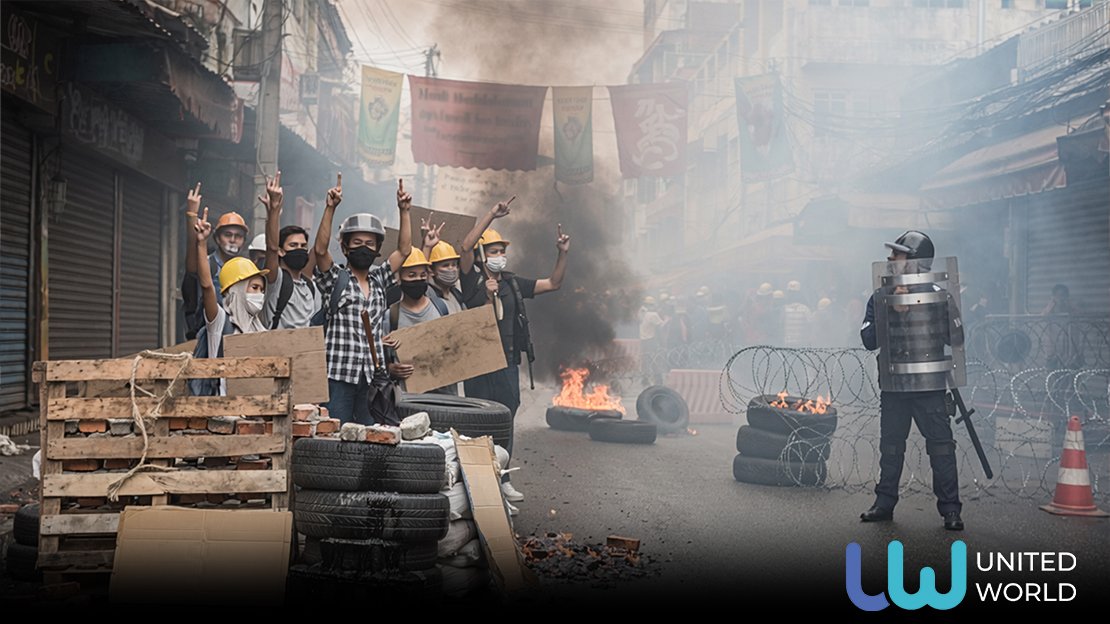
The leadership gap shows most clearly in security crises. Take Myanmar — nothing makes the problem clearer. ASEAN has failed to put real pressure on the conflict. That’s undermined faith that it can even keep basic regional order. The Five-Point Consensus? It matters symbolically, but without enforcement tools and with non-interference as a political straightjacket, results don’t materialize. When an organization can’t cope with a crisis in its own backyard, its claim to act as a stabilizer elsewhere rings hollow. That hits reputation hard. It tells everyone — inside and outside — that ASEAN’s values are stronger than its capacity.
But failures of leadership aren’t just about conflict. The geography of economic statecraft is shifting too: we’re seeing a move from open liberalization to selective protectionism, subsidies, “trusted” supply chains. ASEAN ought to have an edge as a production hub — but only if it can coordinate. That means agreement on standards, trade facilitation, digital rules, sustainability, crisis response. Without leadership, ASEAN risks becoming just an assembly zone, not a rule-maker. Companies will keep investing, but they’ll do it country by country, rules will stay fragmented, and the weight of compliance stays high. That weakens ASEAN’s bargaining power and slows down regional upgrades.
There’s also the home front to consider: domestic legitimacy. ASEAN governments are all squeezed by different pressures — some focus on regime security, others on global competitiveness, others on sovereignty and national pride. These differences aren’t going anywhere. They make it really hard to build a strong collective agenda. What you get is the lowest common denominator. Real leadership means pulling together coalitions among the willing without breaking up the group. But the constant worry about fragmentation makes ASEAN afraid to try “variable geometry”: letting some members move faster on new initiatives while others catch up.
So, what’s needed is functional leadership: setting agendas, keeping commitments continuous, and making sure promises get enforced. These don’t require ASEAN to change its character.
ASEAN needs more stability than the annual chair rotation can deliver. Instead of resetting every year, it’s time to strengthen things like a troika, roll out big projects that last several years, and define clear targets for each chair. This approach lets ASEAN stack results year after year, not just reinvent the wheel each time.
Second, the ASEAN Secretariat needs more authority and muscle. It can’t take the place of political will, but it can help stop fragmentation, monitor what’s actually happening, and keep the organization’s memory alive. If ASEAN wants to be recognized as an actor — not just a talking shop — it needs to invest in its machinery for collective action.
Third, ASEAN needs to make it normal for coalitions of the willing to move problems forward. On things like digital standards, cybersecurity, undersea infrastructure, supply chain resilience, it should be fine for some members to go faster, build templates, then invite the rest in. The point is not to create exclusive clubs, but to build up ASEAN as a whole through open structures.
Crisis management isn’t just about respecting sovereignty—it demands real courage. The real test for ASEAN’s leaders is this: stop dodging tough situations and start owning them. The group was founded to balance powerful interests and keep peace among a diverse bunch of members. That mission still matters, maybe even more now. People have had enough of organizations that waste time in endless meetings but never follow through.
If ASEAN wants to stay relevant, it can’t just rely on its reputation or wait until disaster strikes before getting involved.. Real leadership means staying consistent and taking action before things fall apart. It needs leadership that’s institutional, steady, deeply rooted — and able to build real coalitions. Otherwise, ASEAN will keep appearing everywhere on the diplomatic stage while becoming less decisive where it truly counts.