

By Héctor Bernardo* –
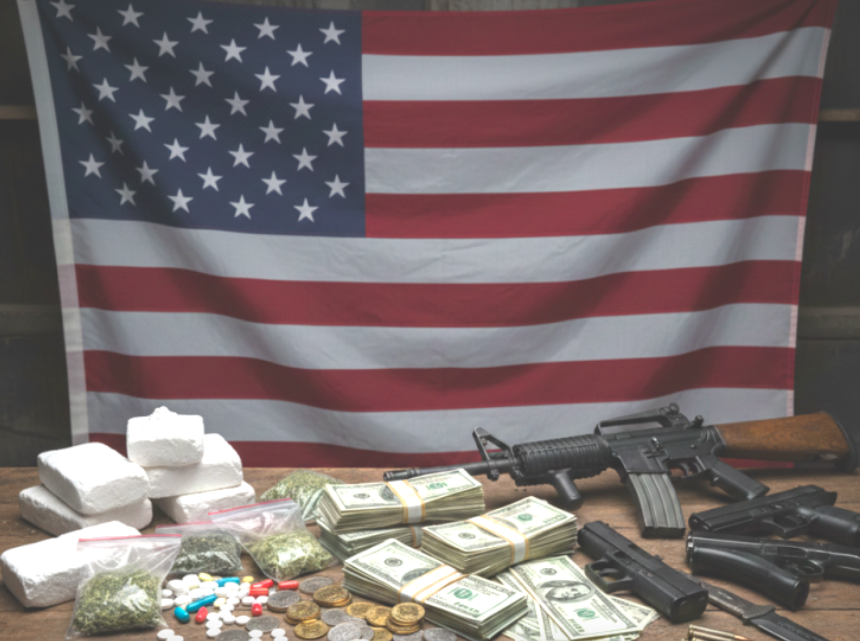
The false rhetoric of the fight against drug trafficking used by the US government and right-wing groups in the region collapses when a quick review is made of Washington’s partners linked to drug trafficking. Among them are Juan Orlando Hernández, Horacio Cartes, Álvaro Uribe Vélez, Felipe Calderón, Enrique Peña Nieto, Daniel Noboa, Guillermo Lasso, Keiko Fujimori, Luis Lacalle Pou, José Luis Espert, and even the Secretary of State himself, Marco Rubio.
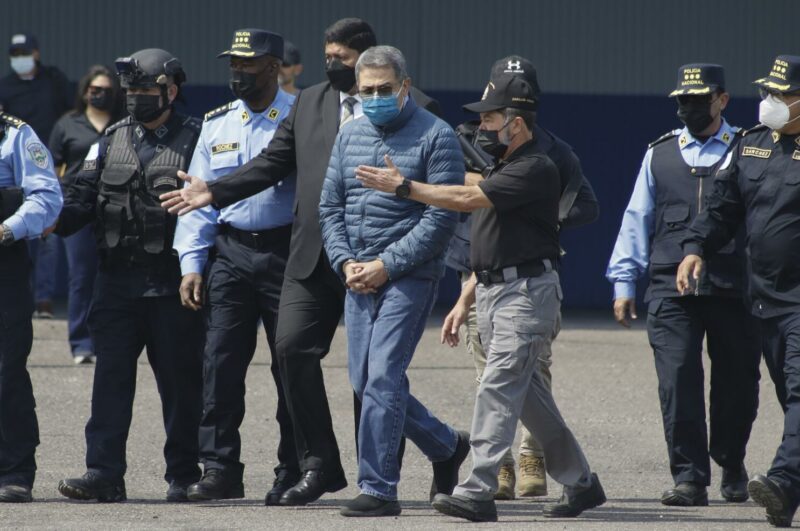
The pardon that US President Donald Trump granted to former Honduran President Juan Orlando Hernández undermines the false rhetoric that Washington uses to attack Venezuela.
While the Pentagon deploys its troops in the Caribbean Sea and carries out extrajudicial executions by attacking boats of alleged drug traffickers, Trump orders the release of Juan Orlando Hernández, who had been sentenced to 45 years in prison by a US Federal Court in New York, after being found guilty of drug trafficking.
But the case of the former Honduran president is not the exception, but the rule. The list of Latin American right-wing leaders accused of links to drug trafficking is long.
Some of the leading figures of the Latin American right who have been denounced for their links to drug trafficking are: Paraguayan Horacio Cartes, Colombian Álvaro Uribe Vélez, Mexicans Felipe Calderón and Enrique Peña Nieto, Ecuadorians Daniel Noboa, Guillermo Lasso, Peruvian Keiko Fujimori, Uruguayan Lacalle Pou, Argentine José Luis Espert and even the Secretary of State himself, Marco Rubio.
Paraguay
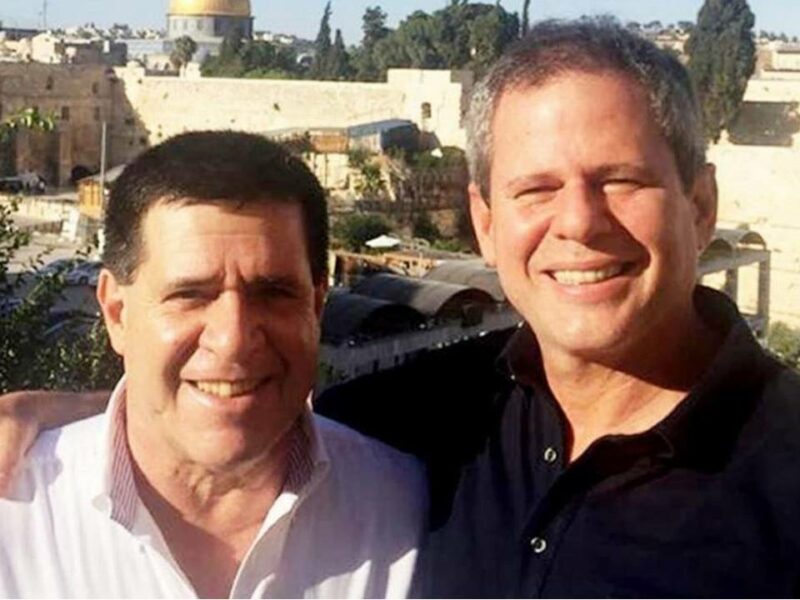
In 2023, the former president of Paraguay, Horacio Cartes (partner of former Argentine president Mauricio Macri), was sanctioned by the United States Treasury Department for having links to drug trafficking and was included on the Specially Designated Persons List (SDN), prepared by the Office of Foreign Assets Control (OFAC).
Following Donald Trump’s arrival in government, in 2025 OFAC decided to remove Cartes from the list. However, businessman Darío Messer, a partner of the former Paraguayan president and whom Horacio Cartes referred to as his “brother,” was arrested in Brazil in July 2019 and convicted in 2020 for money laundering (Messer pleaded guilty and negotiated a reduced sentence).
Mexico
Felipe Calderón, who was president of Mexico from 2006 to 2012, declared a “war on drugs,” however, testimonies from former officials of his government and members of criminal organizations claim that his government provided protection to the Sinaloa Cartel and the Zetas Cartel.
Along those lines, Genaro García Luna, who was the Secretary of Public Security during the government of Felipe Calderón, and who was considered the president’s trusted man, was arrested in the United States in 2019 and convicted of drug trafficking in 2023.
Enrique Peña Nieto, Mexican president from 2012 to 2018, was also accused of having ties to the Zetas Cartel. Former associates and officials in Peña Nieto’s government made allegations regarding these connections.
On September 26, 2014, the 43 students from the Ayotzinapa Rural Teachers’ College disappeared. This case exposed the links between the Guerreros Unidos Cartel, municipal police officers, members of the Armed Forces, and officials from the state and federal governments under Peña Nieto.
Ecuador
In 2023, links were revealed between Rubén Chérrez, an Ecuadorian businessman and close friend of Danilo Carrera, brother-in-law of President Guillermo Lasso, and the Albanian mafia. Chérrez was found to have ties to Dritan Gjika, the leader of this criminal organization. The Ecuadorian Attorney General’s Office merged the investigations into Carrera and Chérrez, focusing on corruption and drug trafficking. In November 2024, Danilo Carrera was sentenced to ten years in prison for organized crime.
Meanwhile, Noboa Trading, a company belonging to the family of Ecuador’s current president, Daniel Noboa, has been linked to cocaine trafficking to Europe. According to Telesur, Ecuadorian police stated that Noboa Trading “may be involved in the export of more than half a ton of cocaine to several European countries since 2020.”
“In 2020, after cocaine was found in banana containers, José Luis Rivera Baquerizo, an employee of Noboa Trading, was arrested. However, he was released thanks to the defense of lawyer Edgar José Lama, who was an advisor to then-Assemblyman Daniel Noboa and who now holds the position of Minister of Health,” the website states.
Colombia and Peru
In 2018, The New York Times published an article by journalist Nicholas Casey titled: “US diplomatic cables suggest Álvaro Uribe’s ties to drug traffickers.” The article details the links Uribe Vélez forged in the 1990s with various drug trafficking networks, particularly the Medellín Cartel and its leader, Pablo Escobar Gaviria.
Among the cables cited, it is mentioned that Senators Guillermo Vélez Trujillo and Alejandro González, from the same party as Uribe Vélez, pointed out to American diplomats the links that he had with the Ochoa Clan, members of the Medellín Cartel and founders of paramilitary groups.
Meanwhile, in Peru in 2016, the public prosecutor’s office opened an investigation against far-right leader Keiko Fujimori for money laundering. According to journalist Carlos Noriega, in an article published in the newspaper Página/12 titled “The Ghost of a Narco-State,” Fujimori allegedly received campaign contributions for 2011 from various offshore entities (a structure often used to conceal the true origin of funds), from Luis Calle Quirós, “included by Peruvian and U.S. authorities on drug traffickers’ lists,” and from Joaquín Ramírez, who was under investigation by the DEA for laundering money derived from drug trafficking.
Uruguay and Argentina
Former Uruguayan President Luis Lacalle Pou became embroiled in the scandal surrounding the escape of drug trafficker Sebastián Marset, who evaded an Interpol arrest warrant by obtaining a Uruguayan passport. Adding to the intrigue, Alejandro Astesiano, the head of presidential security, was implicated in a network that supplied counterfeit passports.
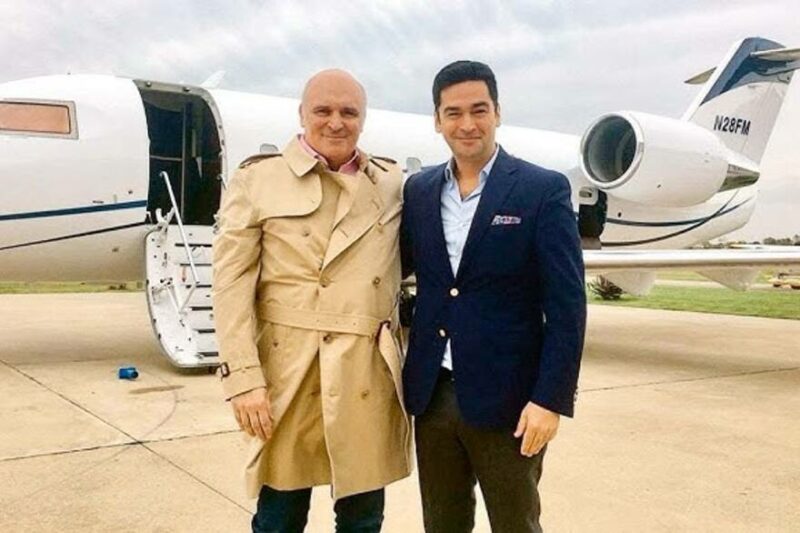
In Argentina, one of the main allies of the ruling party (La Libertad Avanza), José Luis Espert, had to decline his candidacy for national deputy for the province of Buenos Aires when a scandal broke out over his links with the drug trafficker Federico “Fred” Machado.
According to leaked US documents, Espert (a close confidant of President Javier Milei) received at least $200,000 and made several trips on Machado’s private jet. Machado is wanted by US authorities for extradition to face charges of drug trafficking and money laundering.
The shoemaker’s children go barefoot.
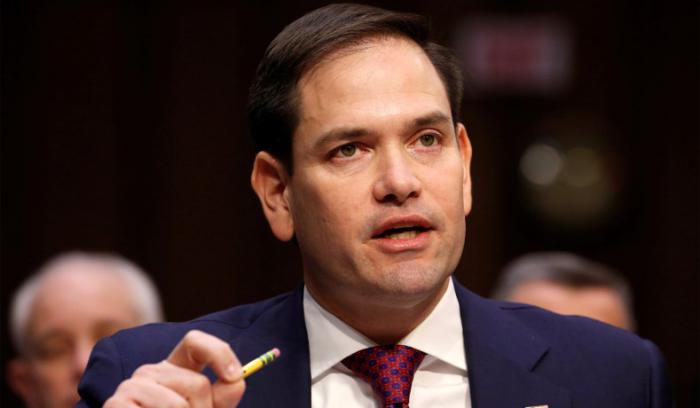
Washington’s bellicose rhetoric, which uses the fight against drug trafficking as a pretext to threaten Venezuela, Colombia, and the entire region, has Secretary of State Marco Rubio among its leading proponents. However, little is said about the allegations against Rubio himself for his supposed links to drug trafficking.
Orlando Cicilia, Marco Rubio’s brother-in-law, was sentenced in 1990 to 25 years in prison for drug trafficking. Cicilia, who was married to Barbara Rubio, was part of the drug trafficking organization headed by Mario Trabaue, which had turned Miami into the main port of entry for cocaine into the United States. An investigation by The Observer indicates that in 2009, during his campaign for the U.S. Senate, Rubio allegedly received thousands of dollars in contributions from lobbyist Joel Steinger, who was accused of laundering money for various drug cartels.
A Recurring Pattern
Back in 1989, Democratic Senator John Kerry presented a report (known as the Kerry Report) to the United States Congress revealing how the Nicaraguan Contras, who attacked the Sandinista government, committed massacres, and sowed terror in Nicaragua, were financed with drug money with the complicity of the Central Intelligence Agency (CIA), the United States Drug Enforcement Administration (DEA), and the United States State Department itself.
One of the report’s findings states that: “drug links to the Contras included… payments to drug traffickers by the U.S. State Department using funds authorized by Congress for humanitarian assistance (…)”. Alcira Argumedo, a prominent Argentine intellectual, once asserted: “Don’t be fooled, the DEA doesn’t fight drug trafficking, it fights to monopolize it.” If the United States truly wants to combat drug trafficking, it should confront the American banks that launder money for drug cartels, the American companies that supply weapons to these groups, and their regional partners, who coordinate these trafficking networks with the complicity of the CIA and the DEA. “The fight against drug trafficking” and “the narcoterrorist enemy” are merely rhetorical constructs (as were, at one time, the supposed “weapons of mass destruction” that Saddam Hussein was believed to possess) used to develop its geopolitical strategy and advance its threats and interference against the countries of the region.
Héctor Bernardo* Journalist, writer, and professor of Introduction to Contemporary Social and Political Thought – Faculty of Journalism and Social Communication – UNLP. Member of the PIA Global team.
This article was previously published on PIA Noticias here.