


By Islam Farag, from Cairo / Egypt
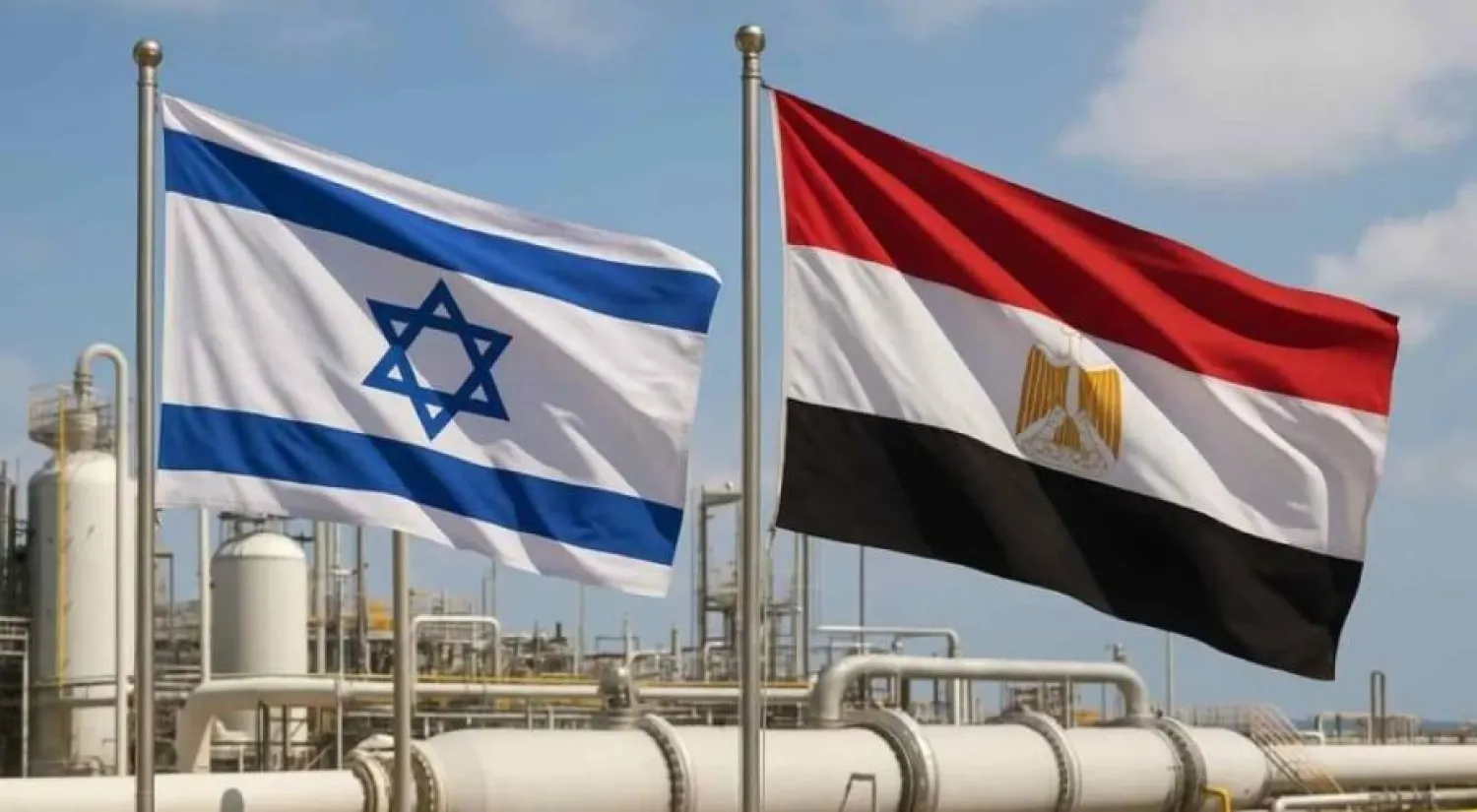
The announcement by Israeli Prime Minister Benjamin Netanyahu approving a $35 billion gas export deal to Egypt from the Leviathan natural gas field, located in the Mediterranean Sea off the coast of Haifa, came as a shock to many who do not closely follow Egyptian-Israeli relations.
Perhaps the shock of these observers is justified, especially when coupled with questions about the motives and justifications that led Cairo to such an agreement with a state that has been a major cause of regional instability over the past two years. This instability stems from its deplorable aggression against the defenseless people of Gaza and its unlawful targeting of multiple Arab capitals under flimsy pretexts of “preemptive self-defense.” Worse still, this agreement is being finalized between Israel and Egypt, a country whose national security was targeted by Israeli pressure to forcibly displace Palestinians onto its territory.
Roots of the Renewed Deal
Before delving into the economic and geopolitical dimensions of the deal, it is important to note that the approval announced by the Israeli Prime Minister a few days ago was merely a ratification of a renewal of an existing agreement.
This ratification concerns a renewal, expansion, and fundamental modification of an agreement between the two countries dating back to 2019. Under that original deal, Egypt imported quantities of natural gas, using a portion for its critically needed domestic consumption (especially for operating power plants), and liquefying the remaining portion through its existing liquefaction plants for re-export to Europe.
The timeframe for this agreement recently expired. Tensions between the two countries, stemming from the war on Gaza and Israel’s rigid conditions for ending the conflict, overshadowed the prospects of its renewal. Both sides attempted to use it as a leveraging tool to force the other into making specific concessions within an unspoken struggle to impose specific visions for the post-war future in the Gaza Strip.
It is well-known that in recent years, Egypt has suffered from a severe shortage of energy sources, forcing it to implement scheduled power cuts in some parts of the country for hours. It compensated for part of this deficit by using Israeli gas. This issue represented a clear vulnerability in its energy security that Israel shamelessly exploited. Since the outbreak of the war on Gaza in October 2023, Tel Aviv has attempted to blackmail Cairo, hoping to compel it to accept the migration of Palestinians. Consequently, it halted gas supplies several times during the war, most recently in June during the 12-day confrontation with Iran.
An Egyptian Maneuver
Cairo was keenly aware of the Israeli mindset and prepared for it months ahead of the summer period, when electricity consumption peaks. It secured several deals for Liquefied Natural Gas (LNG) from various companies and chartered four regasification vessels, determined not to leave its security at the mercy of Israeli manipulation.
Through this maneuver, Egypt was able to send a strong message to the Israeli side that it would not submit to any blackmail regarding the displacement issue, regardless of the economic pressure. On the contrary, during the negotiation period for the agreement’s renewal, Cairo engaged in serious and intense negotiations with major companies to secure its LNG needs, an effort that caused concern for the Israeli side.
In fact, Israel does not possess any facilities for liquefying its natural gas production, meaning any attempt to export it must pass through Egyptian liquefaction plants. Additionally, Israel does not have strong alternatives to the Egyptian market. Any alternatives to this solution are either non-viable or prevent Israeli gas from being price competitive in the global gas market.
Government Justification
Despite the popular rejection of the deal, the Egyptian government is attempting to market it as a commercial transaction unrelated to political matters. From the perspective of Egyptian government officials, the deal allows Egypt to be supplied with 130 billion cubic meters of Israeli gas until 2040, valued at up to $35 billion. This quantity will be delivered to Egypt via the gas pipelines between the two countries. The portion needed by Cairo will go directly to power plants without the need for liquefaction, while the remainder will be liquefied on behalf of Israel in exchange for fees collected by Egypt for this service.
Should Egypt decide to replace this quantity of Israeli gas with LNG from the international market, Cairo would incur a significant price difference plus the costs of regasification, potentially raising the total cost to approximately $60 billion for the same quantity.
Nevertheless, the purely commercial dimension put forth by the government to justify the deal does not hold up against the complexities and risks raised by critics as valid reasons for rejection. These complexities and risks range across security, economic, and geopolitical concerns.
Diverse Reasons for Popular Rejection
Security critics view Egypt’s near-primary reliance on Israel for energy supplies as extremely dangerous and a threat to Egyptian national security, especially if political relations between the two countries deteriorate. This dependence could enable Israel to pressure Egypt using the energy card. In their view, while the government defends itself by stating the agreement includes clauses protecting its rights in case of a politically motivated gas cutoff, “reality is always different.” According to one opponent, Israel could halt gas supplies for political motives disguised behind weak pretexts, such as claiming to protect facilities during a conflict, as has happened before.
Geopolitical critics question the rationale guiding the Egyptian decision-maker in accepting this agreement. They argue that supporting the treasury of a hostile state with billions of dollars represents direct support for that state’s geopolitical strengths, both in the security equation with Egypt and in its regional power balance. This is particularly concerning as this state has missed no opportunity to harm Egyptian interests, even under a peace treaty.
Nothing supports this viewpoint more than the acknowledgment of the Israeli Prime Minister himself, who has repeatedly affirmed the importance of this deal to his country’s economy, stating that roughly half the value of the deal will be invested in supporting education, health, infrastructure, and security for Israel’s future generations. In his latest speech, he also emphasized that it enhances Israel’s position as a regional energy superpower. Furthermore, he noted that the deal allows gas to be sold at a good price to Israeli citizens.
According to one opponent of the agreement, these words are a source of heartache for Egyptian citizens. “While Egyptian citizens groan under successive increases in energy prices, this deal subsidizes gas prices for Israeli citizens,” he stated.
Pragmatic and Commercial Reservations
Even some who pragmatically support the deal have reservations. They question whether the government secured a clause in the agreement granting it the right to reduce the price if global gas prices fall, especially given the possibility of this occurring with Europe’s expected capacity for gas self-sufficiency instead of importing from Russia.
Others have attacked the agreement based on its terms, which were clearly detailed in the statement by the Israeli company “NewMed Energy,” a key party to the deal. In its statement to the Tel Aviv Stock Exchange, the company confirmed that the agreement ensures Egypt’s commitment to purchase or pay for the additional quantities according to the agreement mechanisms. Crucially, it eliminates Egypt’s right to reduce contracted quantities if the average price of Brent crude falls below $50. The agreement sets a pricing mechanism linked to the Brent crude price with a minimum price floor, and a mechanism for price updates after 5 and 10 years from the start of the second phase, with both parties retaining the right to reduce supplies by up to 30% if an agreement on price modification is not reached.
Furthermore, despite the Egyptian government’s extensive public relations campaign that the deal returns Egypt to its position as a gas exporter, there are those who remain skeptical. A former government official stated that the deal alone will not contribute to Egypt’s return as a gas exporter, as this requires the discovery of a massive Egyptian gas field to compensate for the recently declining production of the Zohr field. “Even if such a field is discovered, it would require drilling and development work that could take at least four years, and any acceleration of this timeline would incur massive costs,” the former official added.
Calming Public Fears
This internal rejection of the deal, based on various grounds, has been met with government attempts to reframe the issue in a way that dispels these different fears.
To downplay the likelihood that using Israeli gas could lead to control over Egypt’s energy market, sources close to the regime stated that the volume of Israeli gas imports amounts to 850 million cubic feet per day, while domestic consumption is about 6 billion cubic feet per day. Therefore, it constitutes only about 12% of the total domestic consumption. These sources clarified that the government compensates for the deficit in local production, which is about 1.5 billion cubic feet per day, through purchasing deals with international suppliers and a plan to increase production capacity to meet domestic needs.
Regarding the allegations that the agreement could signal government negligence of national interests or a betrayal of the Palestinian cause, the official government response came from Diaa Rashwan, spokesperson for the State Information Service.
Rashwan stated that what occurred is a commercial contract subject to market rules and international investment mechanisms, far removed from any political application or interpretation. In a statement, he stressed that the parties to the agreement are well-known international commercial companies operating in the energy sector for years, including the American company “Chevron,” alongside specialized Egyptian companies for gas reception, transport, and trading, with no direct government intervention in the signing of these contracts.
Rashwan warned against being drawn into any hostile propaganda or media campaigns seeking to impose a political nature on a commercial agreement. He affirmed that Egypt’s position on the Palestinian issue is fixed and will not change, based on supporting the legitimate rights of the Palestinian people, rejecting forced displacement, and adhering to the two-state solution.
Israeli Confirmation of Fears
Nevertheless, Cairo’s efforts and its insistence on portraying the matter as a profitable commercial agreement to calm the intensity of public dissatisfaction and frustration face a challenge not just internally, but primarily from the Israeli side.
Speaking to “Sky News Arabia,” former Israeli diplomat Meir Cohen presented a different view of the agreement. He said that the Israeli ratification of the agreement coincides with the second phase of the ceasefire in Gaza, reflecting a natural indication of the continued good relations between the two countries. He explained that the popular perception in Egypt of Israel as an enemy state does not reflect the practical reality of relations between the two countries. He affirmed the existence of strong cooperation, even though some issues between them still require addressing, such as the unauthorized entry of Egyptian security forces into Sinai and the matter of the Israeli ambassador to Cairo, who has not yet taken up his duties.
Persistence of the Unpopular Approach
Given the controversy surrounding the deal both internally and externally, I spoke to an independent energy specialist in Egypt, presenting him with the conflicting viewpoints to ascertain the extent of the risk undertaken by the Egyptian government in the agreement.
According to the source, the agreement, in its scope and economic terms, is merely a government attempt to hedge its bets and secure a portion of its natural gas needs.
“The government anticipates increasing its domestic crude production by 2027. If this materializes, it will relieve Egypt of any potential pressures on its energy security. If it doesn’t, Egypt will have succeeded in securing a certain amount of its needs at a competitive price. Moreover, this amount itself does not represent a critical share of the gas blend it imports,” the source said.
Whatever political and economic calculations led the Egyptian government to proceed with the renewal of this old agreement, it will remain one of the controversial steps that have characterized this government’s operations for years; a government that champions political and economic realism without much concern for the populist dimension, regardless of the scale of criticism and the validity of the reasons for rejection.