


By Adem Kılıç, Political Scientist
The spectacle staged by Trump in Egypt approximately two months ago and presented as the ‘peace of the century’ propaganda never made a realistic contribution to Israel’s military objectives in Gaza.
Furthermore, despite the terms of the agreement, the people of Gaza have continued to be deprived of humanitarian aid over the past two months, and Palestinians continue to struggle to survive in harsh winter conditions, in addition to the hunger they endure.
Israel, meanwhile, is continuing its military attacks, taking refuge in this diplomatic show put on by Trump, as if to prove that it has historically never complied with any agreement.
Indeed, the essence of Israel’s historically adopted fundamental strategy has always been, and continues to be, stalling at the negotiating table and a hard power approach that disregards both international and bilateral agreements on the ground.
Clearly, the ongoing attacks in Gaza have now gone far beyond the goal of ‘eliminating Hamas’.
For Israel, Gaza has now become a laboratory for rebuilding ‘regional deterrence,’ and the attacks, which continue despite civilian casualties, are emboldened by the Arab world’s lack of response.
All these realities and Trump’s show in Egypt support the analyses I previously wrote in Uwidata.
The current situation is that Israel knows that, as it has throughout its so-called history, the Trump administration will not impose any harsh restrictions on US domestic politics or Washington.
Indeed, war criminal Netanyahu recently declared this reality to the global public with the following statement:
‘If it weren’t for the Jewish people, the US would not exist.’
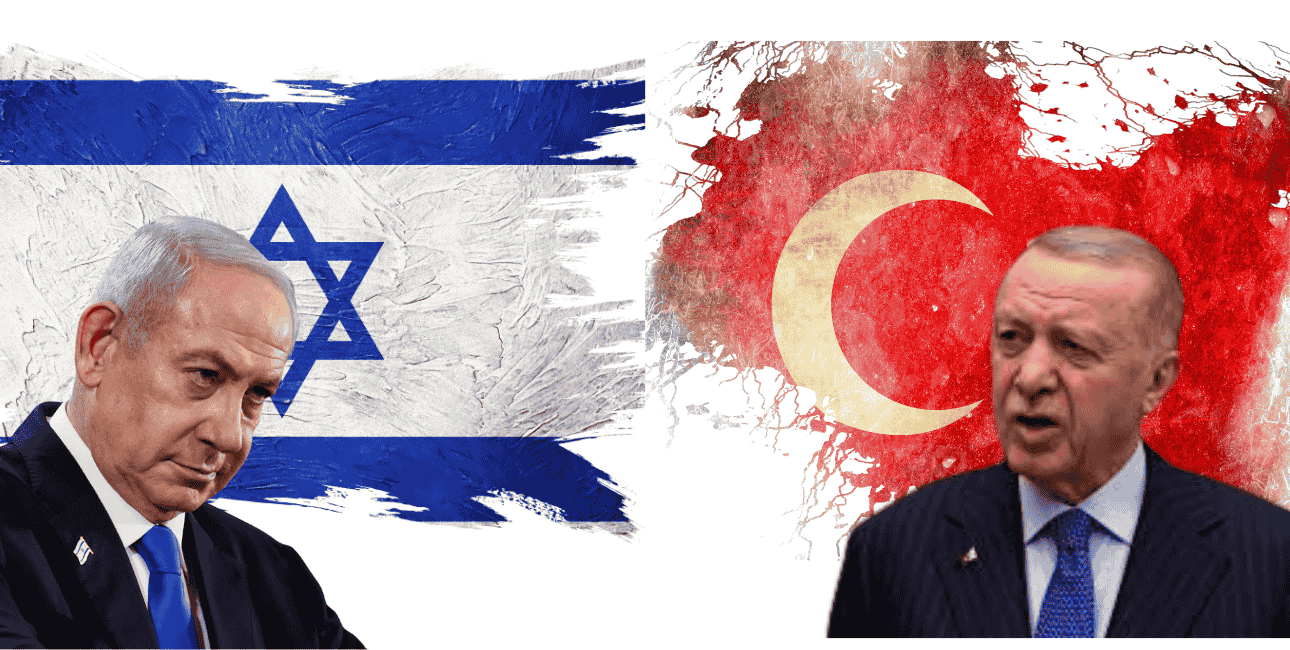
Israel’s next target is Türkiye!
However, the truly noteworthy move is seen in the new military architecture taking shape beyond Gaza, in the Eastern Mediterranean.
The ‘military rapid support force’ that Israel is trying to establish together with Greece and the Greek Cypriot administration is designed as a structure aimed at encircling Türkiye, rather than a classic defense cooperation.
This structure means a hybrid security arrangement outside the NATO umbrella but indirectly using NATO infrastructure.
At this point, Israel’s strategic thinking is clear: to restrict Türkiye’s room for maneuver in the Eastern Mediterranean through energy pipelines, joint air-sea operations capability, and intelligence sharing.
Greece and the Republic of Cyprus, meanwhile, are seeking to gain legitimacy in this equation through geography and politics rather than military action.
This is because Israel views Athens and Nicosia as useful tools, both as a gateway to Europe and as instruments to present the anti-Türkiye bloc as ‘multilateral’.
It is no coincidence that this military build-up is progressing in tandem with provocations in Syria.
Israel’s increasing occupation steps in the Golan region, where it is considered an occupier under international law, and its statements of support for PKK affiliates threatening Türkiye’s national security in Syria are also part of the same strategy.
How will Türkiye respond to this scenario?
First and foremost, Türkiye’s strongest advantage is its unprecedented expansion of its sphere of influence and its emerging capacity to play on ‘multiple fronts’ simultaneously.
In the coming days, Türkiye will address the structure established along the Israel-Greece-Cyprus axis not only as a military threat but also as a political and diplomatic encirclement attempt and will take the following steps.
As a first step, Türkiye will adopt a strategy of making its naval and air presence in the Eastern Mediterranean more visible and continuous. Türkiye’s long-standing Blue Homeland doctrine will move beyond being a theoretical framework and become more practical and deterrent in this new era.
As a second step, Türkiye will take steps on the diplomatic front, as always, in accordance with international law.
Türkiye will seek to bring Israel’s attacks on Gaza and the military bloc in the Eastern Mediterranean to the international agenda under the same heading, and will seek to activate international mechanisms.
As a third and most critical step, Türkiye will take steps to curb Israel’s expansionism in the Eastern Mediterranean and Syria and its support for terrorist groups.
However, this move certainly does not mean direct confrontation.
Türkiye will primarily limit Israel’s ability to engage in these expansionist activities through airspace coordination, intelligence activities, and new contacts established with regional actors, while also deploying military options to disrupt the PKK/YPG terrorist organization’s integration process in Syria.
Undoubtedly, Türkiye’s advances in defense industry and military technology stand out as a silent but decisive factor in this equation.
Israel’s rapid support force plans, in an environment without US support, are now far from achieving absolute superiority against Türkiye’s unmanned systems, air defense and electronic warfare capabilities, and Türkiye will no longer hesitate to reflect this difference on the ground.
In summary, the ongoing war in Gaza, the so-called peace theater in Egypt, the anti-Türkiye military blocs being established in the Eastern Mediterranean, and the provocations in Syria are not separate events but pieces of the same strategic picture. It appears that Israel is attempting to shape regional balances at this juncture by utilizing terrorist organizations, Greece, which has become a financial burden on Europe, and the illegitimate Republic of Cyprus.
However, Türkiye is no longer a passive observer of these games. It is a major actor that reads the field, the table and the timing together, and has the power to reshape the process.
And in the near future, all actors will understand this.