


By Dure Akram, from Lahore / Pakistan
Vast swathes of Gaza City lie in ruins after two years of war, with nearly 90% of the population displaced. By the time an uneasy ceasefire was brokered in October, Israel’s assault had killed at least 68,000 Palestinians and obliterated entire neighborhoods. This is the wreckage over which the leading world powers unveiled a 20-point “Comprehensive Plan to End the Gaza Conflict” — a bold blueprint that promised immediate calm and is now being tested in the hardest phase of any ceasefire: implementation.
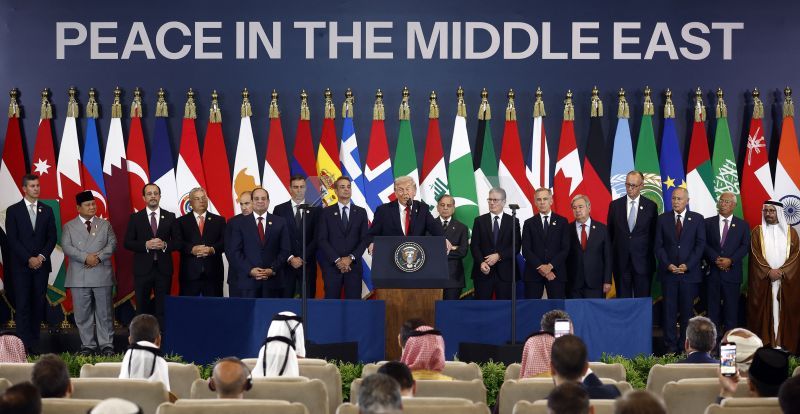
US President Trump’s initiative, formally endorsed at a Sharm el-Sheikh summit, temporarily halted the carnage. It delivered a short-lived breakthrough: a hostage–prisoner exchange began, and Israeli forces pulled back from parts of the Strip.
Three months on, the ceasefire is holding unevenly, but the plan has entered its most difficult phase: implementation beyond the pause in fighting. Israel refuses to fully withdraw, with Prime Minister Benjamin Netanyahu digging in on a “new border” inside Gaza.
Potential troop-contributing countries have hesitated to deploy peacekeepers, citing uncertainty over mandate, rules of engagement, and the risk of being drawn into active hostilities. That hesitation matters because UN Security Council Resolution 2803 authorized a temporary International Stabilization Force (ISF) — but authorization is not the same as force generation.
As a result, Phase II — covering post-war governance, security arrangements, and reconstruction — has stalled, not collapsed, caught between incompatible political red lines. The plan’s survival now turns less on declarations than on whether states are willing to underwrite it with personnel, money, and enforcement mechanisms.
How did we get here? The story is as much about the Muslim world’s response as it is about the intransigence of the conflict’s direct participants. From Islamabad to Ankara, Riyadh to Rabat, leaders publicly endorsed ending the bloodshed — but their political calculations, internal pressures, and divergent priorities have undercut any unified front.
Pakistan: Between Rhetoric and Reality
Pakistan’s support for Palestine has long combined emphatic rhetoric with constrained practical options, a tension that the Gaza ceasefire plan brought into sharp relief. Prime Minister Shehbaz Sharif was among the first to applaud Trump’s 20-point proposal, lauding the American president’s leadership and embracing the ceasefire roadmap. “I welcome President Trump’s 20-point plan to ensure an end to the war in Gaza,” Sharif declared, vowing that a two-state solution must soon follow for lasting peace.
Islamabad’s endorsement was no surprise: Pakistan, which has no ties with Israel and a populace deeply sympathetic to Palestinians, could hardly oppose a plan promising to stop what it had repeatedly condemned as genocide.
In August, the Pakistani Parliament unanimously passed a resolution reaffirming “historic and unwavering” support for Palestine and denouncing Israel’s “plans for long-term occupation of Gaza” as war crimes.
When the discussion turned to contributing troops to a proposed International Stabilization Force, Islamabad slowed its approach. The UN-endorsed ceasefire called for an International Stabilization Force (ISF) to secure Gaza, and all eyes turned to Pakistan’s military — one of the world’s largest and most experienced Muslim-majority contributors to UN peacekeeping missions. Pakistani officials floated openness in principle, while stressing that any deployment would require clarity on mandate, consent, and domestic political buy-in.
Participating in the ISF could curry favor with Washington and wealthy Gulf allies at a time when Pakistan’s economy needs bailouts. Indeed, analysts noted that Islamabad’s new Strategic Defense Agreement with Saudi Arabia, inked days before the peace deal, and its heavy diplomatic courtship by Jordan and Egypt positioned Pakistan as a linchpin in the regional security calculus. In theory, sending Pakistani peacekeepers might showcase Islamabad as a “security stabilizer” for the Middle East.
But domestic reality can puncture this ambition. Palestine is an emotive, almost sacred cause in Pakistan. The idea of Pakistani soldiers operating in Gaza has already set off alarm bells. Pakistan’s passports explicitly forbid travel to Israel; any whiff of de facto recognition or cooperation is politically toxic.
Defense Minister Khawaja Asif cautiously said joining the Gaza force would be a “matter of pride” if Pakistan decided to participate but insisted that “no decision” had been made and promised to consult Parliament and all stakeholders first. This careful tightrope walk signaled Islamabad’s nerves. Behind closed doors, Pakistani officials sought assurances: could their troops deploy under UN cover without ever directly engaging Israel? Perhaps Pakistani units might focus on humanitarian work while troops from countries that recognize Israel take on any direct liaison with the IDF.
Former Foreign Secretary Salman Bashir bluntly acknowledged the bind: the US plan had a pro-Israel tilt, “yet we did not have any option but to go along” to stop Gaza’s suffering.
Türkiye: Firebrand Support and Calculated Restraint
If Pakistan talked a big game, Türkiye’s role in the Gaza saga has been a study in fiery public advocacy tempered by hard-headed pragmatism. President Recep Tayyip Erdoğan, long a vocal patron of the Palestinian cause, seized every opportunity to excoriate Israel’s conduct in Gaza. When Trump’s plan emerged, Erdoğan lent it strong backing on paper: “I commend US President Donald Trump’s efforts and leadership aimed at halting the bloodshed in Gaza,” he announced, pledging that “Türkiye will continue to contribute to the process” for a just and lasting peace acceptable to all sides. This endorsement signaled Ankara’s desire to be seen as a key peace broker.
Indeed, Turkish diplomats were deeply involved in the hostage negotiations and ceasefire talks alongside Qatar and Egypt. At the Sharm el-Sheikh summit, Erdoğan stood with Trump and Egypt’s President Sisi as a co-sponsor of the agreement, and Türkiye reportedly agreed in principle to contribute personnel to the International Stabilization Force.
Yet Erdoğan’s enthusiastic rhetoric masked significant caveats.
Domestically, Türkiye witnessed massive protests in solidarity with Gaza throughout 2024–25, fueled by gruesome images of bombarded hospitals and refugee camps. Erdoğan himself fanned the flames, at one point lambasting Israeli leaders as “war criminals” and likening Gaza’s plight to a genocide.
Having restored ties with Israel only in 2022 after years of estrangement, Erdoğan abruptly froze that rapprochement once the Gaza war escalated: he recalled Türkiye’s ambassador from Tel Aviv and suspended defense cooperation.
That explains Ankara’s nuanced stance on the ground. While Türkiye supported the idea of a peacekeeping force, it quietly hesitated when Hamas baulked at disarmament. Turkish officials made clear that their troops would act as peacekeepers, not combatants hunting Palestinian fighters. “We will not be part of any scheme to fight our Palestinian brothers,” a senior aide told local media.
Erdoğan instead positioned Türkiye as Gaza’s humanitarian lifeline and advocate. Turkish military cargo planes and the naval hospital ship TCG İskenderun delivered thousands of tons of aid to Gazans once the ceasefire allowed relief convoys.
In the halls of the UN, Türkiye pressed for resolutions demanding unfettered aid access and decried Israel’s intermittent strikes during the truce as provocations that violated the accord.
When Israel’s top general bluntly declared that the IDF would not fully withdraw from Gaza’s south — essentially hinting at de facto re-occupation — Ankara was among the first to slam the statement and warn Washington that Israeli intransigence was jeopardizing Trump’s peace initiative. This mix of cooperation and confrontation exemplified Türkiye’s balancing act: Erdoğan embraced the ceasefire to stop the carnage, yet hedged against elements of the plan, such as long-term international governance of Gaza, that he deemed unfavorable to Palestinian aspirations or to Türkiye’s influence.
Türkiye’s reaction has been supportive but conditional. Erdoğan wants credit for helping end the war — he touted his personal calls with Hamas’s leadership and President Trump as pivotal in clinching the hostage exchange — but he also seeks to guard Hamas’s political relevance and ensure Gaza is not carved away from the broader Palestinian question.
Saudi Arabia: Leverage, Demands, and an Unmoved Red Line
No country had more at stake in Trump’s Middle East gambit than Saudi Arabia — nor did any single leader shape Trump’s plan behind the scenes quite like Crown Prince Mohammed bin Salman (MBS).
For much of 2023, Washington courted MBS to join the Abraham Accords and normalize ties with Israel, dangling security guarantees and nuclear deals.
But the Gaza war’s horror forced Riyadh into a hard reset. The Saudis swiftly shelved any overtures to Israel when bombs began to rain on Gaza, aware that Arab public anger was white-hot. MBS made one point crystal clear to Trump: Palestinian statehood is non-negotiable. When Trump, in February 2025, offhandedly floated a shocking idea — a US takeover of Gaza after expelling its residents and turning the Strip into the “Riviera of the Middle East” — the Saudi reaction was swift fury.
The Kingdom’s Foreign Ministry blasted the pledge to “take over” Gaza as an unacceptable scheme of ethnic cleansing and reiterated that no Normalization with Israel would occur until Palestinians gain an independent state with East Jerusalem as its capital. “The establishment of the Palestinian state is a firm, unwavering position… non-negotiable and not subject to compromises,” the Saudi statement declared pointedly.
Following Saudi objections, Trump’s team quietly retooled the proposal. The final 20-point plan conspicuously included an assurance that Israel would not annex the West Bank and that discussions on Palestinian self-determination would continue in parallel. This was a direct nod to Saudi and Jordanian demands, essentially anchoring the Gaza truce to the two-state vision. With that condition met, Riyadh gave a cautious green light to the ceasefire. MBS himself, according to insiders, maintained a deliberate public low profile — perhaps calculating that overt praise of Trump could be unpopular domestically, but also recognizing that being seen as opposing a ceasefire would be worse.
Behind the scenes, however, Riyadh wielded enormous influence on how the plan was shaped and implemented. Saudi diplomacy successfully pressed for a language guaranteeing no forced displacement of Gazans and pushed to involve the Palestinian Authority in Gaza’s future administration so that Hamas’s ouster would not lead to a permanent vacuum.
Riyadh continued to keep Israel at arm’s length. Throughout the war and after, Saudi state media labelled Israel’s actions in Gaza as “war crimes”, and MBS authorized a massive airlift of humanitarian aid to Gaza via Egyptian territory as a sign of solidarity. By November, Saudi officials were privately warning the White House that Netanyahu’s reluctance to withdraw troops and his rhetoric about fighting “to the end” in Gaza were imperiling the entire ceasefire. Simply put, MBS expected Trump to deliver Israeli compliance in exchange for Saudi buy-in — a test of the much-vaunted Trump–MBS “bromance”.
Domestically, MBS’s hard line — no relations with Israel without an independent Palestine — played well, blunting criticism that he was ever willing to bargain away Palestine for US favors. Internationally, though, the Kingdom’s stance contributed to the plan’s fragility. By insisting Gaza’s future be tied to the West Bank question, Riyadh raised the stakes — something Netanyahu’s far-right government was bound to resist, as indeed it has by rejecting any talk of a Palestinian state. Moreover, Saudi Arabia declined to contribute forces to the Gaza Stabilization force, preferring to open its wallet — pledging billions for Gaza reconstruction — but not risk Saudi boots on unfamiliar terrain.
The Saudi crown prince has reportedly floated an alternative peace conference for 2026, aiming to bring Europe, China, and even Iran to the table to forge a broader settlement beyond Gaza.
United Arab Emirates: Between Normalization and Duty
The United Arab Emirates (UAE) was in a delicate spot from the conflict’s outset. As the first Gulf state to normalize relations with Israel under the 2020 Abraham Accords, the UAE found its diplomatic rapprochement tested by the relentless bombardment of Gaza. Abu Dhabi’s calculus has been to maintain its bridge to Israel and the US while placating Arab public opinion and upholding its claim to support Palestinian statehood.
In practice, the UAE walked a fine line. It joined international calls for a ceasefire early on and, crucially, embraced Trump’s 20-point plan as a way to end a war it described as “intolerable.” Emirati diplomats privately helped lobby others at the UN to pass Security Council Resolution 2803 endorsing the Gaza peace plan in November — a resolution the UAE itself co-sponsored as the Arab representative on the Council.
Publicly, the tone was measured: President Mohammed bin Zayed (MBZ) welcomed Trump’s “commitment to end the war in Gaza” and urged all parties to seize the opportunity for peace, aligning closely with the US narrative. But even as it supported the plan’s lofty aims, the UAE drew clear lines regarding implementation.
One such line was military involvement. The UAE made it known that while it backed the idea of an International Stabilization Force, it would not send Emirati troops to Gaza without a solid legal mandate and clear rules of engagement. Having invested heavily in its modern army, the UAE is not shy about foreign deployments — it intervened in Yemen’s war, for instance — but Gaza is a different proposition: the optics of Arab soldiers potentially clashing with Palestinians are as problematic for Abu Dhabi as for any Muslim nation. Emirati officials publicly stated they needed “clarity on the legal framework” before committing forces. The UAE was content to fund and equip the Stabilization mission, but it preferred others — perhaps Pakistan, Indonesia, or European forces — to take on the on-the-ground security role.
Meanwhile, the UAE leveraged its unique position as Israel’s Gulf partner to try to moderate Israeli behavior, with limited success. Throughout the ceasefire, MBZ maintained open channels to Netanyahu’s office, pressing for increased humanitarian aid flows and warning Israel not to torpedo the deal by stonewalling prisoner releases or re-entering Gaza militarily. Notably, when Israel slowed the entry of relief supplies, Emirati air force cargo jets flew directly to Egyptian airports near Gaza with hundreds of tons of aid — a public display of assistance. The UAE even set up a field hospital in the enclave’s south once hostilities paused.
All this was aimed at mitigating Gaza’s misery and showing the Arab world that Normalization had not numbed the UAE to Palestinian suffering. UAE officials also made a point of emphasizing the plan’s references to a future Palestinian state. In New York, the Emirati ambassador reminded the Security Council that the ceasefire “must be a step toward a two-state solution, not a substitute for it,” echoing the Saudi and Egyptian position.
However, Abu Dhabi’s balancing act has drawn skepticism. Critics in the Arab public accuse the UAE of having empowered Israel via Normalization and thereby emboldened the Gaza onslaught in the first place. Thus, its response to Trump’s plan, while supportive, was also low-key and tactical. Rather than front-and-center cheerleading, the Emirati approach has been to facilitate and finance: welcome the American initiative, quietly ensure the Arab consensus stays intact, and pledge funds for Gaza’s reconstruction. In the grand chessboard of Middle Eastern diplomacy, the UAE’s bet is that it can be both a friend to Israel and a friend in need to Palestinians.
Qatar: The Mediator’s Dilemma
Throughout the Gaza war and its aftermath, Qatar has worn two hats — host to Hamas and helper to Washington. This tiny Gulf emirate punched above its weight as a mediator, and Trump’s peace plan owed much to Doha’s behind-the-scenes facilitation. When the guns fell silent, Qatar’s diplomacy deserved significant credit: it brokered the crucial initial deal that saw Hamas free dozens of Israeli women and children in exchange for Palestinian prisoners in late 2024, which built momentum for Trump’s broader agreement.
Qatar’s Prime Minister and Foreign Minister, Sheikh Mohammed bin Abdulrahman Al Thani, was in regular contact with Trump’s envoy, Steve Witkoff, helping bridge gaps between American demands and Hamas’s conditions. Qatar’s capital hosted several rounds of indirect talks between US officials and Hamas representatives leading up to the October ceasefire.
Publicly, Qatar welcomed Trump’s initiative but with guarded phrasing. A senior Qatari official cautioned in February, at the height of Trump’s “we’ll take over Gaza” bluster, that it was “far too soon to discuss who should control Gaza” given the fragility of the situation. Spokesman Majed Al-Ansari pointed to the deep trauma of displacement for Palestinians and urged Washington to slow down: focus on solidifying the ceasefire before musing about Gaza’s governance. This reflected Qatar’s awareness that any talk of reshaping Gaza’s political order — especially talk of removing Hamas entirely — could derail the delicate truce. Once Trump’s official plan was unveiled, Qatar endorsed its humanitarian aims but remained non-committal on aspects such as international administration of Gaza.
By mid-November, however, as Phase II stalled, Qatar grew openly critical of Israel’s slippages. It accused Israel of “failing to uphold commitments” to increase the aid flow and of continuing covert operations in Gaza during the ceasefire.
Qatar’s role has been a dilemma because its interests are multifaceted. On one hand, Doha wants lasting calm in Gaza — it has invested in Gaza’s infrastructure for years and likes to be seen as a benefactor. On the other hand, Qatar is keen to preserve Hamas, or at least its political wing, as a legitimate player. This put Qatar at subtle odds with Trump’s plan, which effectively sought to neutralize Hamas.
Qatar’s balancing act may have emboldened Hamas to hold its ground. In early December, exiled Hamas leader Khaled Meshaal, speaking from Doha, reiterated Hamas would not disarm voluntarily.
Internationally, Qatar has earned plaudits for its mediation — even the White House acknowledged Doha’s “indispensable” help in freeing hostages. But some in Washington remain uneasy with Qatar’s double game of harboring Hamas ideologues. Doha is reportedly arranging back-channel talks between Hamas and the Palestinian Authority about a possible reconciliation, hoping to satisfy demands that Gaza be governed without Hamas while avoiding an outright confrontation.
Egypt: The Gatekeeper of Gaza
For Egypt’s President Abdel Fattah el-Sisi, the Gaza war was both a nightmare next door and an opportunity to reclaim regional clout. Egypt, which shares Gaza’s southern border, bore the brunt of refugee fears, Sinai security risks, and the moral expectation to act. When Trump’s peace plan materialized, Cairo embraced it with visible relief. Sisi co-hosted the Sharm el-Sheikh summit where the ceasefire deal was ceremonially signed, positioning himself as a co-architect of Gaza’s new “peace.”
Sisi stunned observers by showering Trump with praise, calling him the “only one” capable of bringing peace to the region. Flattery aside, Sisi’s support came with a solemn warning: only the establishment of a Palestinian state could truly end the conflict. “Peace remains our strategic choice,” Sisi declared at the summit, “but this choice can only be established upon justice and equality in rights.”
Egyptian officials ensured the plan included guarantees against Gaza’s depopulation. Sisi had flatly refused Israeli and even some American suggestions during the war that Gaza’s civilians flee en masse to Sinai. “Not one Gazan will be allowed into Egypt,” he vowed, fearing a permanent refugee crisis.
Once the ceasefire began, Egypt became the critical conduit for aid. The Rafah border crossing roared to life with hundreds of Egyptian trucks ferrying food, water, and medicine into Gaza daily. Egyptian engineers were dispatched to repair damaged roads on the Gaza side, and Egyptian field hospitals near Rafah treated some of the most grievously injured Gazans.
At the same time, Sisi kept a tight lid on security, reinforcing troops in Sinai to prevent any jihadist spillover or arms smuggling that could undermine the truce. Egyptian intelligence, which historically liaises with both Hamas and Israel, took on a central role in the ceasefire monitoring mechanism, the Civil-Military Coordination Centre. It worked closely with the Americans in that coordination cell to verify that Hamas was not rearming, and that Israel was easing its blockade as promised.
Despite these efforts, Egypt has grown frustrated as the peace plan faltered. The partial Israeli withdrawal left IDF units still occupying about half of Gaza’s territory even after October. From Cairo’s perspective, this smacks of Israel reneging on its commitment, raising the specter of a long-term division of Gaza that Egypt strongly opposes.
Moreover, Hamas’s obstinacy on disarmament has thrown a wrench in Sisi’s hopes of restoring the Palestinian Authority to Gaza, which would align with Egypt’s preference for a weakened Hamas and a secular nationalist order. In early December, Egypt quietly convened a meeting between Hamas and PA envoys, to little avail.
Egyptian diplomats have also expressed annoyance at some in Washington for “green-lighting” Israel’s continued drone strikes on Hamas targets despite the ceasefire. Cairo warns this undermines trust and could unravel the ceasefire entirely. Sisi has communicated to Trump that Netanyahu’s hardline stance — such as comments about establishing a new security buffer inside Gaza — is unacceptable.
For Sisi, much is on the line. Egypt’s economy is in dire straits, and it faces discontent at home; brokering Gaza peace and securing reconstruction contracts could be a much-needed win. Egypt stands to benefit economically from the reconstruction boom if the plan proceeds — its companies are poised to supply cement, steel, and labor to rebuild Gaza’s ruins. Little wonder Sisi called the Gaza plan the “last chance” for peace and urged all parties to stick to it.
As of now, Egypt remains firmly committed to salvaging the plan. It continues to push for Phase II — the deployment of a multinational force and the establishment of a technocratic Gaza administration — even as those steps languish. Sisi’s bet is that neither Israel nor Hamas wants to relaunch full-scale fighting, so a middle ground can be found if enough pressure is applied.
Jordan: Guardian of Palestine
Jordan’s King Abdullah II often refers to himself as the custodian of Jerusalem’s holy sites and a guardian of Palestinian rights. The Gaza war and subsequent peace plan have severely tested that mantle. Jordan, home to millions of Palestinians, has witnessed some of the largest pro-Palestine demonstrations per capita.
King Abdullah responded by taking a hard diplomatic line: he recalled Jordan’s ambassador from Tel Aviv to protest the “catastrophe” in Gaza, and his government lodged furious complaints at the UN, accusing Israel of violating international law. In Parliament, Jordan’s lawmakers went further, voting in 2023 to expel the Israeli ambassador altogether. Though that vote was non-binding and the government stopped short of severing relations, it underscored the domestic pressure on Amman to distance itself from Israel.
Into this volatile mix came Trump’s peace initiative. Publicly, King Abdullah welcomed any effort to stop the bloodshed, but he also drew a stark red line: no resettlement of Palestinians, no annexation, no erosion of Palestinian sovereignty. The royal court stated its rejection of any attempts to annex land and displace Palestinians in response to Trump’s early Gaza scheme. Like the Saudis and Egyptians, the Jordanians insisted that the Gaza plan not deviate from the goal of an independent Palestinian state.
Once assurances were in place, Jordan cautiously endorsed the ceasefire plan. Jordan’s behind-the-scenes role was more consequential than many realize: its security forces have extensive experience training Palestinian police from past US-funded programs, and the plan explicitly mentions consulting Jordan on building Gaza’s new security architecture. Early on, Jordan signaled willingness to contribute to the International Stabilization Force, or at least to train Gaza’s future local police, but only under certain conditions. Amman sought a clear UN mandate for any force, robust rules of engagement, and a limitation that Jordanian troops would not be tasked with fighting remaining militants. Echoing others, King Abdullah warned that without a clear mission, “it would be difficult to make the plan succeed.” The ambiguity of Resolution 2803, which authorized the Gaza mission but left many details vague, led Jordan to delay final confirmation of troop contributions. Jordanian analysts openly pondered a nightmare scenario: young Jordanian soldiers, many of Palestinian origin themselves, killing or injuring Palestinians in Gaza. Such an image could tear at Jordan’s social fabric.
Thus, while Jordan in principle supported Trump’s plan, in practice, it has been guardedly slow to implement key parts. Amman has focused more on the political track, pushing for the Palestinian Authority to be strengthened. King Abdullah has been working the phones with President Mahmoud Abbas, Egypt’s Sisi, and the Saudis to ensure that any interim arrangements in Gaza eventually lead back to PA control rather than creating a separate Gaza quasi-state. This stems from Jordan’s fear of a “Gaza first” approach that might leave the West Bank and Jerusalem indefinitely occupied and Jordan’s own West Bank-origin populace permanently bereft of a homeland. In line with this, Jordan has insisted that leaders’ joint statements emphasize equality between Israelis and Palestinians and the principle of two states living side by side in peace and security.
Despite these efforts, Jordan finds itself in a precarious position as the ceasefire plan falters. The continuing Israeli military presence in parts of Gaza and Netanyahu’s aversion to a Palestinian state have vindicated Jordanian sceptics who said Trump’s plan was a half-measure. Domestic discontent simmers: the same Parliament that voted to expel the Israeli envoy now calls the Stabilization force idea a trap and urges the King to champion a tougher stance against Israel’s “long-term occupation of Gaza.”
King Abdullah has little room to maneuver. He relies on Western, especially US, aid and security cooperation, so outright defiance of Washington is unlikely. But he also cannot ignore societal pressures in a country where a majority has Palestinian roots. For now, Jordan maintains its official commitment to the peace plan, participating in follow-up meetings and offering technical support.
Iran: Defiant Opposition
No analysis of Gaza diplomacy is complete without Iran, the loudest rejectionist of US peace endeavors in the region, at least rhetorically. True to form, Tehran excoriated Trump’s Gaza peace plan from the moment rumors of it surfaced. Iranian Supreme Leader Ayatollah Khamenei thundered that America’s proposal was a “deceitful, fraudulent scheme” and vowed that Iran would continue to back “resistance forces” in Palestine.
When Trump announced in early 2025 that the US might take control of Gaza and relocate its people, Tehran’s condemnation was blistering, accusing Trump of plotting to “ethnically cleanse Gaza” and urging Muslim nations to oppose a “new Balfour Declaration,” referencing the colonial-era promise that led to Israel’s creation. Iran’s state media depicted Trump’s plan as a neo-colonial project to install a puppet regime in Gaza headed by none other than Trump himself, given the plan’s provision for a Trump-led “Board of Peace” overseeing Gaza’s reconstruction. For a regime that built its legitimacy partly on opposing US influence and championing the Palestinian cause, Trump’s initiative was initially a perfect foil. Tehran could use it to paint rival Muslim leaders, such as the Saudis and Emiratis, as American stooges if they supported it.
And yet, Iran’s posture was not as monolithic as its slogans. Hamas, Iran’s ally, agreed to the ceasefire’s first phase and engaged with Trump’s envoys on prisoner swaps. This put Iran in an awkward spot: sabotaging Trump’s plan would have meant undercutting Hamas at a moment when Hamas’s survival, and the safety of Gaza’s civilians, were on the line. Tehran adjusted its messaging in subtle ways. By the time the UN Security Council was set to vote on the ceasefire resolution, Iran adopted a stance of cautious support for any plan that ended the war, while simultaneously expressing doubt about US intentions.
An Iranian foreign minister told Al Jazeera in an interview that Iran welcomed a ceasefire “won by the resistance of the Palestinian people” but warned that “America must not be allowed to dictate Gaza’s future.” In diplomatic circles, Iran signaled it would not actively obstruct the deal. When Egypt invited Iran to the Sharm el-Sheikh peace summit, Tehran initially remained silent rather than immediately rejecting the invitation.
In the weeks after the ceasefire, Iran publicly championed Hamas’s narrative: that the UN resolution was flawed for imposing an “international trusteeship” on Gaza and for demanding Hamas disarm without guaranteeing Palestinian rights. However, sources suggest Iranian envoys communicated to Doha that Iran was pleased the bloodshed had stopped, and that it would counsel Hamas to observe the ceasefire as long as Israel did.
Trump’s plan, insofar as it halted Israel’s offensive that was decimating Hamas, aligned with that interest. Tehran, in a rare twist, did not torpedo the US initiative. One might say Iran’s strategy was yes to the ceasefire, no to the peacekeepers. When the push came for an international Stabilization force, Iranian state TV began running stories alleging the proposed ISF was a cover for a NATO occupation of Gaza, a plot to “disarm the resistance” that must be resisted. It also gave countries such as Indonesia and Pakistan additional pause about sending troops, playing into Iran’s goal of denying the US and its allies a foothold in Gaza.
Ultimately, Iran’s reaction to Trump’s Gaza peace plan encapsulates its broader stance in the Middle East: ferocious rhetoric against American “plots,” coupled with opportunistic moves to benefit from chaos.
Malaysia and Indonesia: Distant Voices of Hope
Far across the Indian Ocean, Malaysia and Indonesia, the Muslim world’s populous Southeast Asian twins, added their weight to the chorus calling for Gaza’s salvation. These nations are geographically removed from the Middle East, yet emotionally and diplomatically invested in the Palestinian cause. From day one of the Gaza war, both saw enormous public outcry. In Kuala Lumpur, tens of thousands rallied with banners of “Save Gaza” and demands that the government sever any quiet trade links with Israel.
Prime Minister Anwar Ibrahim found his foreign policy agenda suddenly dominated by Gaza. He took a strident tone: during the 2024 ASEAN summit, Anwar condemned Israel’s bombings as “unspeakable atrocities” and implored the international community, pointedly including the US, to force a halt to the violence. When Trump unveiled his peace plan, Malaysia’s response was supportive yet tinged with skepticism. The Malaysian Foreign Ministry commended Trump’s efforts “to end Israel’s war on Gaza,” noting the comprehensive plan announced on 29 September 2025 with cautious approval.
Anwar urged Trump to guarantee that Palestinians’ political rights would not be sacrificed for a quick fix, pressing for a credible path to statehood. Malaysia’s backing of the UN ceasefire resolution came with an explicit caveat: if the plan veered into perpetuating occupation under another name, Malaysia would withdraw its support.
On the ground, Malaysia did what it could: dispatching medical teams to Rafah, raising millions in public donations for relief, and offering to shelter a small number of war-wounded children for treatment in Malaysian hospitals. Anwar’s government consistently denounced violations of the ceasefire, with the Malaysian foreign minister lambasting an Israeli strike on a Gaza refugee camp as “barbaric” even after the truce, when Israel claimed it was targeting a rogue Hamas cell.
Indonesia echoed many of Malaysia’s positions but with its own flair. President Joko Widodo, in his final year in office in 2024, called Israel’s bombardment “unacceptable” and urged the UN to step in. His successor continued Indonesia’s staunch support for Palestine. Indonesia was invited to the Gaza summit, reflecting its status as a G20 power and a member of the UN Security Council in 2025. In Sharm el-Sheikh, the Indonesian vice president stood alongside other leaders to sign the ceasefire accord, and Jakarta pledged a contingent of police personnel for the Stabilization force. Like others, Indonesia later hesitated to deploy them as Hamas’s stance on weapons hardened. The government emphasized that Indonesian forces would go only as peacekeepers under the UN, not as part of any imperial design, and only if Gaza’s people welcomed them.
Both Malaysia and Indonesia tied Gaza back to the broader quest for Palestinian independence. At OIC emergency meetings, they pushed for language condemning the occupation. In a UN General Assembly vote in late 2025 calling for upholding the Gaza ceasefire and accelerating aid, these two countries lobbied dozens of non-aligned states to support the resolution, which passed overwhelmingly.
In an unusual move, both countries jointly sent a memo to Washington in December, commending Trump’s initial push but warning that without addressing the root cause — long-denied Palestinian statehood — the ceasefire would be temporary. They advocated for a follow-up international conference, possibly under UN auspices, to chart a roadmap for Palestinian independence. In their eyes, Gaza’s agony and the abortive peace push are a call to redouble efforts for a two-state settlement, not abandon it.
North Africa: Revolution and Realpolitik
Across North Africa, reactions to Trump’s Gaza peace plan spanned fiery rejection and subtle acquiescence, reflecting national politics. Algeria took perhaps the most uncompromising stance. Steeped in an ethos of Third World revolution and staunch support for Palestine since independence, Algeria’s government blasted the plan as a betrayal. President Abdelmadjid Tebboune refused to refer to it as a peace plan, calling it “a colonial diktat” and lambasting Arab states that showed support as “traitors in our midst.” Algerian state media maintained a drumbeat of Gaza war footage and commentary asserting that only armed resistance, not US mediation, could free Palestine.
When the ceasefire was signed, Algeria abstained from official comment — neither endorsing nor explicitly opposing it — likely unwilling to appear against a ceasefire, but also unwilling to give Trump a nod. On the streets of Algiers and Oran, solidarity rallies continued even after the truce, with crowds demanding Israel be held accountable for war crimes. Algeria funneled significant aid to Gaza via Egypt and pledged $250 million for reconstruction, but through UN channels to avoid engagement with the US-led “Board of Peace.” In African Union and Arab League meetings, Algiers lobbied for statements rejecting any plan that does not recognize the full rights of the Palestinian people.
In Tunisia, the tone was similarly impassioned if less influential. President Kais Saied decried the plan as “the deal of the century, part two,” riffing on Trump’s earlier initiative. Saied insisted Tunisia would never accept any form of trusteeship over Gaza, aligning with fears that the Stabilization force could morph into an occupation. Tunisia supported the UN ceasefire resolution, but its UN envoy stressed that relief must be followed by justice: “Feeding our brothers is not enough, they must be free,” he said to applause in the General Assembly.
Morocco was the region’s most complex case. It normalized relations with Israel in late 2020 in exchange for US recognition of Moroccan sovereignty over Western Sahara, tying Rabat closer to Washington. When Gaza erupted, public opinion was overwhelmingly pro-Palestine, yet the government had embraced Israel as a partner. King Mohammed VI maneuvered carefully. As head of the Al-Quds Committee of the OIC, he condemned the bombing of civilians and dispatched humanitarian aid flights to Egypt. Moroccan state media prominently covered Gaza’s suffering, and authorities allowed a large pro-Gaza march in Casablanca. But Morocco did not sever ties with Israel.
When Trump’s plan emerged, Morocco became an advocate behind the scenes. Moroccan diplomats lobbied undecided countries to support the UN resolution on the ceasefire, emphasizing humanitarian urgency. Morocco’s foreign minister publicly welcomed the US proposal and said it was time for violence to cease, for the immediate release of all hostages, and for humanitarian aid to be provided. He added that a two-state solution remains the only path to a just peace.
As part of this balancing act, King Mohammed VI offered that Morocco would host a conference on Jerusalem’s status once the Gaza dust settled. Should the ceasefire collapse, Rabat could again face domestic anger and the reputational costs of maintaining ties with Israel amid renewed violence.
In summary, North Africa’s responses ranged from Algeria’s and Tunisia’s uncompromising solidarity to Morocco’s supportive pragmatism. All reflect a shared narrative: Palestine is woven into the region’s anti-colonial legacy, and public sentiment compels solidarity even as geopolitics pushes some states to moderation.
The Major Powers
United States: Art of the (No) Deal
At the center of this diplomatic whirlwind is the United States itself. Fresh off a return to the Oval Office in January 2025, Donald J Trump was determined to craft a legacy-defining foreign policy win. Gaza became his chosen stage. Trump invested personal capital: convening summits, phoning presidents at odd hours, and inviting some leaders for one-on-one cajoling. The 20-point Gaza plan bore the hallmarks of Trump’s style — ambitious, theatrical, heavy on deal-making bravado.
When the ceasefire took effect, Trump basked in praise from world capitals, a rare moment of broad international acclaim.
Within the US, the political response was partisan and pensive. Republicans hailed Trump as a peacemaker who succeeded where Biden and Obama never did. Trump’s right-wing base, initially uneasy about negotiating with Hamas, was mollified by tough conditions on disarmament and an overt pro-Israel slant.
Democrats and many analysts were less sanguine. They worried the plan was more photo-op than follow-through. Some recalled Trump’s 2020 Middle East peace effort, launched with pomp and later fizzled. Did this plan address root issues or merely pause the fighting? Democratic senators, while voting for aid packages to support the ceasefire, pressed the administration in hearings: What about West Bank settlements? Would the US commit troops if needed? Is this sustainable or a stunt? The administration’s answers often circled back to one point: “We have peace in Gaza right now, and that’s a lot better than war.” True, but possibly temporary.
Cracks even showed within Trump’s circle. Hardliners such as National Security Advisor Michael Flynn reportedly seethed that the ceasefire let Hamas off the hook, while moderates such as Jared Kushner pushed to double down on economic carrots to make peace stick. Reports emerged of deep disagreements between Trump’s team and Netanyahu’s government over Phase II.
Israel bristled at any arrangement that looked like foreign troops policing Gaza, while Trump viewed an international force as vital for credibility. By mid-December, Trump was reportedly losing patience with Netanyahu’s foot-dragging. The image of Trump scolding an Israeli prime minister was jarring to some American observers, given Trump’s first-term record of providing Netanyahu with major diplomatic wins. Yet Trump appeared invested in the deal more than in Netanyahu, a sign of how personal legacy can override alliances.
If Gaza slides back into chaos, Trump risks being tagged with failure. For now, his administration appears in salvage mode: plans to appoint a high-profile American general to command the Stabilization force, and to convene a donor conference to lock in rebuilding funds. This episode has been revealing: Trump attempted an intricate peace in one of the world’s most fraught conflicts — an admirable gamble — but the unilateral style that defined his approach may also be what undercut it. Without meticulous follow-through and genuine trust-building, the plan may have been fated to rest on fragile foundations.
United Kingdom: Staunch Ally
Across the Atlantic, the UK found itself unusually in sync with Trump’s America on Gaza, reflecting strategic alignment and a new political reality in London. By the time Trump’s plan emerged, Britain had a new prime minister: Keir Starmer. Starmer, a centrist by Labour standards, surprised some by maintaining a pro-Washington, pro-Israel tilt not unlike his predecessor.
Starmer embraced the ceasefire plan with zeal. He called it “profoundly welcome” and said he was grateful for Trump’s leadership. Such fulsome praise raised eyebrows: a Labour prime minister lavishly lauding a Republican president is uncommon. But it underscored Starmer’s desire to appear statesmanlike and moderate, shedding Corbyn-era remnants of anti-Americanism in Labour.
At the UN, the UK co-drafted Resolution 2803 with the US and France, helping ensure it passed without veto. British diplomats were instrumental in smoothing Chinese and Russian reservations by adding language about sovereignty and consent, enabling abstentions rather than vetoes. Britain also offered logistical support: Royal Air Force flights airlifted humanitarian supplies, and the UK helped establish the communications backbone for the Civil-Military Coordination Centre monitoring the ceasefire.
The British public was deeply moved by Gaza’s suffering, with large rallies in London calling for an end to the onslaught. By championing the plan, Starmer could claim he answered those calls while also satisfying the security establishment that Britain stood by Israel’s right to security, since the plan addressed disarming Hamas.
As the ceasefire plan unravels, Britain remains publicly behind the US, but subtle shifts are visible. The Foreign Office is reportedly increasingly worried that Israel’s reluctance to withdraw could sink the plan. British diplomats have quietly liaised with France, Germany, and key Arab states to internationalize pressure on both Israel and Hamas to recommit.
France and Germany: Europe’s Vigilant Backers
France and Germany played pivotal roles as well-calibrated supporters of the peace plan — supportive, but watchful. French President Emmanuel Macron positioned himself early. Macron helped convene a humanitarian conference in Paris, with Saudi co-sponsorship, where many UN member states endorsed principles for ending the war.
France offered concrete help: financial aid and contributions to reconstruction, and a willingness to send gendarmes in a training capacity to any Stabilization force. French diplomats pushed for timelines on prisoner exchanges and urged Israel to include women and minors in releases.
Germany also endorsed the plan. Germany’s historical commitment to Israel’s security runs deep, but shock at Gaza’s humanitarian toll was widespread in Germany. The war sparked a spike in antisemitic incidents and volatile street politics, adding pressure on Berlin to support de-escalation. Germany played a major role in humanitarian response and EU fundraising for Gaza relief and future development, tied to benchmarks in governance and reconstruction.
Both France and Germany share a strategic interest in preventing a broader regional destabilization and the downstream security and migration risks for Europe. They see sustaining the ceasefire as essential and have positioned themselves as both carrot and stick, prepared to increase pressure if the plan falters.
Russia and China: Support in Principle
Russia and China found in Trump’s plan an unusual instance to cautiously support, each for its own ends. Russia’s position was paradoxical: it has cultivated ties across the Middle East, from Iran to Israel, and has hosted Hamas leaders in Moscow. When Gaza ignited, Russia saw an opportunity to needle the West but also a risk in uncontrolled conflict.
When the plan surfaced, Moscow offered tepid endorsement, voting for the UN Security Council resolution backing it. Russia likely judged that vetoing a ceasefire would bring global opprobrium, particularly with Hamas itself participating. By endorsing the plan, Moscow also sought to appear constructive on the world stage.
Russia’s support, however, came with opportunism. After the ceasefire, Russian officials hosted Hamas and Iranian envoys in Moscow, claiming to discuss Stabilization. Russian media amplified criticism of Israel’s non-compliance and portrayed the US as unable to enforce its own deal, while Russia positioned itself as a necessary counterweight.
China adopted a more low-key posture. Beijing welcomed and supported efforts conducive to easing tensions, while keeping a careful distance from US leadership. China did not obstruct the plan, preferring stability given its investments and energy interests in the region. At the same time, China used the crisis to criticize US double standards and burnish its Global South credentials.
China has offered to contribute engineers and peacekeepers for reconstruction under UN leadership rather than an American-led mechanism. It has expanded ties with the Palestinian Authority and positioned itself as ready to help, either by supporting the plan’s success or by gaining soft power if it fails.
India and Brazil: Global South Perspectives
India and Brazil reacted in divergent ways. India, under Prime Minister Narendra Modi, gave strong, if calculated, support to the US initiative. India framed the ceasefire as proof of responsible global leadership while balancing long-standing support for Palestinian aspirations with close ties to Israel. India pledged financial support for relief and reconstruction and indicated willingness to provide technical personnel under a UN framework if requested. It nodded to Palestinian aspirations in diplomatic language, without directly confronting Washington.
Brazil, under President Luiz Inácio Lula da Silva, took a sharply different approach. Lula has been a vocal critic of Israel’s actions in Gaza and skeptical of US-led diplomacy. While Brazil supported the UN resolution backing the ceasefire, Lula kept a political distance from Trump’s plan and pushed instead for a more internationalized, UN-centered approach consistent with his emphasis on sovereignty and international law.
The Peace That Wasn’t
From Pakistan’s caution to Türkiye’s conditional support, from Saudi Arabia’s red lines to Iran’s ambivalent posture, the Gaza ceasefire plan has entered a phase of collective hesitation, not collapse.
Each country’s political DNA — its history, domestic pressures, and geopolitical aspirations — found expression in how it greeted or grieved the plan’s demise.
Trump’s 20-point plan has reached the same inflexion point as many Middle East initiatives before it: mutual intransigence and multifaceted cynicism. Hamas would not disarm; Netanyahu would not truly share Gaza’s future; allies would not risk blood; and adversaries would not miss a chance to say “I told you so.” The result is a ceasefire that is holding, but under strain. It is a reminder that no peace can take root in unilateral proclamations. It must be watered by genuine consensus and compromise, commodities scarcer than water in Gaza’s shattered pipes.
For Trump, the deal achieved a halt in mass killing, no small outcome, but now demands sustained enforcement. For the Muslim world, the episode offered momentary unity in outrage and relief, only to resurface old divides and power plays. Statistics tell part of the tale: 1.9 million Gazans displaced, nearly 68,000 dead, and untold lives broken — stakes so high that world leaders had to act, yet outcomes so fragile that their actions continue to fall short.