

UWI author Yunus Soner has travelled various times to Venezuela and spent last year an entire month in the country during the presidential elections. He provided an interview to Turkish TV channel TV24 after the US hijacking of Venezuelan President Maduro. Below is the transcription of the interview.
You are someone who knows the region and the stance of the Venezuelan people very well. Since this incident occurred, many questions have been raised. Some commentators even say: “If you can enter a country and take a head of state from his room like this, then someone inside must have collaborated.”
Based on your sources and communications, what is being discussed in Venezuela? What kind of scenario is being considered? How was Nicolás Maduro taken so easily?
First of all, it must be stated clearly that this is not the situation in Venezuela. President Nicolás Maduro was not taken or kidnapped so easily. As part of this operation, the United States carried out bombings in four different states of Venezuela. Air defense systems were targeted, and acts of sabotage were carried out against the electricity grid in the capital, Caracas.
According to figures released so far, more than 40 members of Maduro’s security detail were killed in the attack, and more than 200 people were injured. Among the injured are civilians, because these bombings also targeted civilian neighborhoods. Therefore, the impression that this was an “easy operation” does not reflect reality.
How has the public reacted? On social media, we see some accounts expressing support. Is there still a sense of shock in Venezuela, or have reactions begun to emerge?
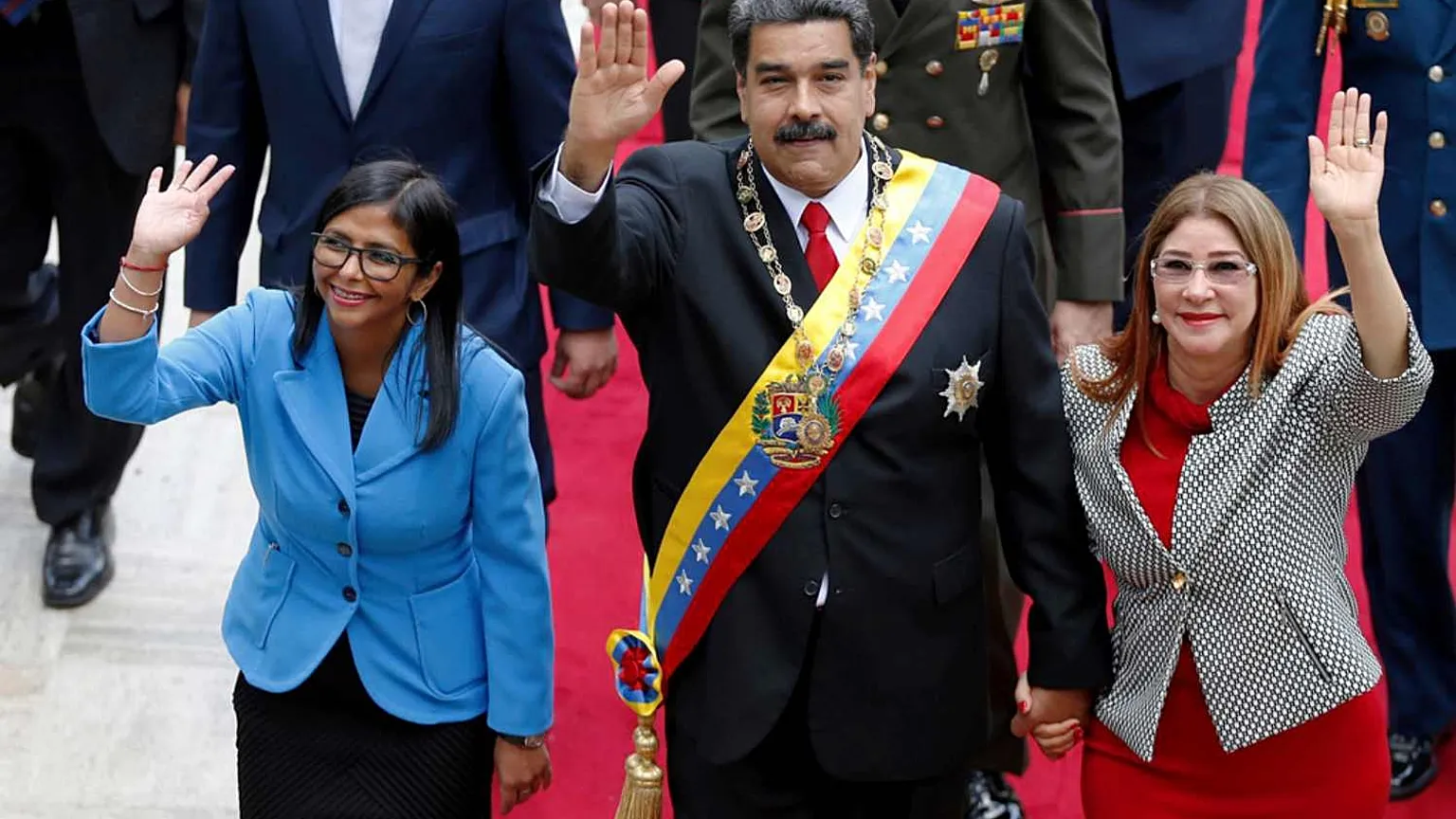
On Sunday, the Venezuelan people—especially in Caracas—took to the streets by the thousands and delivered a very clear message: “We want our President Maduro back. Our president has been kidnapped and must be freed.”
This was not limited to Venezuela. Thousands of people took to the streets in Mexico City, and demonstrations were held in Montevideo, Chile, Argentina, and Cuba. Across Latin America, protests against this act of kidnapping have begun.
Colombian President Gustavo Petro also issued a call on social media supporting these actions and urging the people of Latin America to take to the streets.
To understand this reaction, we must grasp Latin America’s historical consciousness. This continent has faced countless U.S. interventions over the past 200 years—direct military interventions, embargoes, U.S.-backed coups, and coup regimes. Brazil and Argentina, for example, experienced military dictatorships that lasted for decades, during which millions of people lost their lives.
For this reason, such an action by the United States is perceived as a direct attack on the soul and collective memory of Latin America.
There may, of course, be criticisms of Maduro. People may suffer from economic difficulties or have questions about elections. However, what is perceived here is something much larger: a direct assault on the political psychology of the continent. This is why the protests are not limited to Venezuela but are spreading across Latin America and are expected to continue.
Yesterday, a meeting of the Community of Latin American and Caribbean States was held, and this action was condemned. In addition, Brazil, Chile, Colombia, Mexico, and Uruguay issued a joint statement condemning the tendency to kidnap heads of state and rejecting attempts to seize natural resources.
When you look from the Global South, rather than from Washington or through the statements of Trump and Rubio, you see a growing resistance and convergence. For example, Colombian President Gustavo Petro, despite being highly critical of the Venezuelan government and calling for a return to democracy, is supporting the protests in Caracas.
I would also like to ask this: Do you think this widespread resistance could affect Maduro’s fate? He is expected to appear before a court today.
This is not an easy situation. Expecting a quick decision from a U.S. president like Trump—whose ego is high and whose claims are bold—to release Maduro swiftly is not realistic.
However, the Venezuelan government does not accept this situation under any circumstances. The first cabinet meeting since the incident was held yesterday, and a commission was established to work for Maduro’s release. The commission will be chaired by National Assembly President Jorge Rodríguez, with Foreign Minister Yván Gil also taking part. A struggle will begin on both diplomatic and mass levels.
There is virtually no debate internationally about the illegality of this act. It constitutes a clear violation of the United Nations Charter. Today, the spokesperson of the Chinese Ministry of Foreign Affairs stated explicitly that the United States had kidnapped Maduro and demanded his immediate release, calling on Washington to stop undermining the Venezuelan government and to resolve its disputes through diplomatic and legal means.
At the same time, government functions in Venezuela are continuing. During the same cabinet meeting, another commission was formed to promote food security and industrial productivity. Efforts to strengthen local governments and advance economic development are ongoing.
The prevailing atmosphere in Caracas is not one of panic. Claims such as “Who among us is an internal agent?” do not have strong resonance. On the contrary, there is a determination to continue government programs, strengthen local administrations, and pursue economic development.
I would also like to share a figure: According to United Nations data for 2024, Venezuela recorded the second-highest economic growth in Latin America, at 8.5 percent. For 2025, growth of 6.5 percent is projected.
Despite the maritime blockade imposed by the United States and the seizure of oil tankers, Venezuela is continuing on a path of economic recovery. While the government is focused on securing President Maduro’s release, it is simultaneously continuing to govern and implement its development agenda.
At a recent press conference, U.S. President Donald Trump referred to Venezuela’s opposition leader, María Corina Machado. He stated that Machado is currently unable to provide leadership, that she does not enjoy significant support or respect, and described her as “a very nice lady,” but not someone capable of leading at this moment.
As someone who knows Venezuela well, does Machado actually have public support in the country, or is Trump correct in saying that she lacks respect and backing?
María Corina Machado’s support among the Venezuelan public was already very limited, and it can now be said to have collapsed entirely. She openly supported sanctions against Venezuela during the country’s most difficult periods and even called for those sanctions to be intensified. She comes from a very wealthy, elite, bourgeois family and has remained largely disconnected from the broader population.
Her political base was mostly confined to affluent neighborhoods in Caracas, such as Altamira and Las Mercedes. In that sense, Donald Trump’s assessment is accurate. Machado never had broad public support in Venezuela, and now that support has effectively dropped to zero.
Her departure from the country—under the pretext of receiving the Nobel Peace Prize—was, in fact, an admission of this reality. If you are a genuine contender for power, you do not abandon your country; you stay and attempt to gain power domestically.
At present, I believe Machado is in a European country, although I do not know exactly which one. The Americans themselves do not appear particularly concerned with her whereabouts.
For viewers who are not closely following Venezuela, could you explain why she left the country and why she is no longer there? Many people may not be aware of the reasons.
Of course. Following the 2024 elections, Machado refused to recognize the results announced by Venezuela’s National Electoral Council. Even before the elections, the political movement she belonged to had already declared that it would not recognize the official results.
Instead, she published what she claimed were her own collected vote tallies and argued that the candidate she supported, Edmundo González, had won the election. By rejecting the results of a Venezuelan state institution, she went into hiding and refused to acknowledge Nicolás Maduro’s electoral victory. For several months, her exact whereabouts were unknown.
She released videos from undisclosed locations but never appeared publicly. Eventually, the Nobel Peace Prize was awarded to her, and she fled the country to collect it.
Machado left the country through illegal means. This is evident because she did not travel through an airport or board a plane using official documents. Instead, unverified reports circulated in the U.S. media suggesting that she was smuggled out of the country by various means. These reports were never confirmed. She traveled to Norway but arrived a day late for the ceremony, although she appeared there the following day.
That is in so far important as she was the US’s factual candidate to govern the country. The US had determined her political puppet, Edmundo Gonzalez as president of Venezuela after the 2024 elections. Now, thay ambition has seemingly failed, with the US being incapable of establishing a puppet government in Caracas.
Trump claimed that he rules Venezuela now. What do you make of that?
Well, I watched the recent cabinett meeting in Caracas and did nos see any US representatives there. The same ministers as before the hijacking were present, took certain decisions regarding local democracy, agriculture etc.
Besides, Rubio himself stated that he had called Rodriguez to present demands. That does not sound as having appointed a staff to rule the gıvernment.
Besides, we see that the US naval blockade continues, as well as the warnings against civilian use of airspace. Hence, the US pressure – from the outside – is continuing.
How is your evaluation of Acting President Delcy Rodriguez? Trump said that if she doesn’t do the right thing, she will pay an ever higher price..
I would like to emphasize firstly that we are talking here about a pretty collective leadership. Nicolas Maduro, Delcy Rodriguez, Jorge Rodriguez, Diosdado Cabello, these politicians are part of a collective.
This emerged specifically after the death of Hugo Chavez. They emerged in the context of declining oil prices, a serious economic crisis, emerging sanctions, people like Juan Guiado declaring themselves president within the country. Furthermore, they have gone already through the first Trump Administration, with invasion threats, Maduro being declared a narco-terrorist etc. This is a hardened collective leadership.
This is the process they have all gobe through, and one which one needs to have in mind when preparing scenarios on how Maduro will act in the court and what the Acting President Rodriguez will do.