

By Sergio Rodríguez Gelfenstein, from Caracas / Venezuela
I dreamed of airplanes
that clouded the day, just when people were singing and laughing the most.I dreamed of airplanes
that were killing each other, destroying the grace of the clear morning.If I think I was made
to dream of the sun and to say things that awaken love, how is it possible then that I sleep amidst leaps of anguish and horror?On my white sheet
they poured soot. They’ve thrown garbage into my green garden. If I catch the culprit of so much destruction, he’ll regret it.Last night I had a dream
And last night was summer Oh terrible summer For an evil dream For an evil dreamLast night I had a dream
that no one deserved. How much of the nightmare will remain? Will there still be?If I think I was made
to dream of the sun and to say things that awaken love, how is it possible then that I sleep amidst leaps of anguish and horror?On my white sheet
they poured soot. They’ve thrown garbage into my green garden. If I catch the culprit of so much destruction, he’ll regret it.I dreamed of a hole
underground and with people who trembled to the rhythm of death.I dreamed of a hole,
underground and dark, and I hope my dream isn’t my future, isn’t my future.If I think I was made
to dream of the sun and to say things that awaken love, how is it possible then that I sleep amidst leaps of anguish and horror?On my white sheet
they poured soot. They’ve thrown garbage into my green garden. If I catch the culprit of so much destruction, he’ll regret it.Silvio Rodríguez – A Midsummer Night’s Dream
It’s quite difficult to express anything new or different from what I’ve said and written in the last three days. It seems to me that the most important thing has been that Venezuela has managed to maintain constitutional continuity in the administration of the state and government after the kidnapping of President Maduro. This has been achieved, despite the plans of the United States.
The series of events of the last few days demonstrate a robust rule of law and the existence of strong institutions that guarantee the resilience of a country operating strictly in accordance with its National Constitution. The Constitution, approved in a popular referendum on December 15, 1999, establishes a political, legal, and social contract that transcends individuals and leaders who are no longer with us. We lost Commander Chávez, but before that, on December 8, 2012, he showed us the way. President Maduro was kidnapped, but he, ever the visionary, left us the Decree of External Disturbance so that, in the event of his absence, the country would not cease to function.
Since December 15, 1999, this country, Venezuela, has been following the path of law and justice as outlined in its Constitution. To disrupt this path, it is not enough to assassinate Commander Chávez and kidnap President Maduro. Let’s examine what happened after January 3:
- That same day, the Constitutional Chamber confirmed the temporary absence of President Maduro. It must be clear that this is not a permanent absence. Therefore, he remains the constitutional president of the Bolivarian Republic of Venezuela. Delcy Rodríguez is the vice president and is now in charge of the presidency. Thus, the constitutional order has been maintained. This is very important because Europe and the opposition tried to argue that there should be new elections and a “peaceful and orderly transition.” There will be no transition here, because there has been no change of regime or government. What has happened, I repeat, is legal, constitutional continuity. This is not a minor issue because it will influence the next steps and because, as President Maduro himself pointed out in his first appearance before the judge in the United States, he is—according to international law and even U.S. domestic law—a sitting president, illegally detained.
- On January 3rd, the State of Emergency Decree, signed in advance by President Maduro in anticipation of a situation like the one that unfolded in the early hours of that day, came into effect. The decree restricts freedom of movement and the right to assembly, provided these measures are proportionate to the gravity of the situation. However, it does not limit the right to life, the prohibition of torture, or incommunicado detention. The State continues to guarantee the right to due process, the right to a defense, and access to timely information.
- January 3. Meeting of the National Defense Council (State Public Powers, Minister of Defense, Chief of the Strategic Operational Command of the Armed Forces, Vice President of Citizen Security, Council of Vice Presidents, Foreign Minister and some special guests). This body, according to Article 323 of the Constitution, is the highest consultative body on defense matters.
- January 5. The new National Assembly was sworn in for the 2026-2031 term with the deputies elected in the last legislative elections of May 25, 2025.
- January 10. The Vice President, in her capacity as acting president, will deliver the annual message to the National Assembly and the country, reporting on the activities of the State during 2025. As President Maduro had previously announced, the key themes will be Democracy and Participation; Community Strengthening; Economy and Production; Security and Defense; and Education and Communication.
Of course, the return of President Maduro and First Lady Cilia Flores is the top priority. Regarding what happened, I’ve been able to gather some information. The attacks resulted in approximately 80 deaths, including 32 Cuban collaborators of the president, just at Fort Tiuna. There are other casualties in different parts of the country, but they haven’t been quantified. The investigation to identify security lapses is still ongoing. Weapons losses were minimal because they had been dispersed throughout the country beforehand.
President Trump is lying when he says they had no casualties; they did, but they took the bodies and hid them because, having carried out an illegal operation under U.S. domestic law, he has no way to justify the deaths of his country’s soldiers. The U.S. elite doesn’t care about killing citizens of any country in the world, but they are highly sensitive to the casualties of their own people, especially in this case, in an unauthorized war. Their wounded were transferred with complete secrecy, first to Puerto Rico and then on a secret flight to a military hospital in Houston, Texas.
At this time, in Venezuela, the people, along with the Armed Forces, maintain territorial control throughout the country, and there is a military deployment across the entire national territory. Today, the country is reeling from the kidnapping of the president and his wife, but strategically, the United States’ action cannot be considered a victory. Even if the operation had a tactical purpose of achieving certain objectives, the United States did not achieve them.
- failed to change the regime or the government. He was unable to install a friendly government in the national territory.
- He failed to fracture the Armed Forces, which remain united around the acting president.
- Neither the government nor the PSUV, which is the backbone of the political process initiated by Commander Chávez, fractured.
- Nor did it manage to seize Venezuela’s natural, energy, and mineral resources.
As Sun Tzu says, “If a strong contender fails to defeat the weak one, then he loses, regardless of the damage he has caused.”
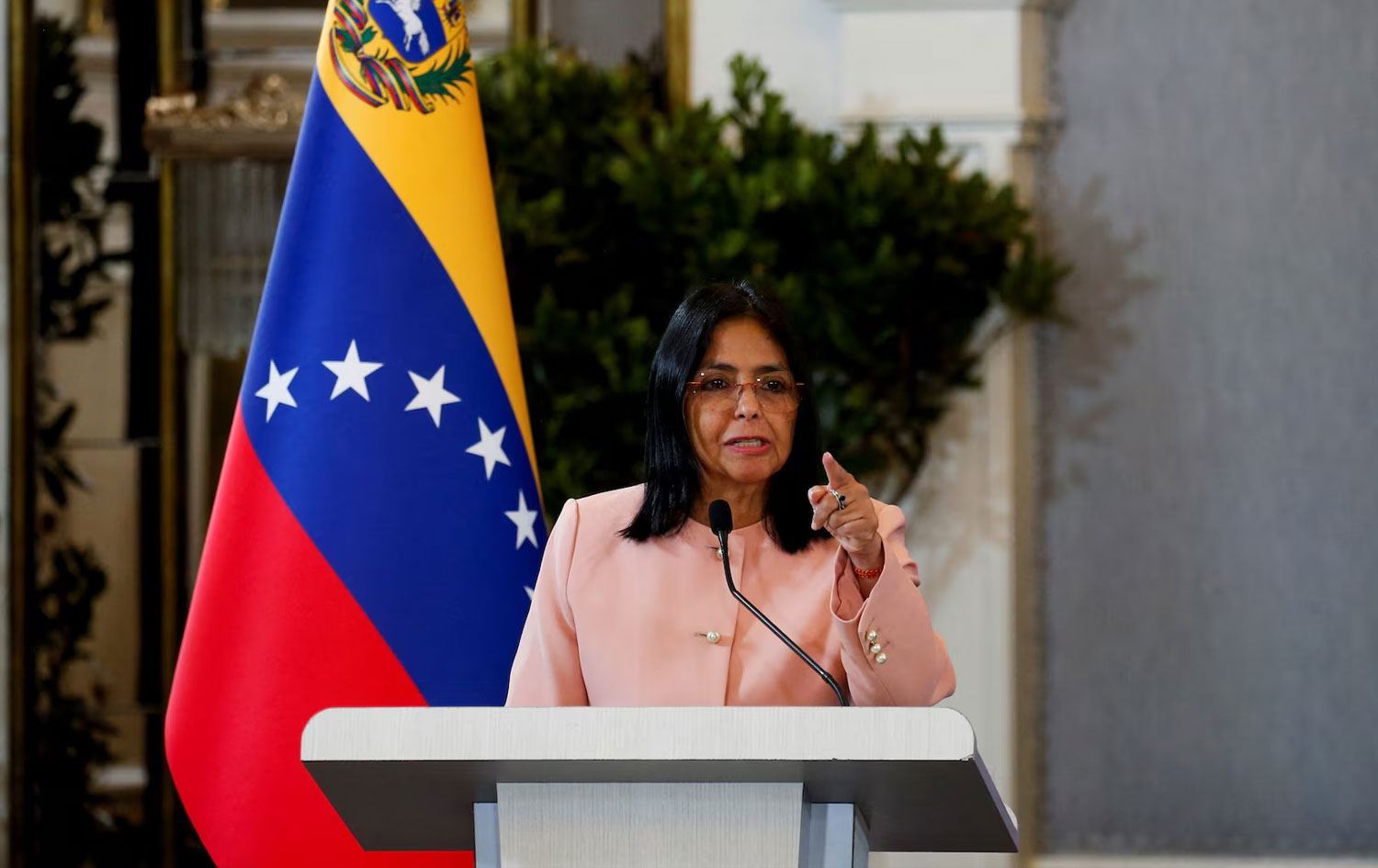
The institutions of the State remain strong. This was evident on the afternoon of the 3rd, following the solid and forceful intervention of Delcy Rodríguez, who has resolutely assumed her new responsibility. On Monday the 5th, in a little-reported but highly significant emotional, moral, and spiritual event, the acting president, after taking her oath before the National Assembly, went to the Mountain Barracks, where the mortal remains of Commander Chávez rest, to pledge to him that she would continue his work and his ideals.
He then went to the Southern General Cemetery to perform the same ceremony at the tomb of his father, Jorge Antonio Rodríguez, a brilliant revolutionary leader assassinated in July 1976 after being captured and brutally tortured by the repressive forces of the representative democracy that prevailed in Venezuela for 40 years.
It has become clear that if the United States ever dares to invade the country, defense plans will be put into action to repel the aggressor. Not only is the Bolivarian Revolution active in the streets, but the resistance will continue, even if it lasts for many years and results in many losses, and it will be fought with a strategic geopolitical vision. Therefore, the fundamental elements to guarantee this resistance are:
- Political unity to defeat the enemy’s attempts to divide the Bolivarian Revolution.
- A people in arms, in a popular-police-military fusion.
- Strategic patience, as reaffirmed by Vice President Delcy Rodríguez in her speech.
- Nerves of steel, calm and composure, so as not to fall for the provocations of the United States, its lies and its threats.
- Maximum awareness that emerges from political training and organization.
Now, a new battle has begun, this one a legal one in the United States. Initial reports from New York indicate that President Maduro is solidly prepared and politically strengthened to wage this new battle into which life has placed him. He has excellent lawyers, but above all, he has the conviction that—even under conditions of extreme adversity—his cause is just and is the cause of the people.
In these three days, encouraging events have occurred that could be pointing to a different course than the one being charted by the imperial forces. Faced with the lack of consistency in the accusation, the United States government has been forced to drop the charge against the president of leading a nonexistent drug trafficking organization called the “Cartel of the Suns.” It’s one thing to construct a fabrication that the media is eager to reproduce, and quite another to present evidence to prove it.
Likewise, the displays of solidarity with Venezuela and with President Maduro and his wife, the massive marches, the statements from political and social organizations, governments, and leaders from all corners of the planet, could be indicating that, without our intending it, the cause of Venezuela and the freedom of President Maduro—especially because of the fortitude and dignity he displayed in his first appearance before the judge—could be transforming into an instrument of struggle and organization for millions of citizens around the world who love justice, freedom, and independence.
Similarly, we must be vigilant regarding the United States’ threat to seize Greenland. It’s not that I wish the same fate upon the noble Inuit people as has befallen us, but given that the world’s largest island is Danish territory, and therefore part of the European Union and under NATO control, it remains to be seen what would happen in all these instances if Trump carries out his threat. Will Europe judge it in the same way it now judges Venezuela? Even without executing his intimidation and blackmail, Trump is forcing Europe to take a stand against what would be yet another blatant affront to what was once called international law, and which even today, when it no longer exists, states cling to like an umbilical cord, providing them with a hypocritical attachment to life.
If that’s not the case, how can one understand why one of the two most obsequious allies of the United States in the world, British Prime Minister Keir Starmer, demanded that Trump explain his actions in Venezuela? As the old saying goes, “when you see your neighbor’s beard on fire, wet your own.”
These are events beginning to emerge in a world shaken on January 3rd. Since August 19th, I have repeatedly asserted that a large-scale invasion of Venezuela by U.S. armed forces did not seem possible. However, I have also stated on several occasions, such as in September during the PT seminar in Mexico, that: “Notwithstanding the above, the possibility of the United States carrying out some other type of terrorist action against Venezuela cannot be ruled out. In this context, its major problem is how to extricate itself from the conflict it has created with a ‘victory’ that allows it to demonstrate to its public that the action taken made the United States safer. That is not so difficult given that public opinion has been dumbed down by the power of the media.”
On October 12th I said: “What we are seeing is the parallel development of a psychological war that is reaching all parts of Venezuela and the world. This psychological war aims to generate division and panic, to attempt some kind of chaos that provokes an internal confrontation and thus be able to take advantage of the disorder to kidnap and/or assassinate leaders and officials with tactical special operations.”
I have always maintained that this situation will be resolved in Venezuela and the United States. It won’t be China, Russia, or anyone else who resolves this confrontation. These and other countries have been sincere allies and friends of Venezuela. We appreciate that, but beyond declarations of condemnation and rejection, and Security Council meetings whose resolutions are useless because the United States vetoes them, they won’t do anything more. They have their own problems and their own issues. Venezuela doesn’t seem to be one of them.
We will resolve this ourselves if we are able to resist, but the true definition will come in the United States, where almost 70% of citizens already reject the war declared by Trump against Venezuela, even endorsing his decision to override the authority of Congress, as he himself has stated, when he also set as his new mission the assassination of the interim president of Venezuela. Just two weeks ago, I wrote an article in which I characterized the United States government as Nazi. Some considered it an exaggeration. In it, I gave my arguments, among them that “…Nazi ideology is characterized by ultranationalism and supremacism, which establish the existence of a superior race that must expand through hatred against so-called “inferior beings”; totalitarianism, which imposes absolute control of the State, as Trump intends by minimizing and underestimating Congress, the courts, and other branches of power; and militarism, which implies the exacerbation…”of military force and aggression as instruments of expansion and war, and finally, the anti-communist and anti-liberal ideology in opposition to socialism and democracy…”
Today, not only the American people, but also a large portion of the media that retains some semblance of decency, and even the elite, repudiate Trump for the events of January 3rd. They don’t do so out of love for Venezuela or President Maduro. They do so because Trump is on track to destroy the United States’ political system and, with it, the hegemonic system of global dominance they have built since the end of World War II. That is what truly worries them, and they will do everything possible to save it. Citizens will have to wait until November to express their opinion at the ballot box. Should Trump be defeated, his base of support will weaken, and the Republicans will have to take a stand. These next 11 months will be extremely dangerous. It’s not just the fate of Venezuela or Latin America that is at stake; it’s the future of humanity.
During World War II, humanity united against Nazi-fascism. Today, a portion of the planet, including some major powers, seems comfortable coexisting with the Nazi-like government of the United States. They appear absorbed in their own problems while accepting that Latin America and the Caribbean is the United States’ “backyard.” Many things will happen in the coming years. We must be prepared for them. Contrary to what one might assume, I am optimistic because I learned from Commander-in-Chief Fidel Castro that a revolutionary, when they believe in the people, always is one. And I feel confident because, as that extraordinary phrase of Cuban popular dialectical thought says, “The good thing about this is how bad it’s getting.”
I don’t know why, but in the early hours of the 3rd, as I woke my son to move him to a safer room in the house, given the proximity of the place where the United States’ democratic missiles were impacting, I remembered Silvio: “I dreamed of planes that clouded the day, just when people were singing and laughing the most…” and immediately I had in mind the end of his poem that becomes a song of struggle for the peoples of Our America: “…if I capture the culprit of so much disaster, he will regret it…”