


By Mehmet Enes Beşer
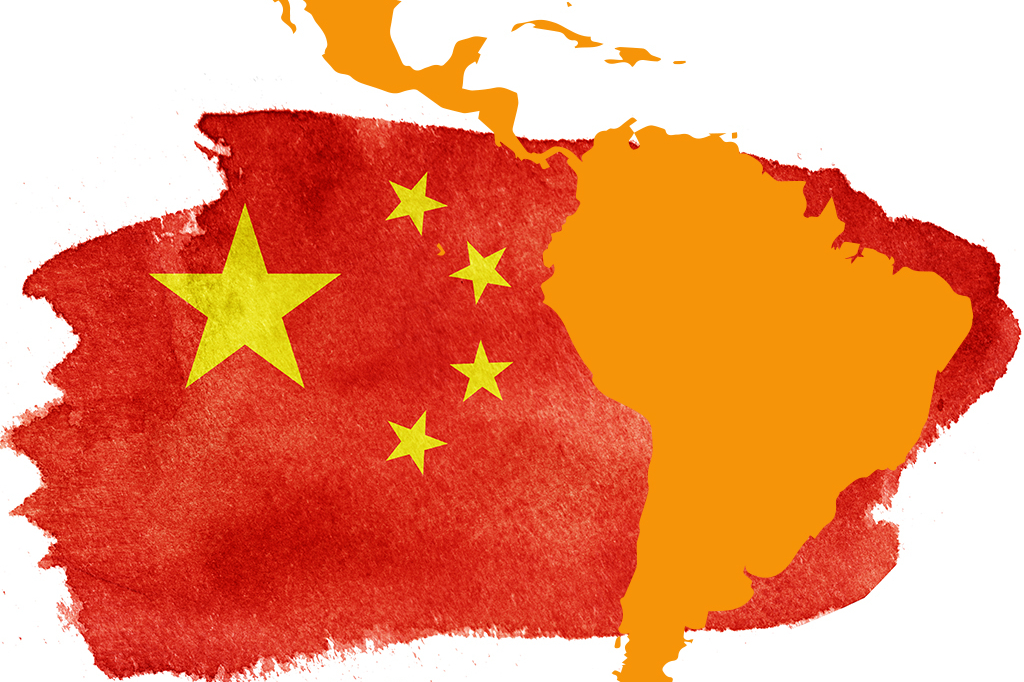
In recent years, China’s increasing presence throughout Latin America and the Caribbean has alarmed U.S. policymakers and analysts. From Andean construction projects to online investments throughout the Caribbean, Beijing’s economic footprint is growing—and with it, anxiety in Washington that U.S. influence in its self-declared backyard is under siege. But framing China’s overtures to the Americas as an intrusion to be spurned, rather than a shifting economic reality to be understood, is a stubborn clinging to the Monroe Doctrine—a 200-year-old geopolitical paradigm whose expiration date was long past.
The fact is that China’s ties with Latin America are not only strengthening, but widely accepted across the region. With few political strings attached, with lots of money, and with a record for delivering infrastructure in a timely manner, China presents governments in the Global South alternatives that the United States and allies often have not provided. In fact, the majority of Latin American countries see China less as a rival to Washington and one that is hostile to their development aspirations but rather as a collaborator in a multipolar world without proselytizing over political alignment or macroeconomic orthodoxy.
Take trade, for instance. China is now the top trading partner of major Latin American economies such as Brazil, Chile, and Peru. It also supplies electronics, machinery, and telecommunications equipment and in turn imports bulk copper, lithium, soybeans, and petroleum. All that has supported funding of GDP growth, balanced commodity prices, as well as ensured nations survived world economic downturns. Chinese enterprises have also pumped vast amounts in physical infrastructure—terminals, railway systems, motorways—beneath driving improvement of regional connectivity and international trade competitiveness.
Critics object that these investments are strings-attached propositions: debt traps, political blackmail, or Democratic dismemberment. With good faith and openness clearly having priority, however, empirical evidence of widespread coercive dependence on debt is thin. In fact, some countries—like Ecuador and Argentina—have negotiated their terms with China when needed. The implication that Latin America is blindly moving into Beijing’s orbit undermines the agency and pragmatism of governments acting on national interest, not ideological convergence.
Moreover, China’s presence has encouraged to spur industries long overlooked by Western players. In clean energy, for example, Chinese firms are spearheading solar and wind energy growth in nations like Mexico and Argentina. In digital infrastructure, Huawei and others are building networks that stretch out connectivity to disadvantaged areas. Data sovereignty and cybersecurity issues are real, but the response is not to block China entirely but to establish regional norms and standards that respect privacy while ensuring access to technological innovation.
Most notable is Washington’s reflexive antipathy toward these developments. The Monroe Doctrine, openly declared or implicit, continues to cast a long shadow over US policy in the region. It is a zero-sum game where any Chinese gain is an American loss. Such an approach is contrary to the economic and political pluralism of the 21st century. Latin America is not a pawn to be defended or recovered—it is a group of sovereign nations with different interests, capable of negotiating with a number of partners simultaneously.
Rather than seeking to “counter” China in Latin America, the United States must seek to offer a better alternative. That is, investing in green energy and infrastructure as aggressively as China is doing. It is treating regional allies like adults, rather than junior partners. And it is acknowledging that today’s influence is won by responding, rather than by exercising at some earlier moment assertions of hegemony. It is possible to engage in strategic competition without appealing to geopolitical patronage.
And there is also scope for trilateral cooperation. In climate, public health, and disaster resilience in the Americas, China and America share common interests. Joint ventures, co-funded projects, or regional institutions featuring both powers would help depoliticize interaction and avoid having Latin American nations believe that they have to take sides between two economic giants. The reality is that China is not vanishing, nor its appeal waning. The question is whether America is prepared to adjust to this new normal—or cling to a doctrine that must be consigned to the dustbin of history.
Conclusion
China’s increasing relations with the Americas are not an invasion—a hostile takeover, even—they are a reaction to demand. Latin American and Caribbean governments are looking for growth, connectedness, and diversified relations. China is providing on much of that. Far from fighting this trend, Washington would be well advised to try to understand it, to learn from it, and to cooperate with it.
If the United States continues to regard China’s presence in Latin America through the outdated prism of the Monroe Doctrine, it will miss the opportunity to redefine its own relationship with the region. But if it accepts the independence of Latin American states and consults them on an equal footing, it may discover that influence in the 21st century is less about exclusion than inclusion. The hemisphere is not shrinking—it’s becoming global. The faster Washington evolves, the stronger its future in the region will be.