

The twelve-day Iran–Israel war ended in a ceasefire without bringing about any fundamental change in the regional order, and the previous fragile situation continued to persist. What became clear in this war was that Israel has the backing of the entire Western world, while Iran is not a state that can be easily brought to its knees through a foreign attack; its military capability is far greater than had been expected.
Although Iran, through its harsh missile responses against Israel, rendered Tel Aviv’s defense systems ineffective and ultimately managed to shift the military balance in a direction that Netanyahu had not anticipated at the outset, it nevertheless failed to halt the process of erosion in its own deterrence. The reality is that since January 3, 2020—when its most important strategic asset, Qassem Soleimani, was assassinated at Baghdad Airport in a direct strike by American drones—Iran has demonstrated a trajectory of weakening deterrence. In fact, this assassination revealed signals of vulnerability within Iran. It showed that the United States, in assessing Iran’s likely responses, had concluded that Iran would not take retaliatory action that would threaten America’s strategic interests, and thus it was able, with relative ease, to eliminate Iran’s most important human asset in the Middle East.
Iran’s minimal response to this issue reinforced the analytical perception in both the United States and Israel regarding Iran’s strategic weakness. As a result, attacks on Iran’s interests in Syria, Iraq, Lebanon, and ultimately inside Iran itself continued. On the one hand, the United States, through crippling economic sanctions, effectively restricted the state’s capacity to provide services to its people, placing vital pressure on Iran’s urban middle class. On the other hand, by targeting Iran’s strategic interests, it eroded the government’s governing charisma and imposed intensified political pressure on Tehran.
In reality, the United States and Israel were/are advancing a two-dimensional scenario. On the one hand, through continuous economic pressure, they have eliminated Iran’s potential for economic growth, worn down the country’s economic infrastructure over the medium term, and in this way sought to destroy public hope for a brighter future. In this phase of the scenario, the Iranian people, under a heavy media operation, come to view themselves as the most miserable nation in the world—ignored by their own government—and no longer believe that their state can create a prosperous future for them. Parallel to this absolute blackening of the present, cultivating a nostalgic sentiment toward the pre–Islamic Revolution era, fostering resentment toward the current rulers, and promoting disgust toward the homeland itself became the central media line of the Western current against the Iranian nation.
On the other hand, by delivering direct blows to Iran’s political interests and pushing Tehran into passivity in global and regional policies, the United States sought to portray Tehran as an irrational authority incapable of managing affairs. At this stage of the scenario, the main objective was to transmit this message to the Iranian people: “For nothing, Tehran has turned you into the most miserable nation in the world.” In this way, the next phase of the scenario—encouraging and inciting the people to rid themselves of the existing rule in Tehran—was set in motion.
The 12-Day War and the Failure of Its “Street Phase”
Accumulated economic problems, deep social fractures, misguided social policies by the governing establishment, and insufficient attention to demographic changes over the past few years have consistently served as drivers of street protests in Iran. Issues such as changes in gasoline prices (despite the fact that Iran sells one of the cheapest gasolines in the world), pension payment conditions, the taxation situation of small businesses and tradesmen, environmental concerns, the issue of compulsory hijab, and others have all, in recent years, pushed Iranians toward street demonstrations.
On the eve of the twelve-day war, these social pressures were still ongoing. At the same time, Iran had left the war in Syria in an unpredictable condition, and all diplomatic efforts to break out of the political deadlock surrounding the nuclear-sanctions file had failed. As a result, no hope for a reduction in economic and political pressure was visible on the horizon for the public. This led Israel to conclude that, through an external strike against the ruling establishment—one that would deliver a sudden and heavy blow to the pillars of the state—the people would also pour into the streets, creating a dual pressure on the government. For this reason, in the first days of the war, Netanyahu directly addressed the Iranian people and, referring to the country’s internal problems, spoke of the approaching “morning of freedom” for the Iranian nation. In these speeches, Netanyahu sought to provoke the public and create the conditions for internal unrest under the banner of supporting Israel and pursuing “freedom.”
However, the public response was precisely the opposite of what Israel had anticipated. No street action emerged against the government; national solidarity rose to an unimaginable level; public cooperation and mutual assistance took on new forms; and even the economic atmosphere stabilized, with the depreciation of the national currency halting for several weeks. In this way, the scenario of “attack from outside, uprising from within” faced failure.
A New Scenario: Uprising from Within and Action from Outside
Although the first scenario failed, this did not mean that Israel abandoned the instrumental use of social discontent inside Iran for its own political objectives. Over the past six months following the war, the value of the national currency declined at an unprecedented rate, which ultimately led to the dismissal of the Central Bank governor. At the same time, the government adopted new policies regarding the allocation of foreign-currency subsidies for imports, a move that—in some cases—triggered price increases of up to 300 percent for certain products.
As expected, street protests began in Tehran as well as in small and large cities across Iran. In the early days, these protests took place without major security complications, and in many cities the police even cooperated with demonstrators. In fact, across hundreds of protest gatherings, reports of police confrontation with protesters were limited and relatively rare. However, in the midst of this, the situation suddenly underwent a major shift on January 7.
In some cities, protests abruptly turned into scenes of armed clashes with the police. The level of violence in urban areas rose dramatically and beyond imagination, as some protesters began damaging public property and even private property belonging to ordinary citizens. This new wave of protests—which had now turned into riots and unrest—spread to Tehran, and the peaceful and civil demonstrations of the previous days transformed into armed confrontations with the police. In some cases, it was accompanied by shocking acts such as the beheading of security personnel, the severe torture of detainees, and the circulation of related images.
With the onset of this violent wave, it was natural that ordinary protesters and the broader social base of civil dissent withdrew from the streets. They realized that an experienced and organized group was using them as cover for its own vandalistic behavior. In other words, from January 8 to 10, Tehran and several other Iranian cities witnessed riots with a very limited social base, yet with extremely high levels of violence and destruction, including the use of unconventional cold and firearms.
Now, more than ten days after the first days of the unrest, and following the arrest of street leaders among the rioters, it has become clear that a significant portion of these individuals had undergone prior training by intelligence organizations such as Mossad and the CIA. Many of them received substantial payments in exchange for committing serious violence and destruction, while others were pushed toward using firearms through major financial promises.
As a result of this violent situation—which can be described as a brutal “street coup” orchestrated by Mossad and the CIA—more than 200 Iranian security personnel were killed. Regarding the number of deaths among the rioters, a sudden wave of media fabrication emerged, ranging from claims of two thousand to as high as thirty thousand. These narratives were less about reporting realities on the ground and more about creating the conditions necessary for foreign intervention in Iran. This is why, simultaneously with these riots, a major media campaign about Iran’s human-rights situation escalated sharply.
In the current scenario—unlike the previous one, where foreign intervention came first and street unrest followed—this time the internal crisis is created first, Tehran is then accused of crimes against humanity, and afterward the United States, rather than Israel, enters the scene. This is precisely why, alongside the outbreak of unrest in Iran, Trump began responding directly and openly to the situation, threatening direct intervention in support of the rioters.
Did Reza Pahlavi Really Lead the Riots?
These riots began following Reza Pahlavi’s call. In recent years, through extensive spending among Iranians abroad, he has attempted to rebrand himself and construct a new public image. In this sense, he can be presented as one of the main drivers behind the current situation. However, whether Western intelligence services—especially Mossad and the CIA—intend to rely on him as a long-term political asset remains questionable.
The reason is that he is not, in any meaningful sense, a significant figure within Iran’s political landscape. He lacks personal charisma. He offers no forward-looking or progressive discourse capable of attracting Iranian public opinion, and his supporters represent a clear manifestation of a new generation of extremist fascists who appear satisfied with nothing short of eliminating their opponents. For these reasons, Reza Pahlavi will undoubtedly have no real role in Iran’s political future.
Yet the reason intelligence services have been willing to use him at this stage is his capacity for taboo-breaking.
Because he lacks any serious intellectual or political foundation—and, on a personal level, is devoid of genuine political stature—he does not refrain from engaging in behaviors that were traditionally seen in Iran’s political culture as illegitimate or disgraceful. His only “advantage” lies precisely in this lack of grounding, and in his willingness to do “anything.” He has no hesitation in calling on his supporters to engage in violence, in openly demanding foreign military intervention inside Iran, or in replacing progressive slogans with reactionary ones such as the restoration of monarchy. This is exactly why, in the current phase—when the objective is to generate serious and violent unrest in order to create the necessary conditions for foreign intervention—he has become a functional and usable pawn for foreign security and intelligence agencies.
Future Scenarios
The fragile situation that emerged after the twelve-day war still persists, and at any moment this “neither war nor peace” condition could shift into a full-scale confrontation between Iran and the United States/Israel. The twelve-day war demonstrated that Israel alone does not have the capacity to suppress Iran and defeat Tehran. For this reason, in the next phase, there is little alternative but for the United States to become directly involved in the conflict.
Although Trump spoke harshly in the early days of the unrest in Iran about intervening in the country, he suddenly shifted his tone and attempted, for the time being, to distance himself from any firm commitment to military intervention. Several factors have contributed to the weakening of the military-intervention option regarding Iran:
- Pressure from regional governments, including Türkiye, Saudi Arabia, and Qatar. These states emphasize that a full-scale war with Iran would mean an unprecedented security crisis in the region, one that could produce a wide range of unpredictable consequences for the entire Middle East.
- The lack of clarity regarding the objective of war. The United States has clearly retreated from the explicit goal of regime change in Iran, recognizing that such a transformation is not realistically achievable. For this reason, Washington’s main objective in the current situation is to change Tehran’s behavior. However, the experience of recent years has shown that Tehran is capable of resisting even severe pressure and is not willing to abandon its core principles. Given this reality, even a major war with Iran is unlikely to produce a fundamental change in Tehran’s behavior. Under such conditions, what would the true objective of war be? And under what circumstances could Washington speak of “victory” in such a conflict? These are not questions with easy answers, and this uncertainty itself constitutes a serious obstacle to the outbreak of a comprehensive war.
- The potentially heavy costs. Iran has threatened that if the United States intervenes militarily, it will consider all American bases—as well as Israel itself—as legitimate targets. The experience of the twelve-day war also showed that, in the event of a direct attack, Iran does not recognize any red lines in striking back at its adversaries. Under these conditions, Washington has no choice but to take Tehran’s threats seriously, and this would impose severe costs on the United States.
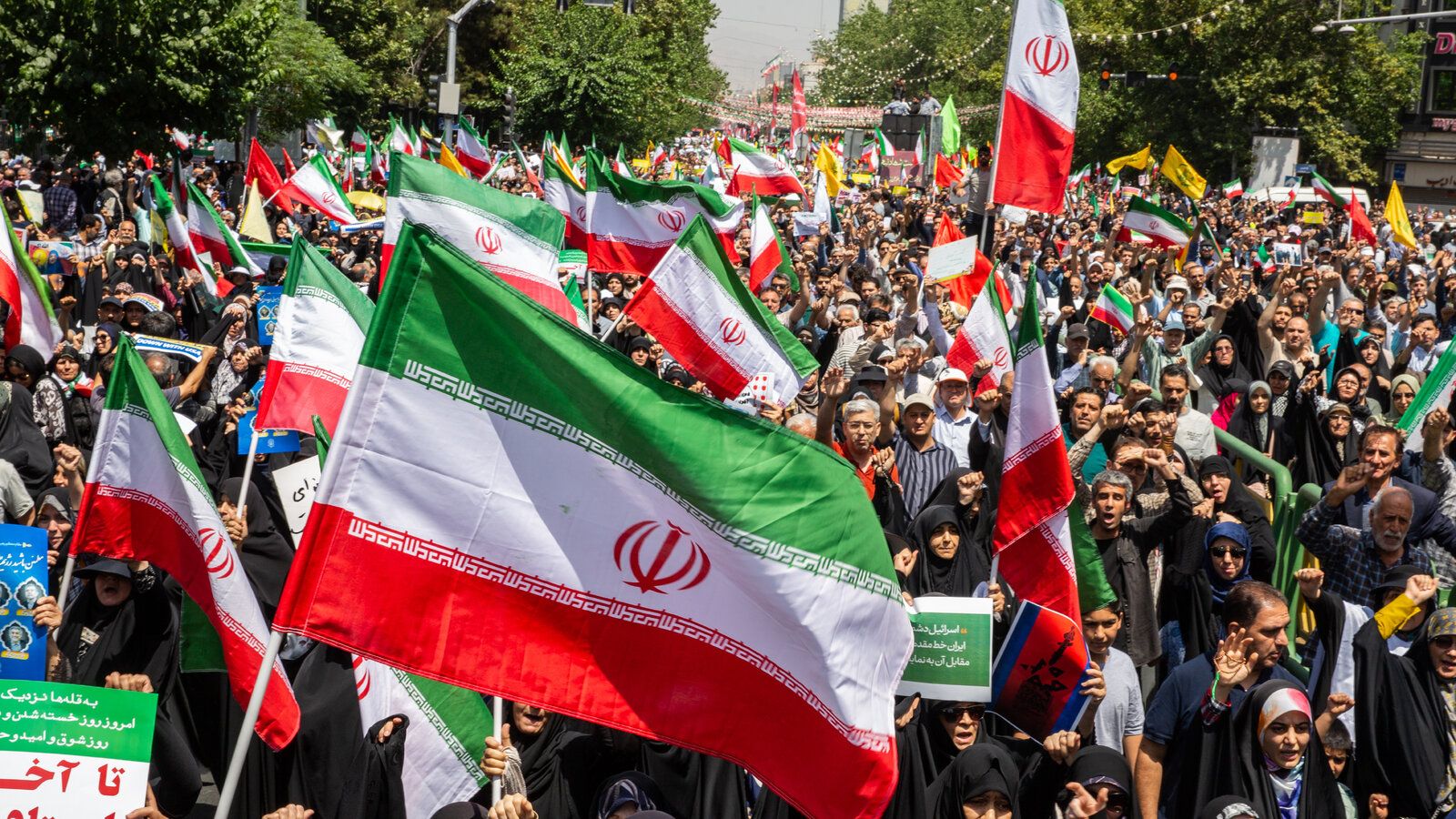
- National unity. Experience suggests that foreign intervention tends to increase unity among the Iranian people. In the recent episode, only four days after the security unrest allegedly guided by Mossad and the CIA—carried out by several thousand individuals—more than three million Iranians reportedly took to the streets in support of the Islamic Republic. This indicates the continued popular legitimacy of the Islamic Republic, a legitimacy that is strengthened rather than weakened by external intervention.
Despite these factors, it can still be expected that in the coming days the United States may move toward eliminating the country’s political leadership—such as the religious leader, the president, the heads of major state institutions, and senior military commanders—as well as striking Iran’s missile infrastructure. The purpose of such actions would be to damage Iran’s governing charisma, intimidate decision-makers, paralyze Tehran’s ability to respond meaningfully to U.S. and Israeli moves, encourage domestic opponents to rise up, and ultimately push Iran toward internal conflict and chaos—an outcome that would lead to the destruction of the country’s vital infrastructure.