


By Ljubodrag Simonović, Belgrade, Serbia
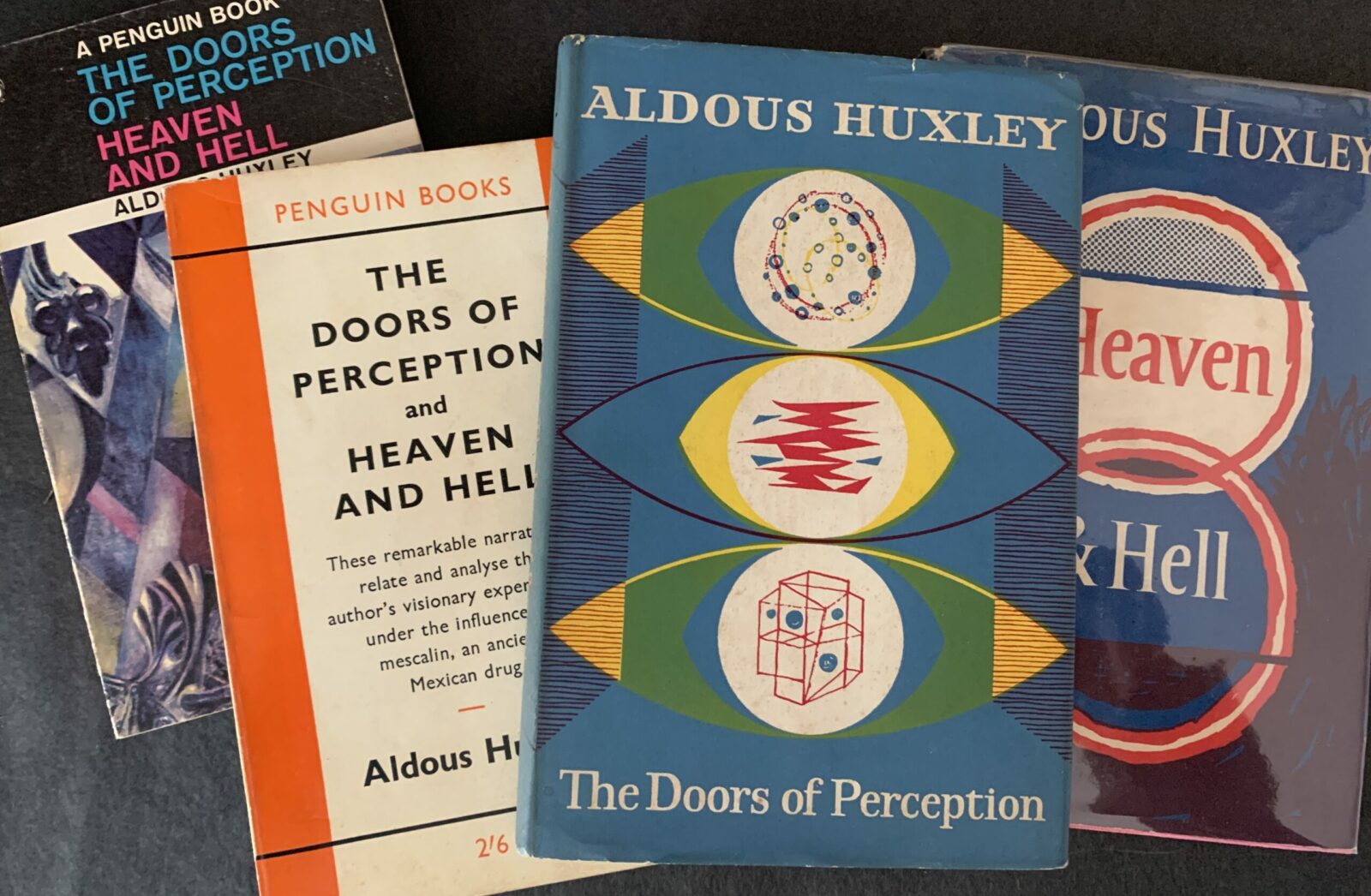
The English writer Aldous Huxley (1894–1963) attracted public attention not only as an outstanding essayist but also as the author of the futuristic study Brave New World (1936), in which he warned about the disastrous development of Western civilization. After World War II, Huxley published The Doors of Perception (1953), in which he sought to analyze the effects of drugs (primarily mescaline) on man’s perceptual ability and his creative power. The book provoked a strong reaction and became popular in artistic circles and hippie communes, especially in the United States. In the following text, we will attempt to analyze the nature of Huxley’s thought, as well as the nature of the drug epidemic in developed capitalist countries, which kills and mentally degenerates millions of young people every year and produces mass idiocy.
Huxley’s thought does not have a revolutionary, but rather a conformist character. It is a response from a capitalistically degenerated man to a capitalistically degenerated world. Huxley’s theory is based on anthropological reductionism. Huxley abolishes man as a libertarian and visionary being, thereby stripping the world of its worldliness—that is, of its human essence. Worldliness implies that man is the creator of his own world, which means that the world is a community of people as social, historical, libertarian, creative, and visionary beings. The world Huxley speaks of is not a real world with a historical nature, but an abstract world with an ideological nature.
Huxley’s thought corresponds to the nature of the contemporary world. Huxley seeks to improve man and perfect him through chemical means and spiritual drugs in the form of religion and mysticism. Man is reduced to a biological given, to a religious fanatic, and to a mystic. In reality, man is caught between dehumanized science, which is in the hands of capitalist clans, and religion and mysticism, which are in the hands of churches and sects. Huxley seeks to prevent the oppressed working people from developing a critical consciousness that calls capitalism into question. The creation of mystical visions through chemical substances and drug-induced sessions are intended to prevent people from creating a vision of a humane world. The critic of the “brave new world” followed the dominant tendency of capitalist development. By becoming addicted to drugs, man becomes a slave to the ruling order, which turns the world into a modern concentration camp through science and technology.
Capitalism and its ideological sphere abolish man as a being capable of creating a reasonable world. Huxley does the same with his theory. His thought is not only based on dealing with the idea of a reasonable world—which represents the greatest value of enlightened thought and German classical philosophy—but also abolishes reason as the source of man’s self-awareness. Drugs prevent man from understanding the essence of the existing world and abolish visionary consciousness, without which man is lost in the capitalist hopelessness. Huxley does not strive to create a world of free and rational people, but rather a world of drug addicts. Man cannot create a humane world and, in that context, fantasize about the future of humanity — but through drugs, he can create illusory worlds within his own mind. Drugs become a means that offer the possibility of an apparent escape from the existing world to lonely people, who are lost in the nothingness of everyday life. Huxley’s thought ends in individualistic mindlessness.
Huxley abolishes man as a free and creative being and reduces him to a mere perceptive being—a recipient of sensory impressions. In truth, man is not an object situated in the world from which he receives impressions; rather, he perceives the world as a creative and libertarian being, and as such, he is an active being who relates to the world he lives in by creating a humane world. He does not experience himself as a human being solely through perception, but through an active relationship with the world—as an organic part of society as a human community, which means establishing interpersonal relationships as a fertile, emotional, creative, libertarian, and visionary being. By having an active, transformative, and creative relationship with the world, man enhances his perceptive abilities, thereby increasing his capacity to understand the world and changing relationship towards it, as well as his ability to develop interpersonal relationships and thus enrich himself as a social being. This is the basis for the development of creative sociability as the most important historical value, which offers humanity the possibility to ensure a certain existence and create a new world.
Drugs do not contribute to the development of man’s perceptive abilities but produce mental states that generate stimuli which cripple the senses and thus man’s perceptive capacities. At the same time, drugs cripple man’s perceptive powers by depriving him of libertarian self-awareness and creative personality, and by abolishing him as a social being. Drugs degenerate man by turning him into an autistic figure and by destroying his perceptive powers as a natural and reasonable being. In their most dramatic form, drugs “stimulate” man’s mental processes in such a way that they lead to his (self)destruction.
Man’s perceptive ability is not a given but develops alongside the growth of his human potential. The development of humanity is the foundation for the development of man as a perceptive being. At the same time, by developing his perceptive abilities, man expands his authentic human powers — he becomes a man. Every man, as a concrete social being, exists as a unique and unrepeatable perceptive being. The experience of perception and its meaning are conditioned by the nature of man as a social personality and by the nature of social conditions in a given historical period. This is what determines the quality of perception. The nature of prevailing social relations and the dominant value horizon directly and indirectly condition man’s relationship towards himself, people and the world, and thus the nature of perception. A typical example is sexuality. The belief that sex is a ‘sin’ conditions how one perceives and experiences his own body, as well as man’s relationship with other people. Likewise, throughout life, the angle of perception and therefore its meaning and quality are constantly changing. Man experiences the touch of a woman’s body in one way when he is at the peak of his vitality, and in a completely different way when he is in the twilight of his life.
Huxley’s drug-addicted initiative was not only theoretical and experimental in nature; it arose from his need to be someone else. If he started from the fact that every man is a unique and unrepeatable personality, it would not have occurred to Huxley to try to “slip into” other people and thus become another man. It is one thing to try to live in others, and another to try to live with others, respecting them as unique and unrepeatable personalities. Why would a man, who is an independent personality, have the need to take drugs and thus escape from himself and become someone else? Was Huxley using drugs to develop his perceptive powers in order to develop his authentic human personality, or to escape from himself?
Does Huxley’s thought have emancipatory potentials? Huxley states the visions of artists that are the product of their psychological states and sees them in a culturological context. Visions become symbolic phenomena through their interpretation, which is based on a way of thinking that abolishes man as a concrete historical and social being. Drugs become a means by which man “liberates” the senses and mental processes from the constraints of reason and thus from the constraints of everyday life. Through narcotics, a man acquires the ability to perceive what he cannot perceive and imagine if he is guided by the prevailing intellectual and normative horizon.
Does Huxley’s thought have a religious nature? Does his drug-addicted project enable the creation of a mental state in which it is possible to discover that, which is foreign to reason, and which has a metaphysical and transcendental character? Does the drug-induced ecstasy lead a man to the knowledge of a “truth” that has a timeless and suprahistorical nature? Do drugs allow a person to soar into the sky and experience an encounter with the divine? Huxley does not merely set a religious framework in which man should find a timeless meaning of life; in his mystical speculations he tries to uncover the truth. Huxley does not distinguish between the truth and the genuine since he abolished man as a sovereign creative being who creates a value horizon that has a visionary character. At the same time, in his theory the mental sphere itself acquires a suprahistorical and suprasocial character. A man in a drug-addicted ecstasy not only strives to reach the hidden truth, but also to experience a mental flourishing.
According to Huxley, a man “frees himself from the world” by depriving himself of what makes him a man: his social being and the visionary mind that gives him the opportunity to create a humane world. Instead of fighting with other people against the inhumane and for the creation of a humane world, Huxley strives to create a world of autistic petty bourgeoisie who will establish “their” world in their disturbed imagination. Huxley offers the slaves of capitalism a “medicine” that will turn them into drugged idiots who will not dream about the world of free people, but will be obsessed with illusions and hallucinations that abolish the critical consciousness and visionary imagination rooted in man as a social and historical being. Man’s need to realize himself as a human being, the need for other people and a certain existence, and in that context the need for nature as a humanized environment – these are the concrete life-creating sources of man’s visionary imagination.
For Huxley, human imagination does not arise from the existing world, but from the psychological reaction triggered by drugs. It brings a man to such a psychological state in which he loses contact with reality and the ability to reason. Illusions abolish the imagination that arises from concrete life and that seeks to transcend the existing world. They are not only the product of mental processes that are freed from the restraints of reason through drugs; their source lies in the sphere of the unconscious. Drugs become the key that opens the Pandora’s box of the subconscious. It brings a man into such a psychological state in which he falls into the dark labyrinths of the unconscious where he disappears as a sovereign being. Huxley does not realize that the penetration of man into himself by means of narcotics only seemingly enables an escape from the existing world. Even when he is deprived of reason, man is a social being and as such an organic part of the world in which he lives. A typical example are dreams.
Capitalistically degenerated life creates the most ruinous drug that not only produces false worlds in people’s heads, but physically and mentally distorts people. In this way, capitalism makes it impossible for man to understand the essence of the world he lives in and his true position in it. Existential uncertainty and the increasingly dramatic struggle for survival cause anxiety, fear, panic in man… and in this way condition the mental processes that determine how he perceives and experiences the world. Capitalism keeps man in a state of stress and thus destroys his nervous system, turning him into mentally disturbed person. This is reinforced by the existential logic of capitalism, which is based on the principles “Man is another man’s wolf!” and “The war of all against all!”. A man does not see another man as a friend, but as a mortal enemy. Instead of being a source of life’s joy, the world becomes a battlefield. Man finds compensation for his increasingly bloody life in the misfortune and suffering of others. It is indicative that in the “free world”, mass sports spectacles, which have an increasingly murderous character, are based on the principle “the audience likes the smell of blood!”
Living in a world based on violence and consumerism, people inevitably acquire a murderous and destructive imagination. The Hollywood entertainment industry also contributes to this. It is a factory that produces a spiritual drug whose effects on people are more devastating than those of “ordinary” drugs. It’s the same with sports and music spectacles, TV shows, gambling, with “video games” for children… Man lives in a room of distorting mirrors in which the increasingly monstrous destruction of man and nature has acquired a fateful and spectacular dimension. Guy Debord was right when he called contemporary capitalism a “spectacle society”. Consumer society and its ideological sphere, which takes on a spectacular form through the advertising industry, create a drug that produces ever more pernicious illusions. It should also be noted that the illusion that “everyone will become rich”, which corresponds to the religious illusion of “eternal life in heaven”, represents a drug that has destroyed the lives of millions of people in the “free world”.
Huxley was a capitalistically degenerated man. The phenomena that Huxley perceives indicate the nature of his thought, as well as the nature of his personality and the nature of his relationship to the world and man. Huxley was not interested in the world in which he lived; it was not the source of his perception. He does not perceive people as concrete social beings, but observes paintings and draperies… Living in Los Angeles, every day he passed by people lying on muddy pavements, begging for a crust of bread. Huxley did not notice these people. He did not perceive human misfortune and suffering, capitalist tyranny and slavery of the working classes, racism and fascist barbarism… In his world there are no black ghettos where children die of hunger and disease; there are no beaten and raped women; there are no criminal gangs that kill without mercy; there are no city neighborhoods where drugs and prostitution reign…
Did Huxley’s thought contribute to the development of drug euphoria in the West? Did Huxley contribute to the affirmation of the understanding that drugs have a “liberating” character and as such should receive public support and legal status? Did Huxley contribute to the creation of the pernicious illusion that drugs provide the opportunity for man to see the light of truth in the increasingly dark capitalist nothingness? Is the vision of the drugged world Huxley’s most important contribution to the creation of the “brave new world”?
Translated from Serbian by Vanja Zakanji
* Lubodrag Simonovic (72) was a member of the Yugoslav national basketball team, which won the world championship in 1970. Several times he played for the national team along with Sergei and Alexander Belov. He was a participant in the Olympic Games in Munich. In protest against the cover-up of a doping scam with Puerto Rico, he left the Games, after which he was expelled from the national team. The author is a Master of Laws and a Doctor of Philosophy. He has published ten books in the fields of philosophy, sociology and historiography. His texts have been translated into English, Russian, Italian, Spanish, Turkish. He taught at domestic and foreign universities. He is married and has three children and six grandchildren. Simonovic lives in Belgrade.