


By Mehmet Enes Beşer
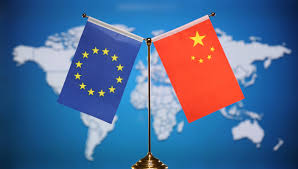
The European Union is at a crossroads geopolitically. As Washington and Beijing move closer, Europe is being increasingly pushed to remain in sync with a less-than-self-guided strategic agenda. Transatlantic unity is essential, but the EU’s China policy has become increasingly derivative—more reflective of what Washington desires than a hard-headed accounting of European interests. This passive outsourcing is not merely unsustainable, it is strategically irresponsible. The EU cannot become a credible player in a multipolar world unless it has an autonomous, interest-based China policy—one based on realism, not obeisance.
The reasons for Europe’s aligning with the US on China are obvious. The US and EU have shared democratic values, institutional norms, and a historic alliance. China’s actions in the South China Sea, its internal human rights record, and its increasing technological reach have stirred both sides of the Atlantic into concern. Equality of concern is not equality of response. The European geopolitical reality, exposure, and diplomatic tradition must be different from America’s. To pretend that they need not be so is to ignore history and strategic geography.
While America views China largely as a great-power rival and security threat, European countries have diversified and multifaceted relationships with China. China is a competitor, to be sure—but a vital trading partner, political friend, and possible pal in addressing global issues such as global warming and epidemiology. European nations’ economies—Germany’s manufacturing belt, Greece’s ports, and France’s wine lands—are deeply interlinked with Chinese markets. The EU’s decarbonization strategy also relies on cheap access to Chinese green technology, from solar panels to rare earths. A policy of confrontation alone or imitation of US-style containment would be appallingly expensive. And more importantly, above all, China acts differently with Europe compared to the United States.
The fact that there is no defense pact, and an EU tradition of normative diplomacy lends Brussels unique leverage. While when the EU speaks with one voice, it can pressure Beijing on labor standards, openness, and regulatory reciprocity without triggering as much of a defensive reaction that Washington does. That bargaining power is lost when Europe is boiled down to mimicking American phrases or letting itself get dragged into Manichean scripts. The power of Europe lies in its multilateralism and not great power mimicry. Second, wholesale alignment with Washington will entail the EU in interests it does not share.
The American vision is decoupling from China, particularly high-tech. There has to be some diversification, but full decoupling is economically unthinkable and politically destabilizing for Europe. European business relies on Chinese demand, and the continent lacks either the political will or domestic capacity to emulate America’s subsidy-led industrial policy. Chip embargoes, investment bans, or blacklists for security reasons in response to Washington are the temptation for bombastic voices in Brussels, but it rather self-destructs as a technology for Europe and Europe’s own market opening. These interdependencies have become even deeper of late. European politicians have grumbled that Washington is exploiting the Inflation Reduction Act to subsidize green tech made in America versus European production. Similarly, US pressure to follow sanctions against Chinese firms threatens to destroy European competitiveness for little real strategic advantage. These are costs to the economy, undoubtedly—but also wasted opportunities to create a European voice independent of global issues.
A more autonomous EU China policy is not appeasement or naivety.
It is setting red lines by European norms, requiring trade reciprocity, spending on technological defense, and diplomatically aligning with like-minded allies—in the US, specifically—where interests converge. It is also being able to talk to China, not knee-jerk hostility. Europe must remain resolute in upholding what it stands for in the case of Xinjiang, Hong Kong, and Taiwan but compromise on climate cooperation, global debt restructuring, and multilateral reform. The EU has more to gain as a bridge than a battleground. That calls for institutional change. The EU must overcome internal disagreement about China. Differences in member states’ differing styles—Lithuania’s brashness, Hungary’s accommodation, France’s strategic hedging, and Germany’s prudent rebalancing all indicate a lack of unity. There cannot be a cohesive China policy reduced from 27 competing national policies. Brussels must speak with one voice, backed by member states ready to place more emphasis on the long-term common interest than on short-term bilateral gain.
It will require also principled political boldness. The EU has to learn to say no—not only to China when it violates European norms, but to the United States as well when it tries to impose harmonization by diktat. Strategic autonomy is not anti-American; it is pro-European. And in a time when middle powers are remaking global order, the EU cannot be a bystander. It has to be engaged, principled, and pragmatic.
Europe’s role in the world rests on being capable of thinking for itself. Giving Washington a monopoly on dictating how to engage with China poses a threat to EU sovereignty and strategic autonomy. The time to reclaim control is now. The EU’s policy on China must be European in values, interests, and will. Anything short of that is abdication masquerading as alliance.