


By Yiğit Saner
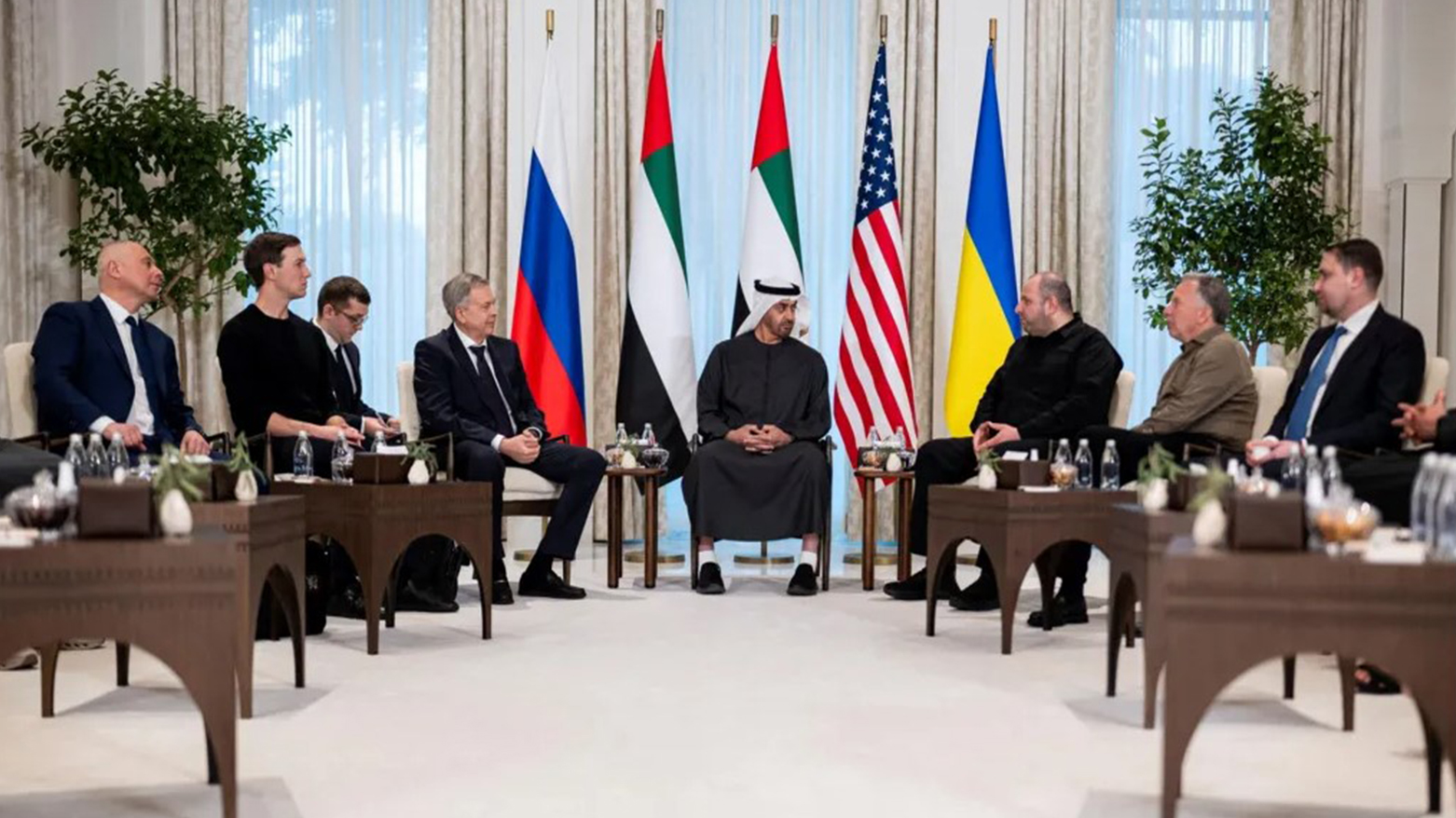
The trilateral talks on Jan. 23-24 in the UAE capital signaled a renewed acceleration in diplomatic traffic in the war in Ukraine. Yet the two days of talks, far from coming to a settlement, ultimately reaffirmed that the parties remain their positions. New dates are being set and talks are ongoing, but there has been no significant change in the positions.
Restating red lines
The fact that Russia, the US, and Ukraine sat at the same table simultaneously for the first time carried clear diplomatic weight. Still, the statements that followed suggest the talks functioned less as a platform for compromise and more as a venue for restating red lines.
Little has changed regarding territory, security guarantees and the military dynamics. The only notable change is the Trump administration’s preference for framing a solution not in military or political terms, but explicitly through economic incentives. Meanwhile, the Kremlin’s decision to appoint Kostyukov, a military intelligence figure rather than a career diplomat to lead the Russian delegation is worth noting.
No official statement came from the Kremlin after the talks. But what Putin adviser Yuri Ushakov, who has been overseeing the talks in Abu Dhabi from Moscow, said beforehand was already capturing Russia’s stance: “If no agreement is reached, the Russian army will continue achieving its objectives.”
The statement once again underscores that Moscow does not separate diplomacy from battlefield realities. Territories under Russian control, especially the Donbas, are viewed not as negotiable but as outcomes of the war itself. The Kremlin insists that a lasting settlement requires Kyiv’s complete withdrawal from Donetsk and Luhansk, the two regions of the Donbas.
Kyiv’s distrust towards Europe
The picture on Ukraine’s side is more contradictory. Kyiv has described the talks as “positive” and “constructive,” yet still to dispel the uncertainty surrounding security guarantees. President Zelensky’s emphasis on “American oversight and control” in a post on X makes Ukraine’s core expectation clear.
That emphasis also hints at a distrust toward Europe. Kyiv doesn’t see the proposals floated in Davos for a multinational monitoring force, with limited troop commitments from France and Germany and a 15,000 soldier numbered plan discussed between London and Paris, as trusty. Moscow’s declaration that such forces would constitute “legitimate military targets” weakens Europe’s deterrence claims from the offset. One EU diplomat’s words after the first round of the talks, “A ceasefire without credible American military backing is like a house of cards” is capturing the mood in Brussels.
Yes, the summit once again exposed Europe’s secondary role in Ukraine. Despite Trump repeatedly stating that American troops will not be deployed to Ukraine, it is Washington that continues to set the rules on the Western side. Arms sales, intelligence sharing, continuous surveillance, and logistical infrastructure all remain under US control. An EU diplomat’s remark that “everyone in the room knows Washington holds the keys, while Paris and Berlin merely decorate the door” neatly summarized Europe’s position. Abu Dhabi did not change this fact, simply made it more clear.
Trump’s model: Concessions = money
The most distinctive feature of the talks was the Trump administration’s treatment of the peace negotiations as an economic negotiation. According to Kyiv Post, the US offered Ukraine a “Prosperity Plan”, and limited “business opportunities” to Russia. This points to a search for resolution driven less by security concerns and more by economic incentives. For Kyiv, this model means a way to survive, and for Moscow a possibility of easing the sanctions and new trade deals.
Also, reports suggest there was modest technical progress on issues such as the Zaporizhzhia Nuclear Power Plant (there are proposals like “shared ownership” or a “trilateral oversight mechanism”). Yet the facility is under Russian control, and Moscow shows no sign of relinquishing its position.
There is also talk of a “buffer zone”. But this too faces an impasse due to competing definitions: the US speaks of economic openness, while Moscow envisions demilitarized territory.
Not a “turning point”
Meanwhile, the reality on the battlefield is unchanged. Russian airstrikes on Kyiv and surrounding areas, Ukrainian drone attacks, and casualties all underscore just how fragile the negotiations truly are.
The talks are going on. But Abu Dhabi did not mark a turning point toward ending the war. It clarified what each side is unwilling to concede: For Moscow, it is territory, for Kyiv it is security guarantees, and for Washington economic gains. Unless this picture changes, talks are likely to remain stopovers rather than destinations.