


By Mehmet Enes Beşer
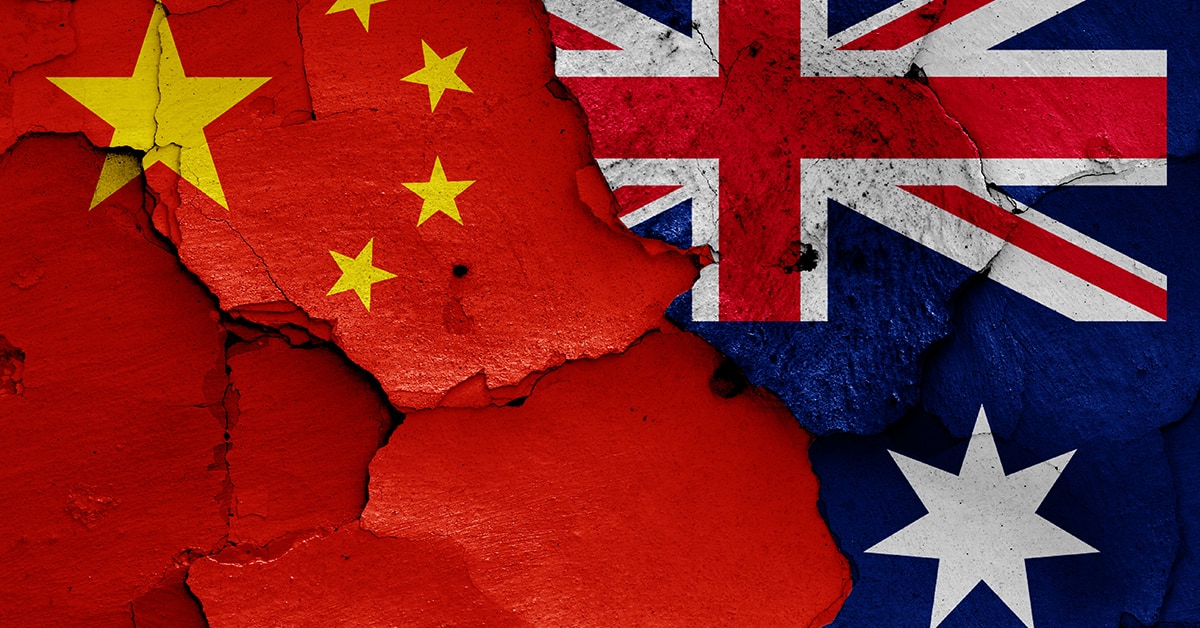
After decades of tense relations with diplomatic chill, trade warfare, and suspicion, recent developments have indicated that China–Australia relations are stabilizing gradually. Diplomatic dialogue has been renewed, trade prohibitions have begun to be repealed, and reciprocating visits are resumed. These are reassuring signals—minimal but important actions indicating both sides to move away from confrontation and head towards practical engagement. But with the momentum there, a truly sustainable and mutual relationship will require more than diplomatic politeness or economic normalization. It requires long-term building of trust—not just at the state and corporate levels, but also in broader societal and media culture.
At the diplomatic level, restoration of high-level engagement has been an important factor in relaxing tensions. After years of estrangement and posturing, it appears Canberra and Beijing have come to the realization that estrangement is futile. The resumption of ambassador-level talks as well as Australian-Chinese foreign minister-level talks reflects a common sense that only through ongoing talks can differences be contained, and progress in furthering mutual interests. These are also prompted by economic imperatives. China is Australia’s largest trading partner, and over one-third of Australian exports go to China. Australia provides China, in turn, with raw materials, agricultural produce, and education services.
Indeed, the revival of economic bilateral trade flows is one of the best indicators of enhanced relationships. The lifting of Chinese tariffs on Australian coal and barley, and the restarting of negotiations on sectors like wine, seafood, and tourism, show both sides are keen to dial down the temperature in concrete terms. Australian companies, many of whom were collateral casualties of the diplomatic freeze, have responded positively. China remains a significant market for the vast majority of industries, and a more stable trading relationship is in both economies’ interests—particularly in the context of an age of global uncertainty.
Normalization at diplomatic and commercial levels, however, is only half the story. For more robust and lasting relations to be a reality, media coverage and public opinion in Australia must also change. Over the past decade, much of Australia’s media reporting on China has been marked by fear, suspicion, and ideologically motivated narrative. Stories of espionage, political meddling, and predatory economics have all but replaced more sophisticated coverage of Australia’s opportunities and subtleties of engaging a rising China. This has created an atmosphere in which strategic prudence has at times tipped over into public cynicism, hardening diplomacy and constraining policy options.
To regain trust, therefore, is also to have a more grown-up and sophisticated debate about China in the Australian domestic politics. Not stifling criticism, much less backing away from legitimate concern—it’s not caricature. China is not an unstoppable friend nor an insatiable foe. It’s a great power with which Australia has convergent as well as divergent interests. To understand this richness, and in order to inform accurately and in balance upon it, is necessary in order to establish an educated public dialogue and a durable foreign policy.
Besides, people-to-people contacts—through education, culture, tourism, and educational exchanges—may also play an important role in bridging distrust. The fact that Australia has a huge Chinese-Australian population, and that previously there was a strong stream of Chinese students and tourists going to Australia, creates natural bridges of re-fashioning familiarity and association. If these associations are cultivated, they can be harnessed to alter image on both sides and provide a human foundation for political and economic collaboration.
Conclusion
China–Australia relations are not yet “back to normal”—but they are heading in that direction. Renewed diplomatic engagement and easing of economic tensions are signs of each side’s mutual recognition that disengagement cannot be sustained. But the way forward is tricky. Continued improvement is not only a matter of government concessions or trade statistics, but of broader efforts to re-establish trust—between societies, institutions, and media cultures.
Australia has the right to act in its own interests and protect its values. But it does not exclude constructive engagement with China. The challenge is to reconcile caution with openness, sovereignty with diplomacy, and skepticism with understanding. A deeper, more enduring relationship is within reach—but it will take time, effort, and most importantly, a willingness to look beyond the headlines.