


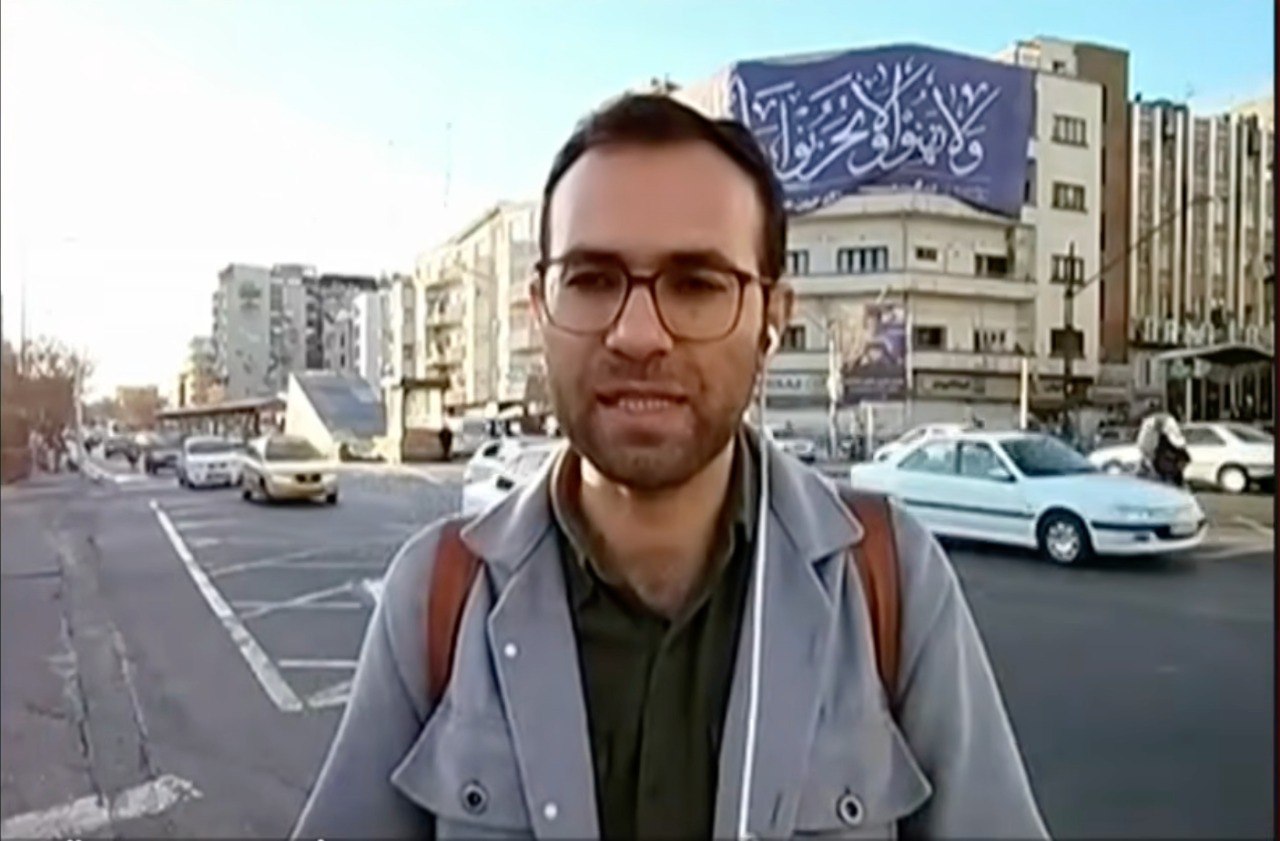
By Gürkan Demir, from Tehran / Iran
Following the 5:00 AM announcement on Iranian state television confirming the death of Ayatollah Ali Khamenei, crowds began surging toward Tehran’s Engelab Avenue. The sun hadn’t even risen yet.
Grief and resilience
What did I see? I saw tears. I saw rage. Chants against the US and Israel. Cries of “No deals, no concessions, Israel will be destroyed.” People formed car convoys with elegies and shouting slogans. It was a mix of grief and resilience.
On February 28, the first day of the strikes, banks, shops, and cafes remained open. But today, following the Ayatollah’s death, they are closed.
I am currently on Engelab Avenue, just a ten-minute walk from the residence of Khamenei where he lost his life. The area had been cordoned off for security immediately after the attack. But it has since been reopened. Despite the war, Iranians are somehow managing to carry on with their daily lives.
A lesson from the 12-Day War
Schools and universities are closed. Government offices and banks are operating at half capacity. As a result, some people have headed to the outskirts of Tehran where life is more manageable. To ensure these journeys go smoothly, the government has preemptively secured supplies of fuel and food. This is a lesson learned from the 12-Day War.
Differences from the 12-Day War
There are some differences from the 12-Day War: back then, police checkpoints only appeared on the third or fourth day. This was against drone and UAV strikes launched from within Iranian territory. This time, to get ahead of such threats, Basij forces established security checkpoints within the very first hours of the attack.
Compared to the 12-Day War, the overall intensity of strikes is less, and the public mood is strangely calmer. During the 12-Day War, Israel relied on drones and UAV launched from inside Iran to target critical figures and civilian apartment complexes where nuclear scientists resided.
Yet, the sheer violence of the strikes is higher this time. The targeting of Ayatollah Khamenei’s residence is an aspect of that. We are hearing quite powerful explosions. And this time, we see the active use of Israeli fighter jets, sometimes breaching Iranian airspace, sometimes firing from just outside, rather than drone and drones UAV launched from inside Iran.
Trump’s claim of “opposition groups”
Five separate explosions happened today in Tehran. Official reports confirm that the Intelligence Ministry and the Nuclear Research Institute at Shahid Beheshti University were targeted. There was a rumor that the state television building had been hit, but then debunked. However, authorities confirmed that military headquarters and police stations around the state television were targeted.
Regarding Trump’s claim that “opposition groups are celebrating the death of Khamenei”: I have seen some footage on social media of small groups celebrating in certain streets of Tehran. But, once the official announcement of Khamenei’s death was made, the streets of Tehran were completely overwhelmed by a flood of people mourning him. Some people attempted to reach the ruins of Khamenei’s residence, but security cordons held them back.
Cover graph: Gürkan Demir at the Engelab Square in Tehran