


By Mehmet Enes Beşer
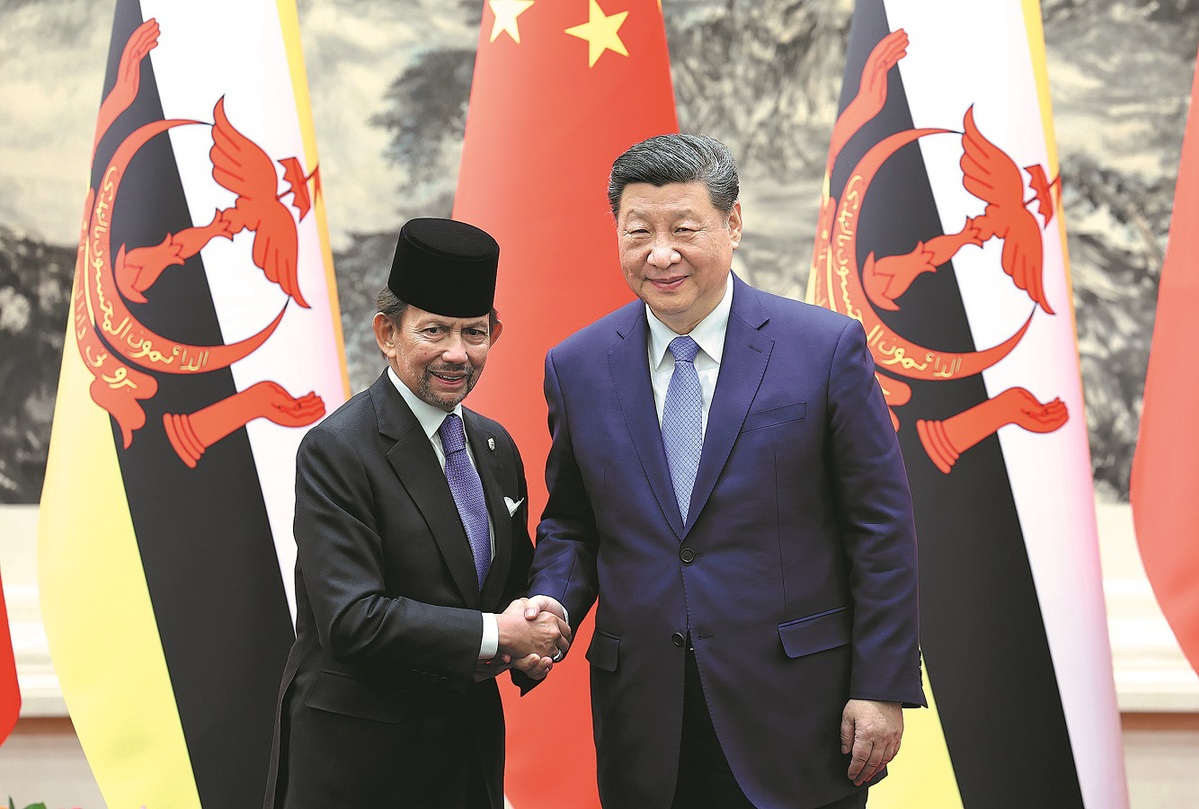
China’s relations with the People’s Republic of Brunei Darussalam in recent years have generally been good across the board. From expanded trade and investment ties to BRI-enabled infrastructure development, the two countries have forged what both sides refer to as a “strategic cooperative partnership.” Brunei has pursued a pragmatic stance in the South China Sea dispute, unlike more aggressive ASEAN claimants, which has only served to make it that much more desirable in Beijing’s eyes. But underlying the political show of friendship and trade, there is one gap: the relatively easy-going rhythm of people-to-people exchanges between the two nations. This gap is significant, not merely to the intensity and longevity of the bilateral relationship per se, but to regional integration and stability.
Though top-level foreign relations and diplomatic relations set the overall tone for foreign relations, day-to-day people-to-people contact—students, professionals, tourists, and cultural practitioners—are what construct sustained confidence and mutual understanding. In the case of the Brunei-China relationship, the absence of strong people-to-people contact can ultimately short-circuit the scope and time frame of their strategic partnership. Economically speaking, the numbers are daunting.
China has become one of Brunei’s largest trading partners and a key source of foreign direct investment. Energy cooperation has expanded, with Chinese firms playing an important role in Brunei’s downstream oil and gas development. The BRI has contributed to infrastructure projects that aim to enhance Brunei’s connectivity and logistics capabilities. These developments complement each other mutually and hold promise for Brunei to diversify its economy beyond hydrocarbons. Economic interaction is not always converted into greater social rapport, though. Educational interaction and student exchange between China and Brunei are exceptions.
Economistic Brunei students abroad in China are compared to other ASEAN students from neighboring countries surrounding Brunei, e.g., Malaysia, Thailand, and Indonesia. Chinese language studies, while increasing in progress, are still far from being common in the Brunei mainstream education system. Public awareness of Brunei among the Chinese is as shallow as its economic significance. Chinese are familiar with the fact that Brunei is an oil-producing sultanate but otherwise ignorant. Bilateral ties will remain technocratic and elite-led and susceptible to geopolitics change without stronger cultural diplomacy, tourism marketing, and student exchange. Structural and situational factors are responsible for the people-to-people shortfall.
Brunei’s small population, conservative societal norms, and dual-education tracks (religious and secular) mean that foreign engagement tends to be selective and cautious. Unlike countries with large overseas diasporas or liberal media ecosystems, Brunei’s international exposure is comparatively narrow. China’s involvement, on the other hand, has been inclined towards state-led, economy-targeted initiatives instead of soft power advances to religiously defined, small states. Bridging these gaps will require more than benign intent—it will require concerted, directed policy effort. Tourism represents another underdeveloped bridge.
Brunei continues to be an unexploited destination for Chinese tourists in spite of direct air connections and increasing outbound Chinese travel within the region. Part of the problem lies in limited marketing, language barriers, and Brunei’s relatively restrictive visa regime. Moreover, Brunei’s image in Chinese travel discourse lacks the exoticism or excitement associated with other ASEAN destinations. But the country has special pulls—untouched rainforests, Islamic heritage, and political stability—that can be better marketed to specialized niches of Chinese travelers, particularly eco-tourists or cultural travelers. In order to fill in the gap, both countries must make a commitment to more forcefully involving society.
For Brunei, it would mean more Chinese scholarships for Brunei, greater Mandarin studies, and having the youths go through exchange programs on a regional level. For China, it would be more intense cultural contact in Brunei—one that is hospitable to the indigenous culture but with openness and sincerity of approach. The civil society organizations, think tanks, and the universities can do better in intercultural training, collaborative research, and intercommunication.
Conclusion
China and Brunei have built a solid foundation in economic pragmatism and strategic partnership. But with a strong people-to-people relationship as the basis, the relationship would be strong enough and can ride out any storm and still continue to function even in the long run. If both are willing to broaden their cooperation on genuinely sustainable and equitable terms, they do not only need to invest in policies and schemes, but also in human beings.
Diplomatic relations are forged by governments, but it is people who forge enduring friendships. In the case of Brunei-China, that bridge still has to be built.