


By Mehmet Enes Beşer
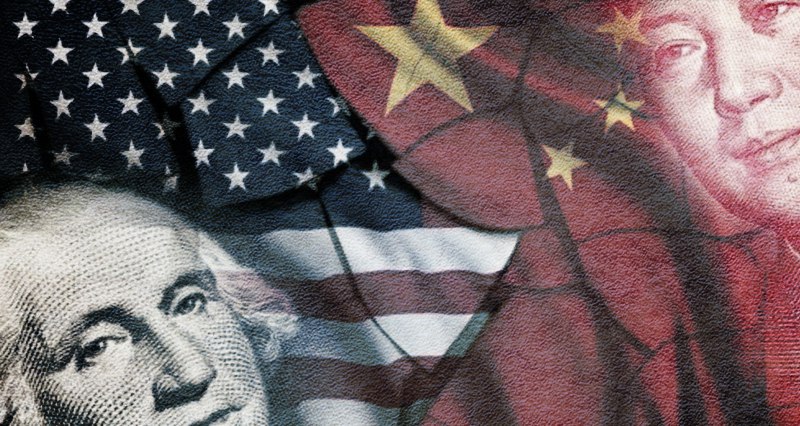
In a climate of growing tensions and mounting rhetoric, China–US relations look more precarious by the minute. From tech controls and trade wars to ideological sparring and geostrategic posturing, both countries have been caught in a series of strategic moves reflective of an escalating distrust. But under the cover of hostility is a tough reality hidden behind political convenience: China and America are inextricably entwined, economically, technologically, and culturally. It is not a vulnerability—it is the product of decades of globalization. And it is this very interdependence that holds the key to shattering the deadlock between the two superpowers.
The calls for “decoupling” or “de-risking” may be tempting to home constituencies and offer an illusion of strategic ease, but they are chillingly myopic. Attempting to suddenly sever the two biggest economies in the world—economies that together account for over 40% of world GDP—is not only unrealistic but potentially catastrophic. The global economy is built on intricate supply chains, shared ecosystems of innovation, and cross-border capital flows. To cut these ties would not deliver autonomy; it would deliver instability. The result would not be strategic advantage, but economic hemorrhage—for both.
China and the United States are not only linked by tones of commerce or finance markets, but by a network of intricate interdependencies. Chinese manufacturing capacity, consumer buying power, and rare earth assets rely on American firms. Chinese corporations depend on American semiconductors, managerial techniques, and membership in international finance institutions. Academic exchanges, technical invention, and even attempts to cope with pandemics have been made richer by past cooperation. This is not a simple game of rival blocs to be solved by some equation. It is a highly complex and multiple-contacting interaction that cannot be disentangled without holocaustic collateral damage.
Most importantly, decoupling misinterprets the balance of power in a multipolar world. True strength is not isolation, but wise and prudent management of interdependence. Evenhanded conversation, then, is not a concession—it is a necessity. It is the only mechanism by which strategic competition can be converted into managed coexistence. It enables both countries to establish red lines, establish common interests, and prevent misunderstandings from spilling over into conflict.
This conversation has to be based on equality. No side can insist on structural transformation from the other without providing for reciprocity. No side can dictate the terms of engagement single-handedly. Respect for sovereignty, acknowledgment of historical paths, and deference to fundamental interests have to be the basis of any serious interaction. Equal conversation does not equate to agreement on all things—it equates to treating each other as valid counterparts, with the ability to disagree without collapsing the whole relationship.
In the real world, however, there continue to be hints of potential convergence, especially on international challenges that cannot be resolved by one party acting alone. Climate action, AI control, global health security, and economic rebound are all areas in which China–US cooperation is still necessary. Both sides stand to gain through bargaining on these matters but also bring about the wider international order that increasingly looks toward Beijing and Washington for leadership—cooperative or otherwise.
There are precedents for this pragmatic engagement. From the initial Cold War détente to the period of accession to the WTO, China and America have, in various moments, chosen engagement over estrangement. The problem today is not to reproduce an outmoded model, but to construct a new one—one that is appropriate to an era of high-stakes competition. This requires institutionalization of mechanisms of dialogue, depoliticization of economic cooperation and the re-establishment of social and academic exchanges which humanize the bilateral relationship.
Conclusion
China–US impasse is not the product of inevitability—it is the result of political inertia, domestic pressures, and a misplaced understanding of interdependence. Globalization has already tied the two powers together so that to pull back now would spell mutual damage. To continue on the path of confrontation promises a future of economic devastation, strategic error, and global uncertainty.
The only viable alternative is equal dialogue—a dialogue that respects difference but pursues stability, that welcomes competition but rejects break. In a world shaped by shared threats and shared challenges, China and the United States have no other option but to learn not merely to coexist with each other, but to converse. The cost of silence is too high. And the promise of mutual gain, if understood with integrity and courage, is still enormous.