


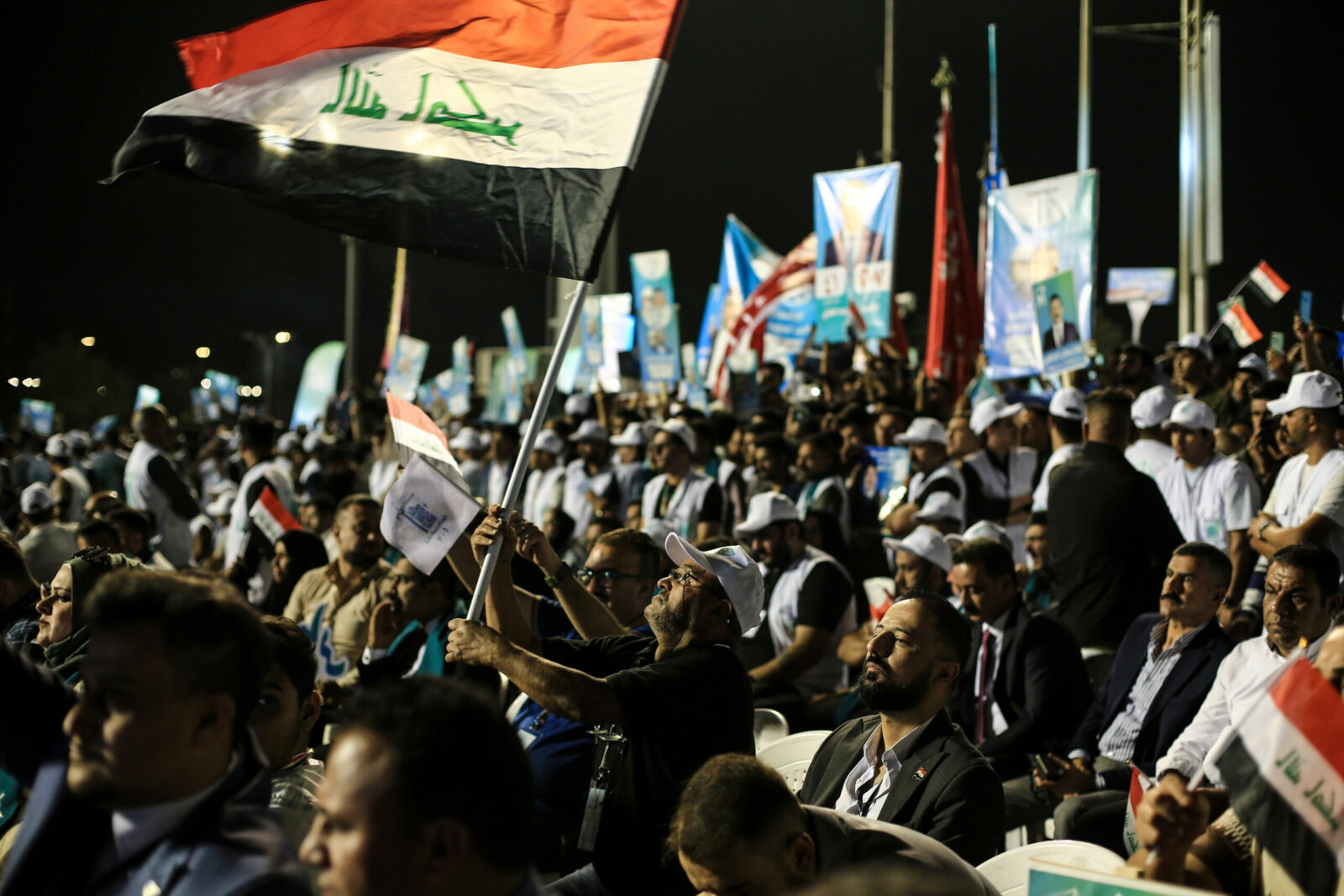
Iraq has held parliamentary elections to fill all 329 seats in parliament. The day was marked by increased voter turnout, and the results indicate progress for forces sympathetic to the resistance axis.
Years after the US occupation, Iraq still has a fragmented structure, which is reflected in the political system, says Yakup Aslan, a journalist specialized on West Asian politics. “Iraq has a constitution based on ethnic and sectarian divisions. According to this constitution, the president of the state must be Kurdish, the prime minister Shia, and the speaker of parliament Sunni.”
Based on this division, the Iraqi people went to elect members of parliament, who would then determine the prime minister and the government by majority vote. The current prime minister, Mohammad Shia al-Sudani, and his coalition finished in first place with 12% of the vote and 46 seats.
For Cevat Pişbin from the Yıldız Technical University, Istanbul, this confirms an existing trend: “With these results, Al-Sudani became a serious political player. This is due to his success in achieving domestic stability and development, while maintaining a balance with international actors.”
Other notable parties include the Progress Party, Taqaddum, which won 36 seats, and the Rule of Law Coalition, led by former Prime Minister Nouri al- Maliki, which secured 29 seats. This coalition is part of the Shiite Coordination Network, a group of parties that, together, won the most seats.
And this is the main outcome, argues Alptekin Dursunoğlu, Editor-in-Chief of Near East News website.
“The resistance achieved a victory so great that it hadn’t even dreamed of it. Within Sudani’s coalition are members of parliament like Falih El- Fayyad, who was president of the Hashd al-Shaabi, and this coalition can be considered the most pro-American. Second, the bloc of al Sadiqoun won 27 seats, a result they hadn’t even anticipated. On the other side, the resistance opponents suffered an incredible defeat.
Al Hashd al Shaabi, or the Popular Mobilization Forces, are anti-American armed groups with political wings and are allied with Iran. Israel targeted them.
“After the 12-day war, Netanyahu, speaking from the podium of the United Nations General Assembly, pointed to Iraq and asked what would happen now to the Popular Mobilization Forces (PMF ). Their role in the future government may be the most complicated”, says Aslan.
The number of parties in parliament and the lack of a clear majority for any one party led to the need for coalitions.
A stop sign for the US, according to Dursunoğlu: “For now, the current political landscape does not allow the United States to push for a coalition against the resistance. Iran’s allies, for their part, have increased their seats.”
Meetings have begun between various blocs and parties to seek a majority. In 2021, after the last elections, it took Iraq almost a year for a new government to be established. Experts warn that we must wait, but agree that the resistance forces managed to maintain their influence in Iraq.