


By Dure Akram
Germany’s decision to transfer 535 Afghan nationals stranded in Pakistan this winter was presented as an administrative exercise, a clearing of unfinished business inherited from a previous government. In reality, it offered a revealing measure of how international refugee policy has been reshaped since the Taliban returned to Kabul in August 2021. Protection has not been withdrawn outright, nor has it collapsed under legal challenge or political revolt. It has been narrowed through process, rationed through delay, and redesigned so that scale has ceased to be a governing principle, replaced instead by a quieter, more defensible logic of manageability.
Afghans today constitute one of the largest refugee populations in the world, estimated at roughly 6.4 million people. The figure is now widely cited, often treated as background context rather than a living policy problem. What draws less scrutiny is its distribution and the political choices embedded in it. Nearly nine out of ten Afghan refugees live in Iran and Pakistan, not because these states have constructed exemplary asylum systems, but because Western migration regimes have tightened legal entry points while preserving narrow, highly selective pathways that can be defended to domestic constituencies as exceptional rather than structural.
This concentration is not an accident of geography alone. It is the cumulative outcome of decisions taken over several years by wealthier states to privilege control over capacity, and procedural discipline over scale. Germany’s airlift illustrates the model in miniature. The program behind these flights approved several thousand Afghans years ago, many of them journalists, civil society workers, former employees of international organizations, and their immediate families. Hundreds of those approvals later expired, not because threat assessments changed or conditions improved, but because administrative timelines ran out. In practice, the difference between evacuation and abandonment depended less on exposure to risk than on whether a file remained active inside a system designed to shed obligations incrementally and without public confrontation.
That logic now defines much of Western asylum policy. Governments speak the language of screening, order, and deadlines, presenting these as neutral tools of governance rather than political instruments. Admissions no longer track displacement trends or humanitarian urgency so much as domestic tolerance thresholds and electoral risk. Asylum, once anchored in international law and framed as a durable obligation, increasingly functions as a concession delivered through bureaucracy, vulnerable to expiry and procedural attrition.
The United States figures prominently in this landscape, though its role is better understood as an accelerant rather than an architect. Following the late-November 2025 shooting in Washington, DC, in which an Afghan national was accused of killing National Guard service members, US policy moved quickly under intense domestic pressure. Within days, the State Department announced a pause on visa issuances to Afghan nationals applying with Afghan passports, including Special Immigrant Visas intended for Afghans who had worked alongside US forces. Consular officers were instructed to halt processing, and visas already authorized but not printed were cancelled.
The decision reflected a familiar American impulse to privilege visible security assurance in moments of shock, even when the policy instrument employed is broader than the threat it seeks to address. It is also important to note that the pause did not amount to a wholesale repudiation of Afghan protection commitments, nor did it erase pathways already used by tens of thousands since 2021. Since the withdrawal, nearly 200,000 Afghans have entered the United States through parole, refugee, and SIV routes, a figure that remains substantial by any global measure.
At the same time, around 265,000 Afghans remain abroad, many in Pakistan or other transit states, having cleared multiple layers of security vetting and awaiting processing. For these individuals, the pause translates not into exclusion but into prolonged uncertainty. Their legal status does not improve, their vulnerability does not recede, and the burden of their presence continues to fall on host countries already carrying disproportionate responsibility.
Security concerns sit at the center of this debate and cannot be dismissed as rhetorical cover. Afghan nationals and networks have appeared in terrorism investigations across regions, and UN monitoring continues to document the presence of transnational militant groups operating from Afghan territory. Pakistan, in particular, attributes a significant share of cross-border attacks to organizations sheltering in Afghanistan, while the Taliban have shown limited capacity, and at times limited inclination, to curb their activities. Governments responding to electorates unsettled by violence face real constraints, not merely political convenience.
The question, therefore, is not whether states should respond, but how proportionately and with what downstream effects. Increasingly, states reach for collective administrative tools rather than case-specific enforcement mechanisms capable of distinguishing between individual risk profiles. Nationality becomes shorthand for threat. Visa channels slow or freeze across the board. Deportation campaigns accelerate in bulk. These measures are politically legible and administratively efficient, particularly in charged domestic climates, but they are also imprecise. They capture large numbers of people who pose no discernible threat while leaving the underlying drivers of insecurity largely untouched.
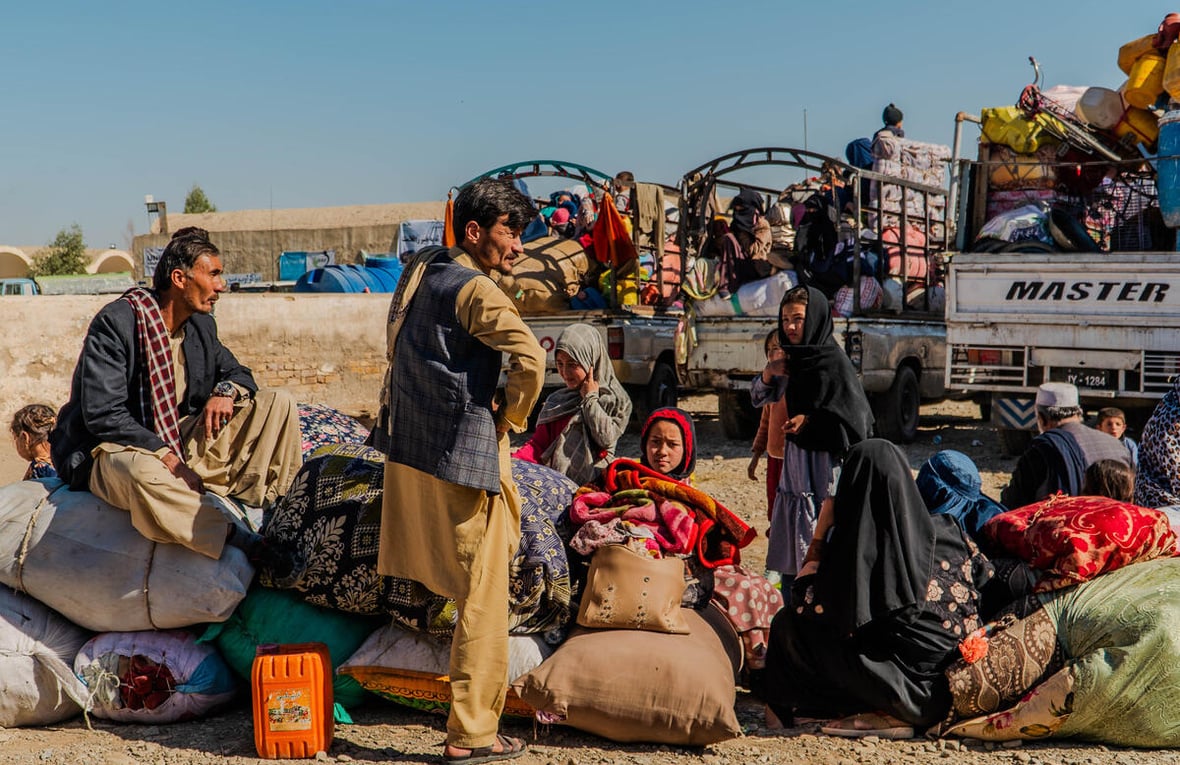
Iran demonstrates how this approach functions when scaled. In 2025 alone, Iranian authorities expelled more than 1.6 million Afghans, according to official statements, while humanitarian organizations estimate that Iran and Pakistan together forced over 2.6 million people back into Afghanistan in a single year, around 60 percent of them women and children. Many of those expelled had lived in Iran for more than a decade, raising families and working informally within a legal grey zone shaped by shifting registration regimes. Documentation gaps, often the product of policy churn rather than deliberate non-compliance, were treated as grounds for removal rather than regularization.
Pakistan’s trajectory has followed a similar path, though under different pressures. Since late 2023, more than 800,000 Afghans have left Pakistan under pressure, with humanitarian agencies projecting totals exceeding one million if the pace continues. The campaign has relied on domestic security and immigration statutes rather than refugee law, allowing authorities to frame the exercise as enforcement rather than refoulement. Settlements have been dismantled, and families who have lived in Pakistan for decades, including those born there, are being told to return to a country they barely know.
Surveys conducted in refugee communities indicate that a substantial share of those leaving Iran and Pakistan have no land, no employment prospects, and no durable social networks in Afghanistan. Deportation in these cases is not a return to origin or a restoration of national belonging. It is displacement by force, shifting vulnerability across borders without resolving it, and often intensifying the very instability host states claim to be managing.
International law remains formally intact. The prohibition on forced return to danger still exists in treaties, court decisions, and official statements. What has changed is enforcement. Temporary protection statuses lapse quietly, appeals are compressed or curtailed, and “safe return” is asserted without independent verification or sustained monitoring. Each step is defensible in isolation, often justified as technical or transitional. Together, they hollow out protection without requiring a single parliamentary vote or formal repudiation of international norms.
Conditions inside Afghanistan underscore the stakes of this erosion. The economy has yet to recover from the post-2021 contraction, and public sector employment remains sharply reduced. Women continue to be barred from secondary education and most forms of paid work, entrenching household vulnerability and long-term dependency. UN monitoring missions have documented arbitrary detention, intimidation, and abuse of former officials, journalists, and activists, including among recent returnees. Humanitarian agencies warn that around 17 million Afghans face food insecurity, with winter assistance severely underfunded and millions of children acutely malnourished, pointing to a crisis that is structural rather than seasonal.
Large-scale deportation also requires cooperation, a reality that introduces its own contradictions. Flights must land, borders must open, and lists must clear. This has produced quiet operational engagement between governments and Taliban authorities, even as diplomatic recognition is denied, and public rhetoric remains uncompromising. Removal depends on the very regime whose practices triggered flight, while aid flows and technical coordination fill the diplomatic vacuum, allowing deportations to proceed without public negotiation or accountability.
Public opinion is managed accordingly. Refugees are reduced to aggregates, schedules, and enforcement targets, while individual circumstances recede from view. When violence occurs, identity tends to outrun evidence. A recent attack at a crowded public venue in Australia briefly saw refugees misidentified as suspects before facts corrected the narrative, an episode that passed quickly but revealed how reflexive suspicion has become. Across regions, political incentives reward visible toughness over procedural precision.
Wealthier states have not dismantled their asylum systems, nor have they openly renounced their commitments. They have externalized costs instead, shifting responsibility outward to neighbors of conflict zones and downward to individuals with the least legal leverage. The system appears orderly on paper, governed by rules and deadlines, while exporting instability in practice.
For Pakistan and other major host states, the implications are strategic as much as humanitarian. Large-scale return will not neutralize militancy emanating from Afghanistan, nor will it resolve the security dilemmas that animate domestic politics. It risks intensifying competition for work, land, and patronage inside countries already grappling with inflation, debt pressure, and political volatility, while narrowing room for maneuver by tying domestic security more tightly to developments across borders they cannot shape. Deportation may ease short-term political pressure, but it deepens long-term exposure.
Germany’s airlift, limited and precise, captures the moment with unintended clarity. Protection is now selective, time-bound, and politically insulated, while mass displacement is treated as a regional problem to be managed rather than a global obligation to be shared. Afghan displacement did not reach this scale overnight, and it will not be resolved through deportation schedules or visa pauses.
What has changed is the international tolerance for exclusion administered quietly and justified administratively. The costs are being absorbed disproportionately by the Global South, not because it chose this role, but because others, constrained by politics at home, have stepped back from it.