


Retired Ambassador Ozan Ceyhun spoke about the rising right-wing populist parties in Europe.
Ceyhun, who most recently served as Türkiye’s ambassador to Austria for 4 years and 10 months, worked for the majority of his 44-year career in several EU countries, mostly Germany.
His tenure ended in December 2024. During his time in Vienna, Ceyhun had frequently engaged with Austria’s Freedom Party (FPÖ), just like he did with other parties in the country.
Also drawing on his personal experience, Ceyhun in an interview with “Aydınlık Europe”, the supplement of Turkish Aydınlık newspaper in Europe, shared his views on how Turkish community Türkiye should approach the rising “right-wing populist” parties in Europe.
We present the interview translated from Turkish.
————————————————————————————————————————
You are an experienced politician and diplomat. Shall we start career and experiences?
I am 65 years old. I lived the most defining part of my life, approximately 44 years, mainly in Germany, also in Belgium, Austria, and other EU countries.
During this time, I gained extensive local political experience in Germany. I also held managerial and advisory positions in institutions such as the State Government and the Federal Parliament. Within the European Union (EU), I served both as a Member of the European Parliament and as Head of the Department responsible for Justice and Interior Policies at Türkiye’s Permanent Representation in Hessen.
After these offices in Germany and Belgium, I worked for six years as a Special Advisor at Türkiye’s Permanent Representation to the EU. Later, I served as Türkiye’s Ambassador to Vienna.
In total, I spent 15 years in Brussels, and a bit in Strasbourg, as a parliamentarian and manager.
The European Parliament and, naturally, the EU Commission which becomes part of your work are among the best “schools” for gaining experience in international relations.
“I felt proud when Schröder said ‘Women, young people, and Turks made me Chancellor’”
One of the accomplishments I am particularly proud of was the 2002 election in which Gerhard Schröder narrowly defeated Edmund Stoiber from the CSU. It was a “first” in German history. I played a role in this success as the campaign manager for “Newcomers for Chancellor Schröder,” which addressed the newly migrated people. In this, we used Turkish language intensively. When Schröder said, “Women, young people, and Turks made me Chancellor,” I would be lying if I said I wasn’t proud.
In short, I gained valuable experience in nearly every area of politics and bureaucracy. Being alongside and learning from seasoned politicians like Gerhard Schröder, Joschka Fischer, and Franz Müntefering was so valuable.
This mistaken criterion for allies
Drawing on your years-long experience, who are Türkiye’s friends in Europe?
During my time before, during, and after serving as a Member of the European Parliament, and during my service as a Special Advisor at Türkiye’s Permanent Representation to the EU, I realized that the statement “Türkiye’s friends are social democrats and greens” is not accurate. Of course, there are exceptions. But in general, unfortunately, this is the reality.
In the past, Türkiye’s dialogue efforts tended to focus on centrist parties such as Germany’s Christian Democratic Union (CDU) and Social Democratic Party (SPD). Today, however, while the CDU, the Bavarian Christian Social Union (CSU), or Austria’s People’s Party (ÖVP) can still maintain a certain vote share, the SPD and Austria’s Social Democratic Party (SPÖ) have largely become minor parties (only retaining first-party status in a few cities).
And the commonly held beliefs that “conservatives and right-wing populists are our opponents” or “they are anti-Türkiye” aren’t true.
In fact, concepts like “friendship” are not suitable for such analyses. In international relations, especially in a world undergoing major transformations, seeing actors simply as “friends” or “enemies” is nearly impossible. Sometimes, as I have observed, the sincerity of those you assume are your opponents is far more valuable than the deceit of those you believe are your friends. In recent years, my experiences with conservatives and right-wing populists have been very positive.
For many years in Germany and Austria, perhaps based on mistaken expectations. We measured how “friendly” parties are to Türkiye with their policy about Türkiye’s EU membership. But in reality, those who said, “We do not support your EU membership” were the sincere ones, while those who claimed to be our friends and supported Türkiye’s membership, and demanded our votes in elections, were actually stringing us along.
We also searched for allies based on this mistaken criterion and wanted to believe in them even when we genuinely didn’t. On the surface, they were saying, “We support your EU membership,” but behind closed doors, their behavior was different. I even know of a Social Democrat EU Commissioner who said regarding Türkiye’s membership, “Nur über meine Leiche” (“Only over my dead body”).
What is the fruit of “alliance” with Social Democrats and Greens?
For many years, Turkish society had hope from “smiling” social democrats and greens in Europe. These parties’ aim was to secure Turkish votes. I believe the Turkish community suffered enough.
In my 45 years of experience in Europe, when it comes to social democrats and greens, it is very difficult for me to answer the question: “Where did we get with them?” If we got somewhere, it was only with the approval of conservatives. We never reached something that conservative didn’t support. And what does this mean? Perhaps for many years, we wasted time by holding back in our relations with conservatives and even right-wing populists.
Now we need to quickly make up for this lost time. In fact, a growing portion of the Turkish community started doing that. In Germany, the number of Turkish-origin conservative politicians in parties like the CDU and CSU, not just as voters, but also as MPs and even federal ministers, is significant. Among AfD voters, the number of Turkish-origin voters is steadily increasing.
In Austria, the ÖVP is not yet the kind of party that Turkish-origin conservatives consider “their political address” as is the case with Germany’s CDU or CSU. Only the Vorarlberg state is a bit different in this regard, where the ÖVP enjoys similar high interest from Turks.
But, the FPÖ has surpassed Germany’s AfD in terms of the support it receives from Turkish-origin voters. Particularly in the Salzburg and Vienna state elections, the FPÖ received significant votes from Turkish-origin voters. This development needs to be analyzed correctly.
The rise of “right-wing populists”
Why does it need to be analyzed correctly? Why is it important for the Turkish community and Türkiye?
It is significant for the future of the Turkish community. Turkish-origin people who now consider Germany or Austria their “homeland” make choices in line with this sense of “homeland”.
First, we need to agree on this: in democracies, we must respect voter decisions. Just like, we say “Our people chose our leaders. What’s it to you?” when someone in Europe says, “Erdoğan has been elected but we do not recognize this election”, the same principle applies in Europe, whether the winner be AfD, FPÖ or someone else.
In Europe, people are increasingly supporting right-wing populists. In Germany, AfD’s current vote share is 26.5%, while the nearest party CDU-CSU is around 23–24%. The Social Democrats fluctuate between 15–20%, and the Liberals fail to cross the 5% threshold.
Looking at Austria, the right-wing populist FPÖ is clearly the leading party with 36% of the vote and trending toward 40%. It holds power in five of Austria’s nine states, has state governors in one, and is likely to come to power in Upper Austria (Oberösterreich). We are talking about a party which, except Vienna, could be a coalition partner almost everywhere.
Particularly in Austria, the business community believes that conservatives and right-wing populists form the most accurate coalition model.
Let me be clear: Personally, I don’t have a stance like “I really like the AfD, they are my party, or FPÖ is my party. I admire the Prime Minister in Italy, or I’m a Le Pen supporter in France”. I cannot have such a stance. That’s not my job. I only say we need to recognize these realities and see that conservatives and right-wing populists are developing as the inevitable coalition models of the future. Our politics and relations should be adopted accordingly.
“Great disappointment” of the Turkish community from Social Democrats and Greens
Why has the Turkish community moved away from Social Democrats and Greens toward AfD and FPÖ?
In my view, the main reason is great disappointment.
For years, the Greens and Social Democrats, believing that “Turkish-origin votes are already in the pocket,” always secured their votes, but did almost nothing to meet their expectations. They fell far short of what was expected.
“New homeland” for Turks
Meanwhile, Turkish voters have long since become settled in Europe. For example, in Germany and Austria, Turks have grown up in villages, towns, and cities alongside native Austrian or German neighbors, classmates, and childhood friends. Some of these friends became heads of mosque cultural associations, others became police chiefs, and other mayors. In other words, they developed strong relationships in their communities. This is an integration, a sense of being “local”, process.
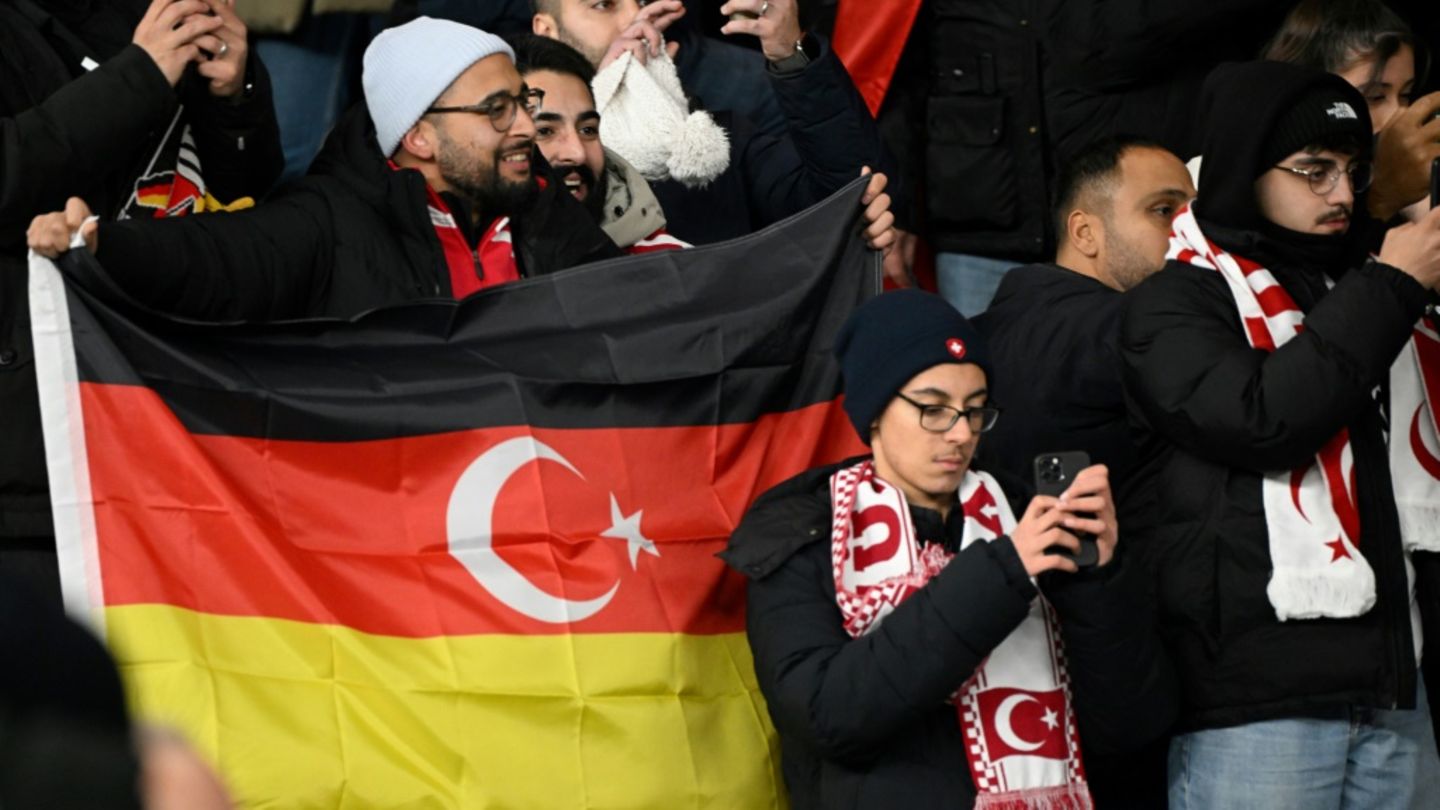
One day, a leading Austrian official asked me, “Ambassador, why are Turks now voting for FPÖ?” I responded, “Didn’t you want them to integrate? It seems the Turks have integrated.” We laughed, but this is not just a joke. Turks now want to protect what they have and prevent what could disturb their peace, simply because they feel at home here. In their villages, towns, neighborhoods, and cities, they are concerned about disruptions to the peaceful living conditions in their “new countries” and do not want the “outsiders” they perceive as uncooperative. For example, during the last European Championship matches, those who attacked Turkish-origin Viennese celebrating with Turkish flags on the streets were not “far-right skinheads”! That is one reason.
Second, I should remind that the vast majority of the Turkish community is conservative. They are very sensitive about religious issues as much as Catholic ÖVP or FPÖ members are. What does this mean? Issues like LGBT and similar things make Turkish-origin Austrians, especially parents with children in school, uneasy.
AfD and FPÖ: 10 years before and after
Perhaps those who remember the discourse of parties like AfD and FPÖ toward Turks 10 or even 5 years ago are still reactive. I respect that. But we must also remember: the world has changed. Europe is changing. The old European Union is no longer there. Everything is evolving very quickly. For this reason, instead of refusing to engage with someone based on what they said 10 years ago, it is far more important and necessary to look at where they stand today 10 years later.
What is the accurate term: “far-right” or “right-wing populist”
Many media outlets, both in Europe and Türkiye, define AfD and FPÖ as “far-right”. Do you see these parties as “far”?
I find it wrong. The media in Türkiye is failing to evaluate Europe correctly. I have been careful to avoid using the term “far-right.” Because everyone uses it as a way to “smear” those they oppose.
If one must approach these parties critically, the correct term is “right-wing populist” in my view.
Take Hungary. Prime Minister Orbán is one of President Erdoğan’s closest allies. Orbán is labeled “far-right” by certain circles in the EU. Is he far-right to the Turkish media? No, no one calls him “far-right” in Türkiye. So why does the Turkish media call FPÖ, one of Orbán’s allies and partners in EU matters, “far-right”? What I said also goes for AfD.
Now, when I say this, some will claim “Ozan Ceyhun has become an FPÖ or AfD supporter”. That is one of my biggest complaints. When discussing this, you find yourself having to explain that you are not actually “far-right” or “right-wing populist”. The issue at stake isn’t about being “far-right” or “right-wing populist”.
As a citizen who feels responsible for safeguarding my country’s interests and as someone who will continue to advocate for the interests of the Turkish community in Europe, I say: we should see the realities clearly and make accurate analyses.
Dialogue and preparing for the future
Following the “accurate analyses” we’re emphasizing, what steps should be taken? What should be done?
Of course, it is necessary and always proper to maintain good relations with the parties currently in power in EU countries. But it would not hurt to also prepare for the future!
For example, if a political party assigns five or six people to foreign relations, appointing one to engage with a right-wing populist party would not be wrong. This would establish a healthy dialogue with that group.
Actually, this is not a new debate. I had written about it at length before. Why am I pursuing this discussion? Because I do not want us to be late. If we are late, I believe the Turkish community in Europe will face difficulties in resolving certain issues later. But if we start the dialogue today, it will be much easier to protect our interests and achieve our expectations when they come to power tomorrow.
Cover photo: Stern, AfP