


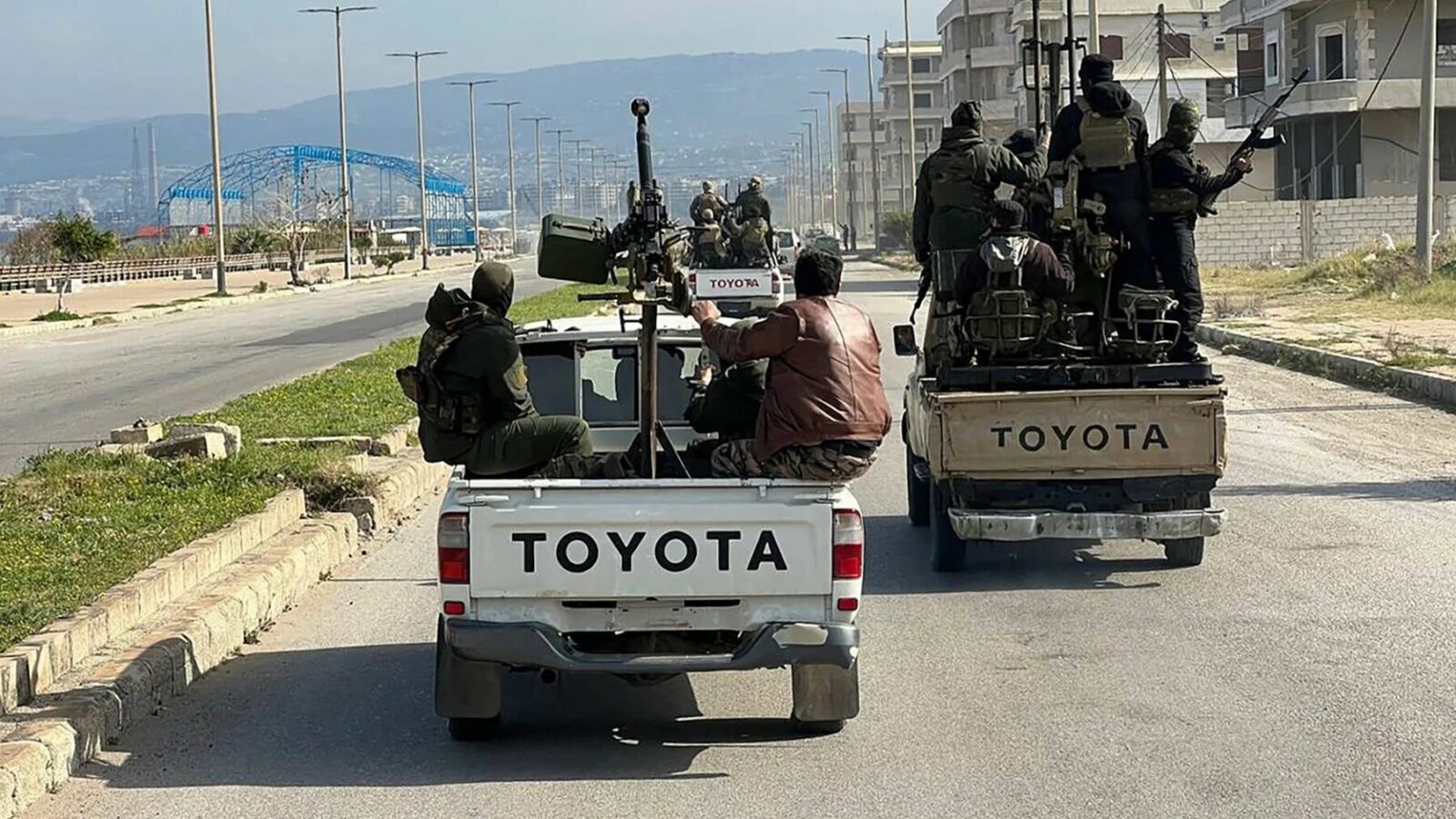
Syria experienced days of intense fighting that ended on Tuesday with a preliminary agreement, which could determine the country’s administrative future.
It all began in two neighborhoods of the city of Aleppo. After the evacuation of the civilian population and clashes, the armed groups belonging to the Syrian Democratic Forces had to retreat east of the Euphrates River.
For Ünal Atabay, former colonel of the Turkish Armed Forces and expert in security and international relations, not a surprise:
“The Aleppo operation was an operation within a city, much more difficult to carry out. Its success gave confidence to the Syrian government and its armed forces, and they continued the offensive toward Deir Hafir and Maskana.”
Within a few days, as the Syrian democratic forces withdrew, the government armed forces advanced to the cities of Rakka and Deir Ez Zor, crossing to the east of the Euphrates River, first time since years that the SDF had to admit Syrian military actors here.
“The SDF lacked a social base to defend the territories west of the river, because the population there is made up of Arabs. But once they had to retreat so far, the Arab tribes in the east also abandoned the SDF and switched to the government side”, according to Atabay.
The offensive was briefly halted on Sunday by an agreement between the government and the SDF, mediated by US special envoy Tom Barrack, with more diplomatic action behind the scenes, according to Dr. Eray Güçlüer, President of the Center for Eurasian Strategic Studies (ASAM)
“It was crucial to avoid foreign intervention against the operation, for example, bombings by Israel. More importantly, there were US soldiers on the ground who could have intervened. Here, President Erdoğan prepared the diplomatic ground.”
The terms of agreement of 14 points were fundamental: the transition of all civil and political institutions to the central government and the individual integration of Kurdish fighters into national security institutions, expulsion of PKK fighters from Syria.
Güçlüer says: “Regional autonomy, that David’s corridor of Israel, connecting these regions with the Mediterranean… All these projects are going to the dustbin of history. There’s no going back.”
But there was a brief going back: after meeting with interim president Ahmad Sharaa on Monday, Mazlum Abdi, the SDF commander, rejected the agreement, also due to internal dynamics explains Levent Kemal, expert on terrorism and security.
Syrian advance
“The SDF organization is not monolithic. It includes elements of the PKK in Syria, elements of international left-wing organizations, members of the PKK from Iraq, and others. Therefore, while some accepted the truce, others continued fighting.”
After meeting Abdi, Al Sharaa spoke by phone with US President Donald Trump. Syrian forces and allies advanced into the autonomous region, reaching the outskirts of the cities of Ayn al- Arab and Hasakah, the provincial capital. The SDF called for international resistance, with protests also taking place in Türkiye.
But negotiations continued, says Erkin Öncan: “Negotiations continued even during the clashes. It’s important to remember that the territories governed by the SDF are very important areas, both militarily and economically, with their oil and gas fields and agricultural production.”
In the meantime, several Arab tribes, until now included in the SDF, rebelled and changed sides in favor of the Syrian government, effectively turning over an important crossing to Iraq. Syrian army, allied tribes and militia conquered the majority of the oil fields east of the Euphrates, which had been in the hands of the SDF during years, providing essential income for the self-declared autonomous region.
On Tuesday night, the Syrian presidency presented a new proposal: the position of deputy defense minister for the SDF, representatives in parliament and government positions, as well as protection of cultural rights.
Barrack called on the SDF to take advantage of the offer, while Trump praised the cooperation with the Syrian government. The US special envoy’s statement on X indicates a strategic repositioning of the US in Syria.
US envoy: original purpose of the SDF has “expired”, US no interest in “separatism or federalism”
He wrote on his X account the following:
“Today, the situation has fundamentally changed. Syria now has an acknowledged central government that has joined the Global Coalition to Defeat ISIS (as its 90th member in late 2025), signaling a westward pivot and cooperation with the US on counterterrorism. This shifts the rationale for the US-SDF partnership: the original purpose of the SDF as the primary anti-ISIS force on the ground has largely expired.”
Barrack, who is also US ambassador to Türkiye, added: “The US has no interest in long-term military presence; it prioritizes defeating ISIS remnants, supporting reconciliation, and advancing national unity without endorsing separatism or federalism.”
The SDF has 2 days to draft the proposal, while a ceasefire remains in effect. Meanwhile, with Arab tribes deflecting from it, many argue that one cannot speak of the SDF anymore, and what remains in Syria as combatants are only YPG/PKK forces.
From these, recent news report several attacks on Syrian armed forces, militias, with PKK members being transferred from Iraq to Syria as well, while diplomacy continues in the background.
It remains to be seen whether the majority of the YPG forces in Syria will accept the agreement, which is supported by the US and Türkiye, while Israel at least acknowledges it. It’s rejection, with widening protests spilling over to Türkiye would not only prolonge continued fighting in Syria but also endanger the so-called “Terror-free Türkiye” process up north.