

From Caracas / Venezuela
The United States’ military incursion into Venezuela is an expression of the interventionist tendencies that have characterized that country almost since its founding in 1776. A cursed race, born from impoverished Europeans expelled from their homelands and imbued with a supposed divine gift that, according to them, made them a people chosen by God, set about inventing a country after exterminating the indigenous peoples who had lived in that territory since time immemorial. From then on, their resentment, their hatred of humanity, and their insatiable thirst to destroy everything that is not theirs or to seize what they need through imposition and force, is the hallmark of a state whose elites have made it despicable to a large part of humanity, while another part, through the media, has transformed it into a paradise where many want to go despite being mistreated, despised, and exploited.
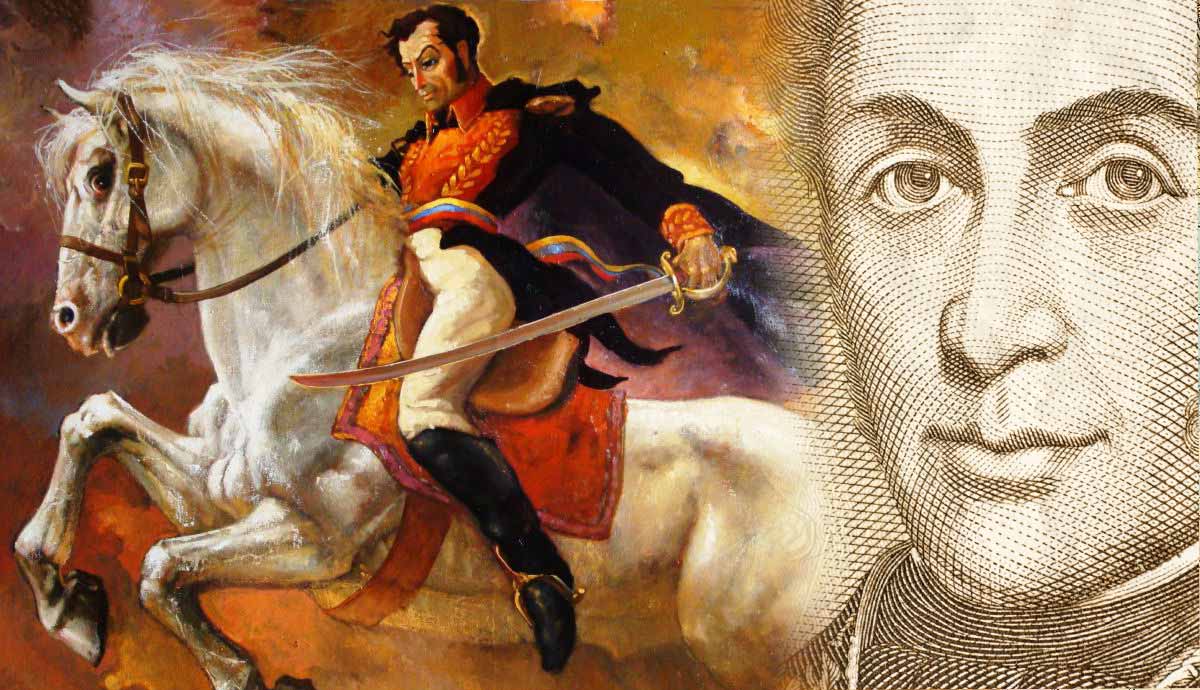
In the case of Venezuela, US intervention has been present since the times of the struggle for independence. However, at that time, the Liberator understood that they, like the British, were “temporary and very selfish allies.” In that context, Bolívar recommended dialogue and negotiation with them, using “sweet and persuasive language to elicit their final decision and buy time in the meantime.”
Like a perverse curse from the north, every time a new century begins (as has happened in all three centuries of the republic’s existence), the United States raises its claws to the point of sharp, offensive aggression against the country. At the start of the 19th century, after his meeting with President Monroe’s special envoy, John B. Irvine, in 1818, the Liberator understood the interventionist and aggressive nature of the northern country when he realized that Irvine’s views were radically opposed to his own, which prevented any agreements from being reached.
Bolívar made it clear to the American diplomat that he would not accept interference from his country in the internal affairs of Venezuela. Likewise, in the particular case being debated regarding the blockade of the Orinoco River by the patriot forces, he strongly rejected Irvine’s position when he tried to dictate guidelines regarding Venezuela’s right to take political or military measures for the better development of the war against Spanish colonialism.
When the 20th century began and during its early years , the United States began to develop an open intervention in the internal affairs of Venezuela, focusing on the management of the oil business, which transformed Venezuela – in the first half of that century – into one of the world’s great producers and exporters, leaving the country marked by this legacy that generated a particular identity in the chorus of nations to this day.
The 19th century in Venezuela was characterized by a long succession of military governments, where autocracy and strongman rule defined governance due to institutional weakness and the absence of the state in important regions of the country. Two figures, José Antonio Páez and Antonio Guzmán Blanco, dominated political life.
It seemed that the century would end under that banner, and the memory of “official history” reflects this. However, Cipriano Castro’s rise to power established—besides the link between two centuries—the signal of what would become a proposal for the country’s transformation in its relationship with the forms of domination and subordination to imperialist capital. Although Castro’s path to power did not differ significantly from that of his predecessors, and his discourse did not vary—in essence—from that of the caudillos of the time, his refusal to satisfy the financial demands of European nations that opted for attack, bombing, and subsequent blockade of our coasts marked a turning point for the Republic in its political development in its dealings with the United States and the other powers of the Old Continent.
In the context of the time, it should be noted that the United States Ambassador to Venezuela, Francis Loomis, had been accused of conspiring against the Venezuelan government under pressure from the New York and Bermúdez Company. This company had obtained a logging concession—without authorization from the Venezuelan state—through a transfer received from Horace R. Hamilton and George A. Phillips, private businessmen who had acquired it in 1884 during the government of Antonio Guzmán Blanco for the exploitation of “natural resources.”
The Venezuelan government rejected the transfer when it was discovered that the territory in question was located near the largest asphalt lake on the continent, the gigantic Lake Guanoco. The Bermúdez Company had been involved in numerous lawsuits with previous governments because it was unable to prove the validity of the concession and the terms of the agreement.
President Castro’s government initiated legal actions to violate the concession, thus beginning a major conflict with the Asphalt Trust, which wielded considerable influence in the United States government.
This country allocated $130,000 to finance the conspiracy known as the “Liberating Revolution.” In the early years of Castro’s government, the Bermúdez Company decided to approach Manuel Antonio Matos, a banker turned general and a fierce opponent of Castro, who felt threatened by the president’s break with the financial sector. Matos undertook the task of organizing an army, uniting all the factions opposed to Castro. Although he secured the support of the French Interoceanic Cable Company and the German Great Venezuelan Railway Company, who offered logistical and financial assistance to the “Liberating Revolution,” Matos was defeated at the Battle of La Victoria on November 2, 1902, ending the uprising and consolidating Castro’s power. Loomis was removed from his post and replaced by Herbert W. Bowen, a figure who would play a significant role in the events that would unfold in the following years.
Seizing control of the Venezuelan economy during its oil boom was an undisguised ambition of the European powers. Under these circumstances, supposedly indebted countries resorted to the forced collection of this “debt,” knowing that this solution was not feasible under the conditions they demanded, and therefore resorted to military intervention.
The events unfolded when naval forces from England, Germany, and Italy attacked and subsequently partially destroyed Venezuelan ports, ultimately blockading them. Simultaneously, they bombarded Puerto Cabello and made a failed attempt to land on the shores of Zulia State, an attempt thwarted by the challenging navigational conditions on Lake Maracaibo and the decisive response of the Venezuelan armed forces stationed at San Carlos de la Barra Castle, located at the lake’s entrance. Days later, France, the Netherlands, Spain, Belgium, and even Mexico joined the protest.
The Venezuelan president’s response shocked the nation when, on December 9, 1902, he proclaimed: “The insolent foot of the foreigner has profaned the sacred soil of the Fatherland.” Initially, it was assumed that the United States would respond forcefully to the European aggression under the Monroe Doctrine; however, this did not occur. The U.S. government explained that the Doctrine was not applicable in situations where an American nation failed to fulfill its commitments.
This attitude, which appeared as a neutral response to the event, concealed, however, the true intention of the new empire in setting the limits of European intervention, establishing that it would only be a pressure tactic to collect the debt but preventing the deepening of the military operation so that it would not lead to an invasion with troops, an action only conceived in our continent for its execution by the United States army within the framework of the application of the Monroe Doctrine, thus demarcating, with precision, the scope of its expansionist influence.
Contrary to the application of the Monroe Doctrine, a proposal emerged from Latin America that became a doctrine of American international law, based on the position established by Argentine Foreign Minister Luis María Drago, who argued that military action to collect debts arising from loans contracted by the State was illegal. President Roosevelt, for his part, argued against the Drago Doctrine, maintaining that intervention in a country did not contradict the Argentine jurist’s proposal if it was not linked to the conquest of territories.
However, this action, and the actions of the US government through its representative in Caracas, constituted a clear intervention in the country’s internal affairs, turning the excessive stance of a Europe that was witnessing its waning power on the continent in its favor. Amid the structural weakness of the Venezuelan political system and its absolute financial precariousness, President Castro was forced to negotiate with the creditors regarding the repayment of the debts. Ambassador Bowen was appointed as Venezuela’s negotiator after the United States’ mediation in the conflict was accepted. The “Washington Protocols” were thus signed without any Venezuelan having any say in their negotiation. Each of these ten instruments—one with each creditor nation—was agreed upon by Bowen with these countries.
It is widely known that Bowen made his own decisions without consulting the Venezuelan government. The Protocols are a true affront to Venezuela and an imposition that defies all reason and disregards the national interest. Bowen argued that both he and his president had already committed to the claimants under these conditions, which were detrimental to Venezuela, but that they could not be changed.
No further comment is needed regarding the nature of the negotiation, which was outside the bounds not only of Public International Law but also of Private International Law. However, beyond legal doctrine, it is solidly supported by documents held by the Republic that the claimed debt was simply nonexistent, that there was no evidence to support it, and that the claims were unviable because the claimants had no right to it, and even because the documents used had been illegally forged.
This entire incident, which could have been resolved through bilateral negotiations with each party, was in reality the perfect instrument for measuring the power dynamics between the United States and the European powers. Europe wanted to know how much power Washington had amassed in its efforts to enforce the Monroe Doctrine. The United States, for its part, wanted the American countries to understand that its economic interests on the continent would be safeguarded at any cost.
For this reason, it was necessary to put a stop to the nationalist attempt that General Cipriano Castro was making in Venezuela. A combination of military measures, economic pressure, and diplomatic interference had resolved this conflict in favor of the nascent imperialist power, ruling in favor of its European allies and setting a precedent for what would follow in 20th-century America.
In 1904, the United States implemented the Roosevelt Corollary to the Monroe Doctrine, thereby assuming the “responsibility” to intervene in any country on the continent if the property or rights of American companies were endangered or threatened. It was a necessary complement for the United States at the beginning of its imperialist phase.
The failure to make the payments agreed upon in the Washington Protocols was the justification for the coup d’état that Juan Vicente Gómez, a close associate of Castro but more inclined to favor foreign interests, staged against 1908 ahis former boss and friend. It is important to note that the United States Embassy in Venezuela itself had informed its government in 1907 that the Venezuelan government had finished paying off its debt to the aggressor powers, as stipulated in the legal proceedings, and was preparing to pay the remaining debt to other creditor countries.
These events kept relations between the United States and Venezuela in a state of marked deterioration as the century progressed. Foreign powers never ceased their attempts to overthrow Castro’s government. He failed to maintain the alliance he had forged against foreign invasion, nor could he even preserve the unity of his party, the Liberal Restoration Party, within which Juan Vicente Gómez began to lead a clique of disaffected individuals. With the president’s illness, the possibility of his removal from power began to emerge. Various factions vied to oust the ailing leader, but it was Gómez who initiated contact with the U.S. government to secure its support for a future conspiracy.
Castro’s departure for Europe to receive medical treatment set in motion an internal conspiracy that found a clear ally in the United States. US Secretary of State Philander Knox himself spearheaded this plot, offering support for a coup d’état and summoning European powers to secure their backing. December 19th was chosen as the date to consummate Gómez’s rise to power while President Castro remained in Europe. The US battleships Maine, Des Moines, and North Carolina soon arrived in La Guaira. Likewise, Washington’s High Commissioner, William I. Buchanan, arrived in Caracas to offer Gómez the full support of the US government. In exchange, Gómez pledged to shift Castro’s nationalist policies toward ones favoring foreign investors and their countries.
The political circumstances surrounding Juan Vicente Gómez’s dictatorship set the tone for his foreign policy, particularly his relationship with the United States. During his rule, the oil industry became the center of the economy and the axis around which the Republic’s activities revolved. His determination to maintain power through repression always enjoyed the support of the United States, which turned a blind eye to the countless acts that violated every democratic obligation.
The United States’ interest in Venezuela’s vast energy resources stemmed from its burgeoning status as the world’s leading industrial and financial power in the 20th century. This rise followed its involvement in the Spanish-Cuban-American War, the signing of the 1898 Treaty of Paris, and its annexation of Panama, where it would build the canal and, more importantly, establish a massive military presence to exert control over the Western Hemisphere. It needed control and oversight of the enormous oil reserves gushing from Venezuela’s subsoil. Nothing could serve its interests more effectively than a subservient and corrupt government that it could manipulate at will.
Nearly a century later, in the waning days of the 20th and the beginning of the 21st, Hugo Chávez came to power in Venezuela. He set out—starting with the adoption of a new Constitution— to change the rules of the game so that Venezuelans would be the ones to benefit from the nation’s enormous wealth. Washington’s response was almost immediate: in April 2002, they organized, armed, and financed a coup against President Chávez, who was reinstated by the people in less than 72 hours. Likewise, the United States ordered sabotage of the oil industry, resulting in direct losses of nearly $15 billion in unrealized sales, a 9% contraction of GDP in 2003, and the loss of jobs for some 18,000 skilled workers. All of this had a significant impact on the national treasury due to reduced tax revenue.
Although Venezuela managed to recover from this severe blow to its economy, just as in Salvador Allende’s Chile when the United States National Security Advisor, Henry Kissinger, ordered the Chilean economy to be “made to scream,” from then on, the United States used its extensive arsenal of instruments of aggression against the governments of Presidents Hugo Chávez and Nicolás Maduro, who took office in 2013.
In this area we can note: financing of the opposition, attempts to fracture the armed forces, alliance with drug trafficking and Colombian paramilitary groups, alliance with internal organized crime, sabotage of the oil industry, the electricity industry and the National Electoral Council, attempted assassination of President Maduro and other high-ranking leaders of the country, invasion by sea, invasion by land with the support of Colombian presidents, artificial manipulation of the price of the Venezuelan currency, creation of an international organization called the “Lima Group” to overthrow the government of Venezuela, almost 1,000 sanctions against Venezuelan leaders and their oil industry, declaration of Venezuela as an “unusual and extraordinary” threat to the national security of the United States, campaigns of lies, distortions and falsifications of the national reality through corporate media, conspiratorial activities of the United States embassy in Caracas and a long list of other actions.
In recent times, this has escalated to the deployment of a fleet in the Caribbean Sea to impede Venezuela’s oil trade and enable the destruction of small fishing boats, the authorization of the CIA to carry out covert operations against the country, culminating in an armed incursion that resulted in the death of 83 citizens, injuries to more than 100, and the kidnapping of President Maduro and his wife.
The Nazi regime that has seized power in the United States is only comparable in history to its German predecessor, Adolf Hitler, during the last century. Washington’s imperialist tendencies, present almost since its inception as a nation, have reached unprecedented levels. We in Venezuela have the responsibility to resist this dark moment in history, and the world will have to decide whether to fight against the expansion of Nazism or coexist peacefully with it. Before, it was Palestine, Iran, Yemen, eastern Ukraine, Sudan, the Central African Republic, Haiti, and Venezuela. Greenland and Europe are about to be added to the list.
But just as every hundred years we suffer in the highest place the increase of American brutality and irrationality, we also remember that, when the poet Pablo Neruda asked the Liberator: “Father, […] are you, or are you not, or who are you?, he answered: “I awaken every hundred years when the people awaken.”