


By Dure Akram, from Lahore / Pakistan
The latest UN sanctions-monitoring report puts a hard edge on a question the region has tried to keep diplomatic: whether Taliban-ruled Afghanistan is merely unstable, or functionally permissive for the kind of cross-border militancy that turns trade maps into casualty lists. In its most recent assessment, the UN Security Council’s Analytical Support and Sanctions Monitoring Team says a “wide range of member states” continue to report the presence of ISIL-K, the Tehreek-e-Taliban Pakistan (TTP), Al Qaeda, and the Eastern Turkistan Islamic Movement—also known as the Turkistan Islamic Party—inside Afghanistan, with some groups using Afghan soil to plan and prepare external attacks.
That matters to Pakistan because it hardens the argument Islamabad has been making since 2021: the violence it is absorbing is not simply “homegrown”; it is enabled by sanctuary next door. The UN’s framing does not settle every contested detail, but it does something more consequential: it internationalizes the sanctuary debate, widening the circle of states with an interest in forcing Kabul to move from denial to verifiable action.
It matters to Türkiye and Central Asia for the same reason Pakistan’s diplomats have been in motion with corridor pitches. A corridor is not a slogan; it is a promise about risk. And risk, in this region, is rarely confined to one border.
Days before Islamabad was hit by its deadliest attack in years, a Taliban-aligned cleric, Sher Ali Hamad, used a funeral gathering near Kabul to call for “jihad” against Pakistan and several Central Asian states. He derided their political systems as “parliamentary and infidel” and said he would not rest until “the flag of Islam” was raised in Islamabad. The remarks circulated widely online. They should be read less as a formal state position than as a signal of what militant networks feel newly confident enough to say out loud: that the region’s emerging trade geometry is a legitimate target set. Kabul continues to reject allegations that it poses a threat to its neighbors, but the problem for Afghanistan’s diplomacy is that rhetoric like this is treated across the region as a window into permissive space, not as a lone provocation.
Afghan rulers have publicly vowed to strengthen ties with Pakistan and the wider region, yet regional capitals read the contradiction through their own anxieties. Islamabad has repeatedly accused Afghanistan of serving as a sanctuary for Pakistani militants, an allegation even some international analysts have echoed. Beijing has a direct security stake in Uyghur militancy; Central Asian governments worry about foreign fighters using Afghan space to incubate infiltration; Iran watches Sunni militant spillover with familiar unease. Even when these states keep their public language restrained, their planning is rarely restrained: they tighten borders and hedge against Afghan volatility as if the threat is real because they have no incentive to assume otherwise. If Kabul’s leadership truly wanted to reassure the region, it would treat voices like Hamad’s not as background noise but as a reputational liability to be contained.
Then on February 6, a suicide bomber struck the Khadija Tul Kubra imambargah in Islamabad during Friday prayers, killing at least 31 and injuring well over 160. Islamic State claimed responsibility. The symbolism was brutal. Pakistan’s capital—the diplomatic showcase where visiting delegations are meant to feel distance from frontier disorder—was reminded, publicly and bloodily, that it is not sealed off from the region’s fires.
That the attack dominated headlines during the visit of Uzbekistan’s President Shavkat Mirziyoyev sharpened the strategic discomfort. Mr Mirziyoyev was in Pakistan on a February 5–6 state visit, and both sides reiterated a $2 billion trade target while signing 28 memoranda of understanding and agreements. Pakistan’s foreign ministry framed the visit in the language of connectivity and long-term partnership, exactly the vocabulary a corridor state needs. But investors and visiting delegations weigh ceremony against risk, and one spectacular attack can cheapen a year’s worth of corridor branding.
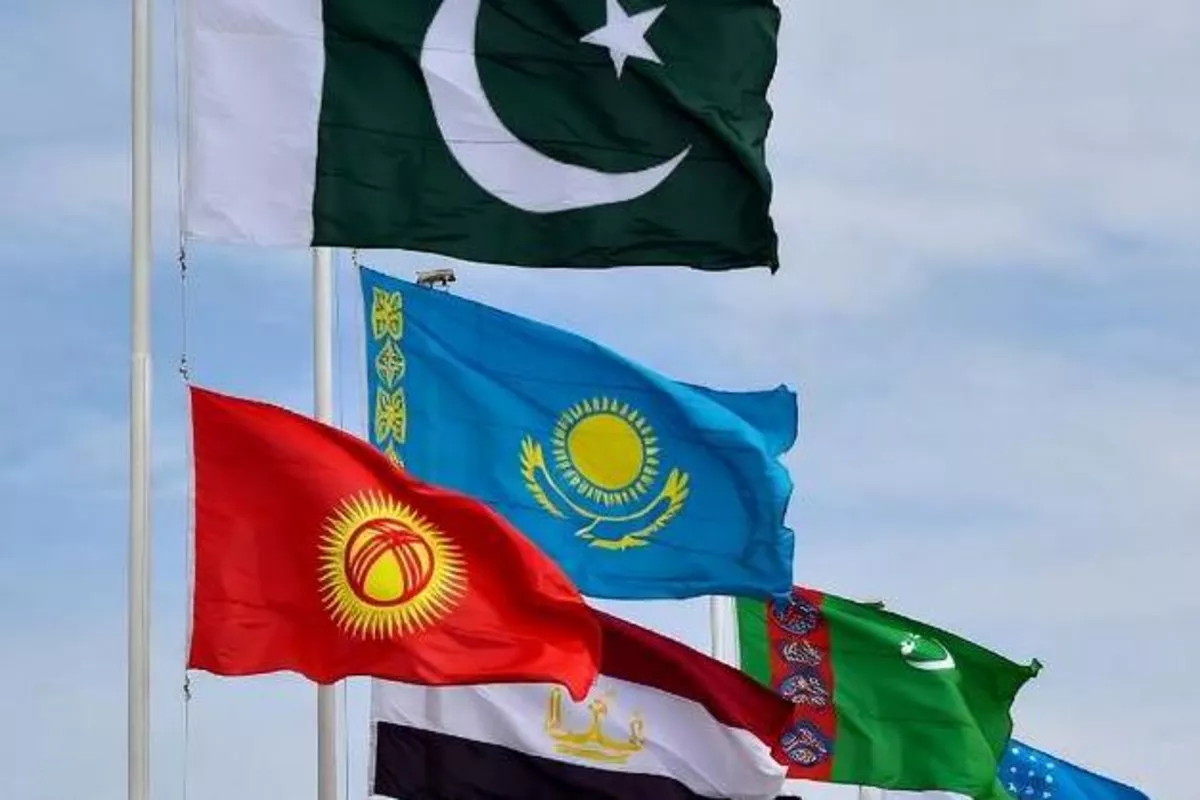
Zoom out, and Islamabad’s calendar reads like a deliberate attempt to lock in a Central Asia arc. Kazakhstan’s President Kassym-Jomart Tokayev visited in early February, and 20 agreements were signed across transport, logistics, mining, healthcare and education, with transit routes explicitly treated as a priority. Earlier, Kyrgyzstan’s President Sadyr Japarov’s December 2025 visit was framed around connectivity and access. The corridor logic is not subtle. Central Asia wants options beyond traditional chokepoints. Pakistan seeks routes that are not held hostage by a single neighbor’s instability.
Here is the dilemma, in plain terms. Pakistan is trying to sell itself as the southern hinge of Central Asia’s access to warm waters at the exact moment militant networks and militant propaganda are advertising their intent to rupture that hinge.
Islamabad’s response to the February 6 bombing carried two tracks at once: condemnation and investigation on the civilian side; claims of breakthroughs and facilitation networks on the security side; and public emphasis that cross-border links are part of the story. Kabul, as expected, rejects the allegation that Afghan soil is used for attacks in Pakistan. But that exchange—accusation, denial, counter-accusation—has become a regional ritual, and rituals do not reassure corridor partners. What reassures them is demonstrable disruption of facilitation networks, credible prosecution, and a sustained reduction in attack capacity over time.
This is why the UN monitoring language is so corrosive for Taliban diplomacy. It does not merely echo Pakistan’s claims; it places them inside an international document that other states treat as a planning input. It tells capitals that prefer quiet management over public confrontation that quiet does not erase risk.
Türkiye belongs in this story for two reasons. First, Ankara is one of Pakistan’s most reliable partners and a serious security interlocutor. Second, Türkiye sits at the intersection of two sensitive conversations: its domestic public debate around Uyghur identity, and its strategic balancing act with Beijing. When a UN report foregrounds ETIM/TIP in Afghanistan, it is not a theoretical footnote for a state that must manage public sentiment, regional security, and external economic constraints simultaneously.
Pakistan’s relationship with Türkiye is often narrated as brotherhood. That framing is sentimental; the underlying logic is transactional and strategic. In July 2025, Turkish Foreign Minister Hakan Fidan—alongside Türkiye’s defense minister—visited Pakistan with counterterrorism and defense-industry cooperation among the stated priorities, a reminder that Ankara reads the region through a security lens even when it speaks the language of trade and diplomacy. The Istanbul–Tehran–Islamabad rail line is often held up as a symbol of connectivity. Symbols matter, but militants understand the underlying math. Undermining a corridor is cheaper than building one.
Taken together, Pakistan’s Central Asia courtship and its deepening partnerships beyond the region signal intent: facing a Taliban regime it does not trust, Islamabad is trying to build redundancy—political, commercial, and logistical—so that Afghanistan is not the single point of failure in its northward strategy. Pakistan’s disputes with Kabul have also repeatedly disrupted cross-border commerce, reinforcing the logic of alternatives. Newer transit ideas, including routes via China and Central Asia under existing frameworks like the Quadrilateral Traffic and Transit Agreement, are being pushed precisely because over-reliance has become a liability.
Militants understand the same geometry. That is why jihadist rhetoric now names Central Asian states alongside Pakistan, and why the Islamic State’s regional messaging frames itself as an enemy of borders, sects and trade. The spoiler’s logic is simple: if you cannot control territory, you can still sabotage confidence.
Pakistan’s violence trend line has hardened that urgency. The Global Terrorism Index 2025 ranked Pakistan second worldwide, reporting terror deaths rising 45% to 1,081. Militants are not confined to the border belt; violence has also flared in Balochistan and, at times, far from frontier terrain. In response, Pakistan’s parliament moved in 2025 to restore preventive detention provisions in anti-terror legislation, allowing up to 90 days’ detention for suspects under specified conditions. The government argues this creates a lawful tool to curb militancy. Critics warn about abuse and rights erosion. Legally or not, the strategic imperative is clear: Pakistan must show it can fight terror as fiercely as it courts new allies.
Behind the geopolitics lie deeper wounds. The February 6 strike on a Shia imambargah was a sectarian message delivered through mass death. Pakistan’s sectarian fault-line is long-running, and it cannot be separated from foreign policy because it shapes internal legitimacy and external perception at the same time. A state that cannot protect worshippers in daylight will struggle to convince partners it can protect corridors, rail nodes, and logistics chains. If diplomacy is to succeed, Islamabad must reconcile its own house: countering propaganda, teaching tolerance, and protecting every citizen.
Read the UN report alongside the Kabul jihad-call rhetoric and the Islamabad blast, and a pattern emerges. Afghanistan’s militant marketplace is becoming transnational again, with South Asia, Central Asia, and the China-adjacent theatre bleeding into one another. The more Pakistan advertises itself as a corridor state, the more it becomes a target set—because destabilizing connectivity is a low-cost way to impose strategic veto power.
That is where Pakistan’s diplomacy with Türkiye stops being a sentimental slogan and turns into a practical question of shared security interests, as Ankara and Islamabad regularly frame cooperation around trade, transport and counterterror coordination.
Islamabad now faces a choice it has postponed for years. One path is to keep treating Afghanistan as a diplomatic problem with periodic pressure and episodic punishment, while hoping Central Asia outreach and China-linked transit logic will outrun the security rot. The other path is to treat militancy as a systems problem that eats trade policy for breakfast and build a counterterror posture that is not only muscular, but credible in court, legible to citizens, and reassuring to partners who read UN reports with a cold eye.
Pakistan’s Central Asia push is rational. Its Türkiye partnership is strategically useful. However, none of it will hold if Islamabad cannot protect worshippers in daylight.
The UN report’s significance is not that it tells Pakistan something it did not know. It changes the audience. It widens the circle of states with a direct stake in forcing Kabul to stop playing word games and start producing verifiable outcomes. That wider stake is Pakistan’s opportunity—and its test. Pakistan can use corridor diplomacy to build a regional understanding that treats sanctuary as unacceptable, whether the militants are TTP cadres, ISIL-K facilitators, or Uyghur fighters drifting through Badakhshan. It can also fail and keep absorbing blasts while signing memoranda.
A corridor state is judged in moments of crisis, not in conference photos; Islamabad has learned that the hardest way. It now needs to prove, once, that connectivity is not an invitation to be bled—only then will Pakistan’s pivot look like a strategy rather than hope.