

By Dr. Fernando Esteche
There are moments when history condenses. When what had been brewing for years in offices, in national security documents, working papers, in private agreements between corporations and states, suddenly becomes visible. February 2026 was one of those moments for Our America.
Three events in fifteen days. On February 4, Washington convened 54 countries to discuss the distribution of Third World resources, particularly those of Latin America. On February 11, the Pentagon convened 34 military leaders from across the hemisphere for the first time in history to agree on subordination disguised as cooperation. On February 18, the head of Southern Command landed in Caracas to “agree” on a post-Maduro “normalization” transition, 49 days after the command had kidnapped the president and his wife in a military operation.
These aren’t just three news items. It’s an operation. And it has a name, a surname, and a doctrine.
The imperial administrator and his historical time
Before discussing the events, we must discuss the man who orchestrated them. Not to humanize him or engage in reverse propaganda, but to understand him for what he is: a top-tier political operative at the service of an imperial machine that transcends him, yet which he serves with remarkable efficiency.
Marco Rubio currently wields a level of power unseen in Washington since Henry Kissinger in the 1970s. He is simultaneously Secretary of State and National Security Advisor, the first official since Kissinger to hold both positions concurrently. Furthermore, he served as acting administrator of USAID while dismantling it from within, and he has articulated the entire hemispheric agenda like no other administration official.
The comparison with Kissinger is pertinent in terms of the deployment and concentration of power, not intellectual caliber. Each is a product of his time. Kissinger was the imperial architect of the bipolar equilibrium: a realist who manipulated the global chessboard with the coldness of a chess player, willing to sacrifice entire countries to maintain the balance of power. Rubio is the imperial architect of hegemonic decline: an ideologue who is pushing urgently because he knows the window of opportunity is closing, that multipolarity is advancing, that time is running out.
What unites them is not intelligence but function; they are effective instruments of imperial management that, in each era, adopts the forms that its historical moment requires. Kissinger operated with the confidence of one who leads the world. Rubio operates with the anxiety of one who fears losing it.
And there is another difference that matters for understanding what happened in February. Kissinger was facing Latin American elites who, although subordinate, had their own national projects, their own organic intellectuals, their own visions of the state. He could negotiate, exert pressure, but he also needed to build minimal consensus.
Rubio encounters something else entirely. He finds a backyard subcontinent whose ruling elites, with notable exceptions, display an intellectual caliber and strategic vision commensurate with their own self-importance; foreign ministers who travel to Washington to sign “framework instruments” without questioning what lies beneath, generals who welcome surveillance technology without calculating the price of dependency, and presidents who mistake alignment with development. The poverty of thought among these elites is not accidental but rather the result of decades of cultural colonization, of universities emptied of critical thinking, and of a ruling class that learned to measure itself against the mirror of the North rather than against the needs of its own people.
PIA Global’s analysis, in Oscar Rotundo’s article on the architecture of the critical minerals summit and Héctor Bernardo’s article on the hemispheric military leaders’ conference, accurately points out this: the US operation of February 2026 encountered no organized resistance because, on the Latin American side, there was no collective political entity capable of formulating it. There was no counterproposal. There was no regional coordination. There wasn’t even a joint statement from the affected countries.
The asymmetry isn’t just about power. It’s about the project. And that, precisely, is what needs to change.
The distribution of common goods
The Truman State Department Building, Washington, February 4, 2026. In the room were representatives from 54 countries, 43 foreign ministers, Vice President J.D. Vance, the Secretary of the Treasury, the Secretary of the Interior, the Secretary of Energy, the U.S. Trade Representative, and Marco Rubio. The entire architecture of American economic and strategic power was present in a single room. Never before had Rubio deployed such a large cabinet for a multilateral event. The group photo was part of the message.
The pretext was cooperation. The real objective was the distribution of roles in the global supply chain of critical minerals: the 17 rare earth elements and the more than 50 other elements that the 21st century transformed into the new oil. These are the inputs without which there are no chips, no batteries, no precision missiles, no electric vehicles, no satellites, no war economy, and no peace economy.
China controls approximately 90% of the world’s processing of these materials. In 2025, it imposed temporary restrictions on its exports of heavy rare earth elements. North American and European manufacturers felt the impact. What happened on February 4th was the organic response to that show of Chinese power.
Who were invited? Why?
The official State Department list includes Angola, Argentina, Armenia, Australia, Bahrain, Belgium, Bolivia, Brazil, Canada, Cook Islands, Czech Republic, Democratic Republic of Congo, Dominican Republic, Ecuador, Estonia, Finland, France, Germany, Greece, Guinea, India, Israel, Italy, Japan, Jordan, Kazakhstan, Kenya, Lithuania, Malaysia, Mexico, Mongolia, Morocco, New Zealand, Norway, Oman, Pakistan, Paraguay, Peru, Philippines, Poland, Qatar, Republic of Korea, Romania, Saudi Arabia, Sierra Leone, Singapore, Sweden, Thailand, Netherlands, Ukraine, United Arab Emirates, United Kingdom, Uzbekistan, and Zambia. And the European Commission.
Reading that list is like reading Washington’s world map. It’s organized by four logics: first, those with the subsoil resources they need. All of Latin America, sub-Saharan Africa, Central Asia, the Pacific. These are the countries with lithium, cobalt, graphite, copper, and rare earth elements. Their place at the table is that of the supplier. They came to sign, not to design.
Second are the technological and industrial allies. The entire G7, South Korea, Australia, India, and Singapore. They are the ones who process, refine, and manufacture. Value-added is negotiated with them. They are the real club of the summit. They are the so-called VIP- Techs.
Third, the geopolitical allies of the moment: Israel, Saudi Arabia, the UAE, Qatar, Ukraine, and Poland. They don’t possess relevant critical minerals. They are there because Washington needs them in other areas: the Middle East, the war in Europe, and containing Iran. Their aim is to disrupt the harmony of multipolarity.
Fourth, the absentees speak volumes. Chile wasn’t invited. It has the largest lithium and copper reserves on the planet and forms the Lithium Triangle with Argentina and Bolivia. But its outgoing government isn’t aligned with Washington. Colombia, under Petro and despite Petro, wasn’t invited either. Bolivia attended but signed nothing. Cuba, Nicaragua—it goes without saying.
And the most telling absence: Greenland and Denmark were not invited. Washington wants to seize Greenland—which has extraordinary rare earth deposits—without recognizing it as a sovereign partner. Inviting it would have contradicted the policy of annexation. The map of those invited is a map of the uses of power.
Project Vault: the name says it all
Two days before the summit, on February 2, Trump announced Project Vault : a strategic reserve of critical minerals with $12 billion in initial capital. Ten billion dollars came from the Export-Import Bank of America—the largest loan in the institution’s history—plus nearly two billion dollars in private capital contributed by General Motors, Boeing, Google, GE Vernova, Clarios, and other corporations.
The reserve will store more than 50 minerals in secure, decentralized facilities across North America. The stated goal is to guarantee 60 days of industrial self-sufficiency if China cuts off production. The real objective is to have Latin American, African, and Central Asian mineral reserves stored in North American vaults before any alternative regional coordination mechanism emerges.
Project Vault has an irony that the specialized press itself pointed out: the administration that preaches free markets and defunds the state is thus building the largest state-run industrial intervention in decades. It is copying the Chinese model to combat China. It is designing strategic state reserves to protect its corporations. Free-market capitalism, when it feels threatened, always turns to statism.
But it also has its structural limitations; it can accumulate raw ore from Argentina or the Congo, but without its own processing capacity, it will continue to depend on China for final processing. That’s why Rubio enthusiastically highlighted Argentina’s ‘ processing expertise’. The ore vault needs the supplier and the intermediate processor. Both are located outside the country.
FORGE and the implied clause
During the summit, Rubio announced the creation of FORGE—the Forum on Geostrategic Resource Engagement—as the successor to the Mineral Security Partnership. Vance announced the intention to create a trade bloc with price floors for critical minerals: mechanisms to protect allied producers from low Chinese prices and discourage sales to Beijing.
At the end of the day, eleven new bilateral agreements were signed with Argentina, the Cook Islands, Ecuador, Guinea, Morocco, Paraguay, Peru, the Philippines, the United Arab Emirates, and Uzbekistan. Additional framework agreements were also signed with the European Union, Japan, and Mexico. These eleven documents in a single day add to the 21 signed in the previous five months.
The clause that no agreement explicitly states but that all contain is always the same: whoever signs with Washington does not sign with Beijing. The documents are ‘non-binding’. The pressure surrounding them, however, is absolutely binding.
As Oscar Rotundo’s analysis of the summit in PIA Global pointed out, the meeting produced not partners, but suppliers. It didn’t build shared value chains, but rather guaranteed supply lines. The difference between the two is the difference between development and plunder with a signed agreement.
The Armies: The Pentagon Welcomes Its Pupils
One week after the minerals summit, on February 11, the Pentagon was the scene of another unprecedented event: 34 Chiefs of Staff from the Western Hemisphere were summoned to Washington for the first time in history.
The meeting was organized by General Dan Caine, Chairman of the Joint Chiefs of Staff, and opened by Pete Hegseth, Secretary of War. It was held behind closed doors. There was no joint statement. No press was allowed. The secrecy is not a minor detail; what isn’t recorded doesn’t need to be defended.
Pete Hegseth got straight to the point when opening the session, according to reports: “Exercises, training, operations, intelligence, access, bases, overflights: let’s work together.” It wasn’t a speech about cooperation between equals. It was a list of requirements.
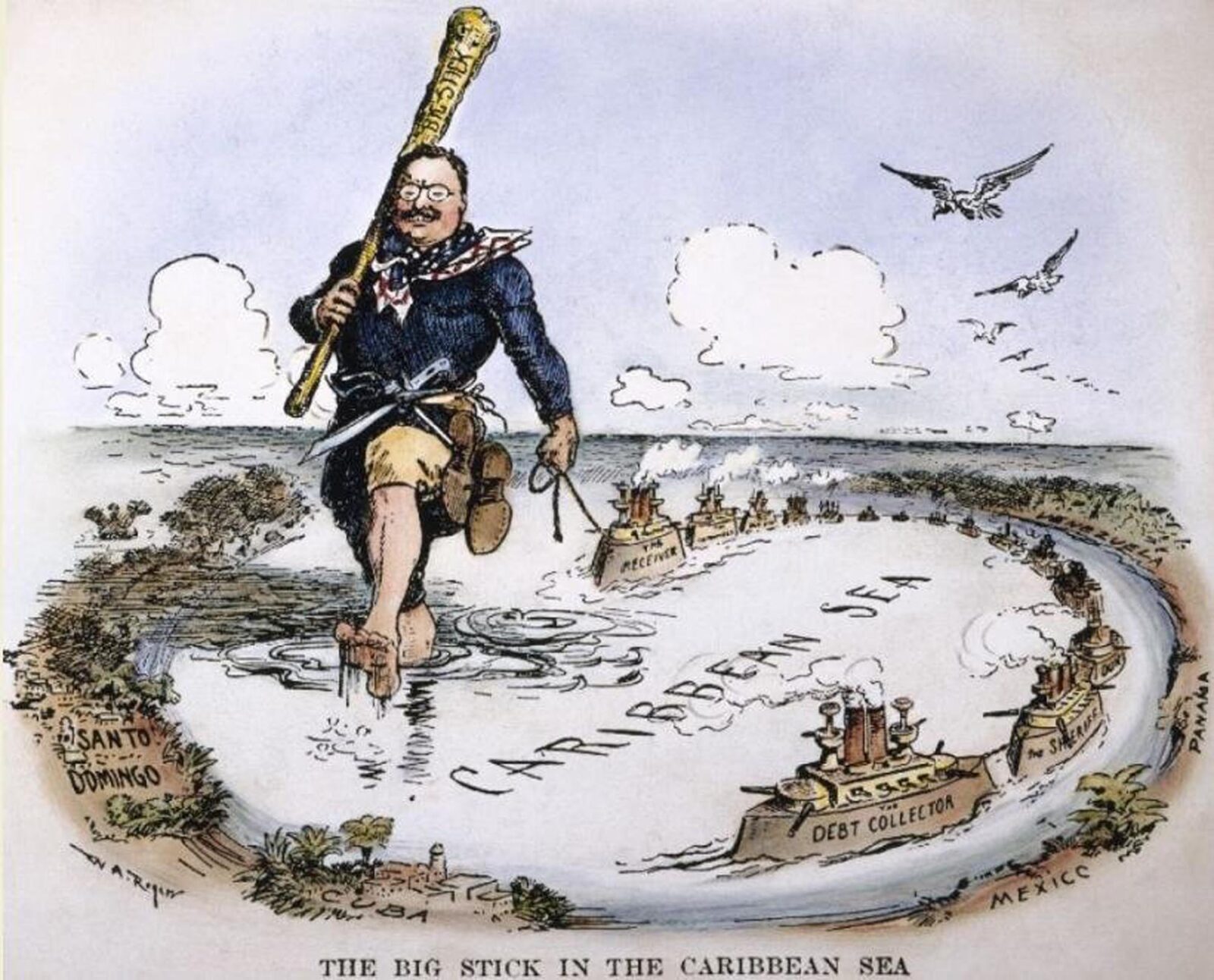
The doctrinal framework was the Trump Corollary to the Monroe Doctrine, incorporated into the 2026 National Defense Strategy. The Monroe Doctrine—1823—declared the American hemisphere a zone of exclusion for external powers. The Trump Corollary adds the 21st-century technological dimension: the active containment of China, Russia, and Iran in the region.
General Guillot, of Northern Command, offered advanced satellite surveillance sensors for border control. General Donovan, of Southern Command, advocated for greater operational freedom for U.S. forces in the region. The technological offer seems generous. Its logic is sound: an army that depends on Pentagon intelligence to monitor its own territory loses control of what it knows about itself.
As Héctor Bernardo documented in PIA Global regarding this conference: the military subordination that was constructed in the Pentagon building on February 11th is not the subordination of defeat in combat. It is the subordination of training, doctrine, technology, and shared intelligence. It is deeper because it is more voluntary. And because those who accept it rarely notice when they began to think in foreign categories.
Among the participants were NATO allies with territories in the Caribbean—France, Denmark, and the United Kingdom—and Argentina, represented by Marcelo Dalle Nogare, the new Chairman of the Joint Chiefs of Staff. The new Argentine commander arrived at the Pentagon in one of the first major military policy events of the Milei administration.
Caracas, closing the siege
On February 18, General Francis Donovan, head of Southern Command, arrived in Caracas. He met with Delcy Rodríguez, the interim president; Vladimir Padrino López, the Minister of Defense; and Diosdado Cabello, the Minister of the Interior.
It was the 49th day since a US military operation kidnapped Nicolás Maduro —’Operation Absolute Resolve’, January 3, 2026—, the first use of direct US military force to overthrow a sovereign government in Latin America since the invasion of Panama in 1989. Thirty-seven years later, the method returned.
Donovan’s visit was presented as ‘stabilization.’ It’s a useful word. It means overseeing the order we imposed. Washington designed a three-phase plan for Venezuela: stabilization of the order, economic recovery under tutelage, and a “democratic transition” with aligned outcomes. A week earlier, Energy Secretary Chris Wright had visited Caracas. His agenda was exclusively oil-related. The scheme is classic: first oil, then “democracy.”
The Southern Command that is currently overseeing the Venezuelan transition is the same one that, in previous months, destroyed more than 30 vessels in the Caribbean during counter-narcotics operations, resulting in over 100 deaths. Its presence in Caracas does not usher in an era of peace.
Donovan’s visit to Caracas marked the end of one phase and the beginning of another. Meeting with two men (Vladimir Padrino and Diosdado Cabello) whose heads have been put on the heads of U.S. agencies, the head of the military force that bombed the city and kidnapped its president staged a scene that neither García Márquez nor the most fantastical of magical realists could have imagined. He met with the Venezuelan government to discuss normalizing relations and stabilizing the country as if his ignominious affront had never happened, and all the players in the scene acted accordingly.
Architecture of dispossession, what the three acts say together
The three acts must be read like a musical score. On February 4th, the underground was secured. On February 11th, the armies were secured. On February 18th, it was demonstrated that words have physical and military consequences. Each event builds upon the previous one. Each one closes exits that the previous ones had left ajar.
The new colonial division
What the minerals summit institutionalized is nothing new; it is the colonial mode of production in a 21st-century guise. Latin America provides raw materials. The global North processes, refines, manufactures, and captures the value. The agreements signed on February 4th do not include local industrialization, technology transfer, or value capture at the source.
Instead of silver and gold, lithium and rare earth elements. Instead of galleons, certified supply chains. Instead of vassalage treaties, ‘framework instruments for strengthening supply’. The vocabulary changes. The logic persists.
The paradox of borders
The same administration that builds walls, deports migrants and displaced people from the Americas en masse, and closes borders to people opens borders to resources. The man who emerges from the underground to seek a better life is detained, prosecuted, and sent back. The underground itself travels unhindered to the vaults of the United States. The integration this architecture proposes is measured in tons of ore, not in rights, not in mobility, not in reciprocity.
There is one element that the imperial narrative never mentions but that is structurally central to explaining why the February operation could be carried out with so little resistance; the quality of the elites with whom Washington found its regional interlocutor.
It’s not just a matter of ideological alignment. It’s about a project, a vision, the ability to think about one’s own territory using one’s own categories. A continent that teaches IMF economics in its own universities, that trains diplomats in its foreign ministries to operate within an order designed by others, that trains its military academies with Pentagon manuals, produces precisely the kind of elite that receives Rubio’s visit with relief rather than suspicion.
This mediocrity is not natural. It is the result of decades of systematic cultural colonization, the defunding of public education and critical thinking, and the destruction of national development projects. Ultimately, it is one of the most effective products of U.S. foreign policy toward the region: the erosion of the material and intellectual conditions for resistance.
The open horizon
It would be convenient to end it here. It would also be dishonest.
The imperial operation of February 2026 is real, it is serious, and its consequences will be long-lasting. But it is not irreversible. There is no moment in Latin American history when the playing field has been definitively fixed. What seems solid today has cracks. What seems consolidated today contains contradictions.
The very architecture that Washington built has its structural limitations. Project Vault depends on minerals it cannot process alone. FORGE requires producing countries to maintain their alignment with a China that offers real alternatives. Military subordination requires internal consensus in each country, and that consensus is not eternal. Venezuela demonstrated that direct intervention is possible, but also that it has global political costs that Washington weighs.
On the other hand, Latin American critical thought has not disappeared, even though it has been displaced from the centers of power. The popular movements that built the alternatives of the 21st century—with all their contradictions and failures—left behind a wealth of political experience and historical groundwork that cannot be erased by an unfavorable election or a change of political cycle. The rigorous analysis produced by Uwidata.com, PIA Global and other critical intelligence spaces in the Global South is part of that accumulated knowledge; a necessary, though insufficient, tool.
What is true, and this must be said without euphemism, is that the current moment demands more than reactive resistance. It demands a plan. It demands a coordinated Latin American response, with the same strategic scope and the same long-term patience as Rubio’s operation. Without that, the vault will continue to fill.