


By Umur Tugay Yücel, political scientist
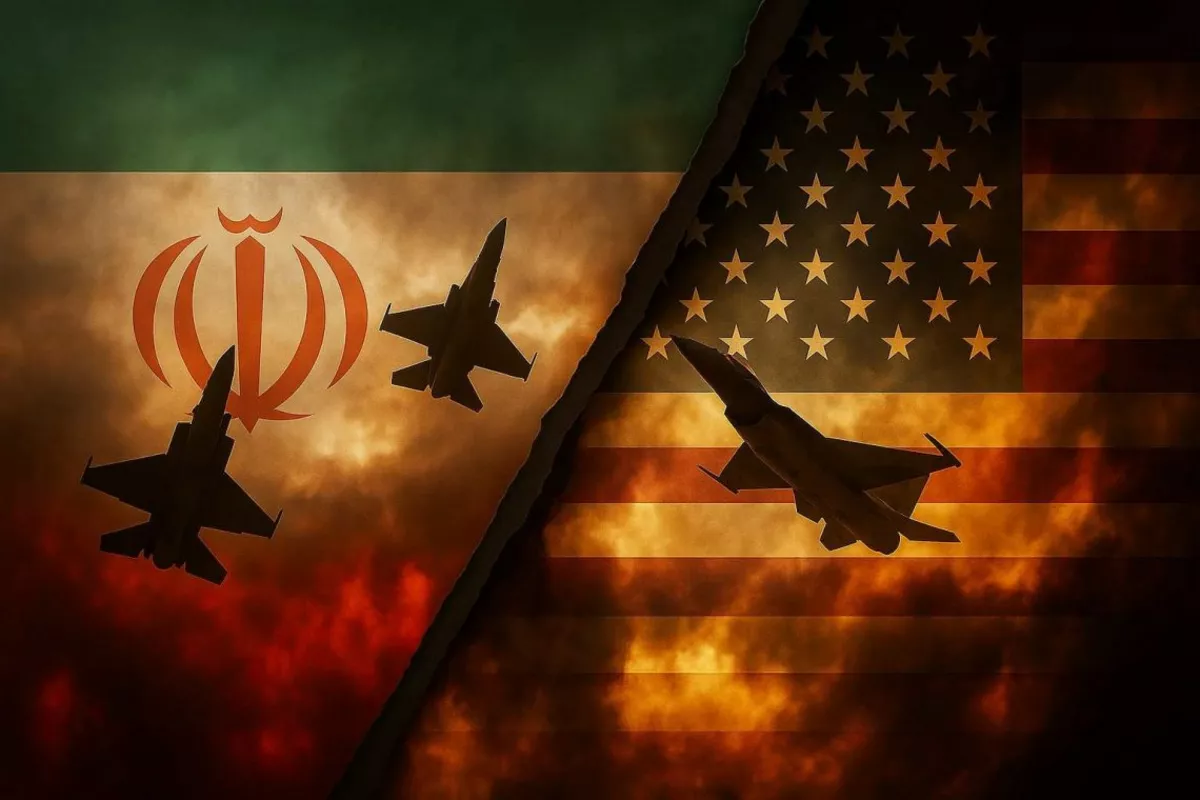
The tension between the United States and Iran is more than just a bilateral crisis; it constitutes a multifaceted strategic competition directly impacting Israel’s security, the Middle East’s security architecture, and global power balances. The nuclear program, the struggle for regional influence, sanctions, and indirect conflicts conducted through proxy actors shape the core dimensions of this tension. The recent increase in harsh rhetoric and military activity has led to a renewed discussion of Washington’s potential military options against Tehran. The scope, priorities, and potential regional consequences of these options have become a major topic of analysis in the international public sphere.
Iran’s internal political situation also plays a significant role in the escalation of tensions. From late 2025 onwards, increasing protests, economic crisis, inflation, and political repression in Iran are emerging as factors challenging the regime’s internal legitimacy. Historically, the Iranian government has attempted to consolidate its social cohesion during periods of internal repression by reinforcing its rhetoric of external threats. In this respect, the tension with the US also serves as a mobilizing tool for the Iranian government in its domestic politics. On the US side, human rights violations in Iran and the harsh crackdown on protests are used as a justification for military and diplomatic pressure.
There is no clear consensus in the international community regarding the likelihood of a direct US attack on Iran. While some media outlets and analysts argue that the risk of an attack has increased, official US authorities have not confirmed that such a decision has been made. Military buildups and harsh rhetoric suggest that Washington aims to deter Iran and force it to make diplomatic concessions. In this context, the possibility of the US considering controlled military options such as limited air or missile strikes in the short term is seen as more likely than a large-scale war. However, even such a limited intervention carries a serious risk for the US, as it could be met with a large-scale response from Iran.
A potential US-Iran conflict could have extremely severe regional and global consequences. Iran’s strategic location on the Strait of Hormuz creates a critical risk area in terms of energy supply. A conflict in the strait could lead to sudden increases in oil and natural gas prices and directly affect the global economy. Indeed, with the increase in tension, there have been fluctuations in Iranian financial markets, and investors have begun to price in the risk of a regional war. This shows that the conflict would affect the international system with its economic and political dimensions.
US Potential Attack Scenarios and Target Priorities
While a potential US attack on Iran might have broad objectives such as “overthrowing the regime,” it would generally focus on deterrence, weakening capabilities, and changing behavior. Therefore, the US’s likely targets are more likely to be limited and selective, focusing on areas where Iran can project military, strategic, and symbolic power. Of course, Washington’s primary concern in this process is to contain Iran’s retaliatory capacity from the outset and prevent the conflict from escalating into a regional war.
In this context, the first target group will be air defense and radar infrastructure. Iran’s long-range missile and air defense systems are a fundamental element of the country’s military deterrence. In US military doctrine, weakening the opponent’s “seeing and detecting” capabilities is essential in the initial phase of a potential attack. Therefore, Iran’s radar networks, early warning systems, and integrated air defense elements are considered among the structures that could be targeted in the initial stages of a potential attack. Striking such targets aims to reduce the risk of subsequent limited air operations.
The second important target category consists of facilities associated with missile capabilities. Iran’s ballistic and cruise missiles are considered one of the most serious military threats to the US and its allies in the region. In this context, missile production infrastructure, storage areas, and command and control structures are among the high-priority targets for the US. The aim here is to reduce Iran’s capacity for a sudden and intense missile retaliation. However, since these targets are generally underground or scattered, completely neutralizing them is quite difficult. This increases the likelihood that the US will resort to limited but symbolic strikes.
The third target group is the military infrastructure linked to the Iranian Revolutionary Guard Corps (IRGC). The IRGC is not only a conventional military structure but also a cornerstone of Iran’s regional influence policy. Therefore, instead of directly targeting the entire Iranian military, the US may prefer to target specific IRGC bases, naval assets, and command centers. Naval assets and fast attack boats, particularly in the Gulf region, are considered critical to the US strategy of protecting maritime trade routes.
Fourth, facilities associated with the nuclear program are always on the agenda in a potential US attack, but they are among the most sensitive targets. Iran’s nuclear infrastructure is an extremely risky group of targets, both militarily and politically. An attack on such facilities could provoke a very harsh response from Iran.
A fifth target category could be military elements with symbolic and psychological significance. In the past, the US has conducted limited attacks aimed at sending a political message rather than targeting the other side’s military capabilities. In this context, specific bases or strategic facilities in Iran could be targeted with the aim of “sending a message” without causing widespread destruction. Such attacks are seen as controlled steps aimed at demonstrating US resolve while avoiding dragging Iran into an all-out war.
Finally, within the context of a possible US intervention in Iran, “leader targeting” options such as kidnapping or assassination of Iran’s top political and military leadership, while unlikely, are not scenarios entirely ruled out. Targeting Ayatollah Ali Khamenei and other high-ranking decision-makers would be perceived by Tehran as a direct attempt at regime change and an existential threat. This could go beyond controlled deterrence and lead to a harsh and large-scale response from Iran, both through its state capabilities and its regional proxy networks. Therefore, these options, due to their potential for high strategic risk, unpredictable escalation, and heavy diplomatic costs, stand out as tools that can only be considered by the US under extraordinary circumstances and in extremely exceptional scenarios.
In conclusion: The nature of the targets will depend on the purpose of the attack
From a general perspective, a direct and large-scale military attack by the US against Iran does not seem certain in the short term. However, the risk has not completely disappeared. The current situation is characterized by uncertainty, mutual threats, and controlled escalation strategies. While the US attempts to strike a balance between military pressure and diplomacy, Iran aims to increase the cost to the other side by hardening its deterrence rhetoric. Therefore, in the coming period, limited military actions, conflicts through proxy forces, and the continuation of diplomatic crises are as likely as a direct war.
However, in a potential US attack on Iran, the nature of the targets would depend on the purpose of the attack. If the aim is deterrence and warning, the targets would be limited and selective. But if the aim is to significantly weaken Iran’s military capabilities, a broader but still controlled set of targets may come into play. In both cases, the US’s primary priority is to limit Iran’s capacity for retaliation and prevent the conflict from escalating into a protracted regional war.
This article was previously published on Independent Türkçe here. Translation by UWI.