


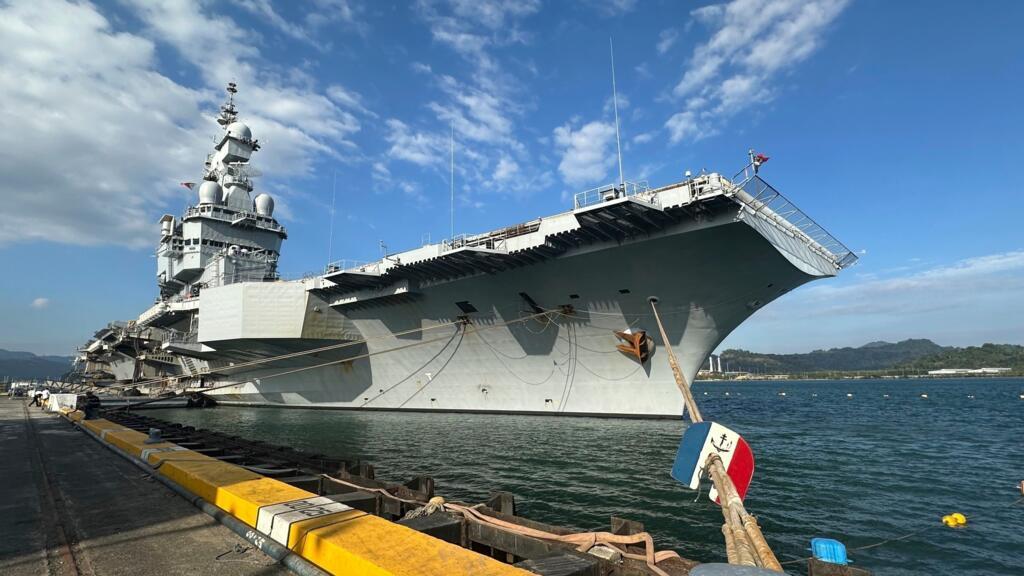
In recent weeks, the island of Cyprus—long a fault line between competing geopolitical visions—has once again emerged as a focal point of escalating military activity. A surge in Western deployments, concentrated primarily in the island’s southern half, has raised alarm bells across the region.
While officials in European capitals frame the buildup as a defensive necessity amid rising tensions in the Middle East, critics argue that the militarization of Cyprus risks undermining decades of fragile stability, drawing the island deeper into great power competition and exposing it to new and unpredictable dangers.
This growing unease is particularly pronounced in the Turkish Republic of Northern Cyprus (TRNC), where political leaders, analysts, and the broader public increasingly view the Western military presence not as a stabilizing force, but as a destabilizing one. Besides, the deployment is even considered as a threat against Türkiye. Interviews conducted over the past days reveal a shared concern: that Cyprus is being transformed into a forward operating base for conflicts far beyond its shores.
Military presence is not limited to deployment. Both aerial and maritime exercises put in jeopoardy the de facto sovereignty of the Turkish Republic of Norther Cyprus.
A New Phase in an Old Conflict
For decades, Cyprus has remained a geopolitical crossroads—strategically located at the intersection of Europe, the Middle East, and North Africa.
Today, that strategic value is once again at the forefront. According to multiple sources and recent reporting by international news agencies, Western countries—including the United States, the United Kingdom, France, and several EU member states—have significantly increased their naval and air presence around the island. Warships, surveillance aircraft, and logistical assets have been deployed, particularly near the British sovereign base areas.
Officials justify this buildup as a precautionary measure linked to regional instability, especially in light of tensions involving Iran and Israel. Yet the speed and scale of the deployment have prompted skepticism.
Gökhan Güler, journalist from the Turkish Republic of Northern Cyprus, describes the shift in stark terms: “We are no longer in a rules-based international system. What we are witnessing is a transition toward a selective, power-driven order.”
The “Security Pretext” Debate
A central question animating debate on the island is whether recent developments are truly reactive, or part of a longer-term strategic plan.
“There is a narrative being constructed,” notes Güler, “that Cyprus is under threat—particularly from Iran. But we must ask: would Iran target Cyprus without provocation? Or is this threat being amplified to justify a pre-existing plan?”
Indeed, conflicting reports have emerged regarding alleged missile or drone activity in early March. While some media outlets cited possible attacks targeting British bases, no clear, independently verified account has been established. Iranian officials have denied responsibility.
Despite the ambiguity, the military response was swift. European naval vessels and aircraft were deployed in large numbers, ostensibly to “protect” Southern Cyprus as an EU member state.
But this justification raises further questions. If the deployments are temporary, critics ask, what guarantees exist that they will be withdrawn once tensions subside?
“What happens when the war ends?” asks Güler. “Will these ships leave? Or will they remain, turning Cyprus into a permanent military hub?”
Buildup for threats
To the north, both on the island and beyond, the deployment is perceived as a threat. “They have turned the southern part into a military camp and an ammunition dept, and started pursuing international military exercises”, says Güler and adds “it is very obvious that these exercises are conducted targeting Türkiye and the Turkish Republic of Nothern Cyprus. This is an operation of encirceling.”
Profesor Hüseyin Işıksal from the Near East University in Northern Cyprus emphasizes the basic position of the South: “The Greek side claims that 35% of “their” territory is under occupation of Turkish military, and announces that these lands will be liberated one day. If, god forbid, one day clashes erup on the island and all these military forces of European countries enter northern Cyprus, pursue massacres, then they will claim to liberate Cyprus from occupation.”
A Military Buildup Years in the Making
Over the past decade, the Southern Cyprus has deepened its military and strategic ties with Western partners. Agreements have been signed allowing foreign forces access to ports, airfields, and training facilities. Joint exercises have become increasingly frequent, often involving scenarios that analysts say implicitly target Türkiye and the TRNC.
At the same time, regional energy projects—particularly those involving offshore gas exploration—have brought Cyprus, Greece, and Israel into closer alignment.
This trilateral cooperation has expanded beyond energy into security. As one interviewee explains, “Since around 2015, we have seen a series of initiatives linking Israel, Greece, and Southern Cyprus—not only in energy, but in infrastructure and defense.”
The result, critics argue, is the gradual transformation of southern Cyprus into what one analyst calls “a military garrison.”
The Role of British Bases
Any discussion of military activity on the island must take into account the United Kingdom’s sovereign base areas at Akrotiri and Dhekelia. Established under the 1960 independence agreements, these bases are not merely military installations—they are sovereign British territory.
“The key point is that these are sovereign bases,” Işıksal emphasizes. “They operate outside local jurisdiction. They can conduct activities without consulting the local population.”
These bases have long played a crucial role in Western operations across the Middle East. From surveillance missions to logistical support, they serve as a hub for projecting power into the region.
Recent conflicts have only increased their importance. “Operations in the Middle East—whether by the U.S., the UK, or Israel—have used these bases for refueling, logistics, and coordination,” the same expert notes.
This raises a critical issue: if Cyprus becomes a staging ground for regional conflicts, it may also become a target.
Israel’s Expanding Footprint
Among the most controversial aspects of the current situation is the perceived role of Israel.
According to Fuat Oktay, Member of parliament of Türkiye’s governing party and the Chairman of the Turkish Parliament’s comission for foreign relations, “Israel seeks instability in the region. It benefits from a prolonged state of conflict, which allows it to pursue its strategic objectives.”
While such claims are contested, there is little doubt that Israel’s ties with Cyprus have deepened significantly. Reports suggest increased Israeli investment in southern Cyprus, as well as cooperation in security and intelligence.
“There are even discussions within the Greek Cypriot community about the extent of Israeli influence,” one analyst claims, citing reports that Israeli entities have acquired strategic properties and play a role in airport security.
Güler adds that recent talks between the three sides elaborated to establish a 2500-soldiers strong military unit in Southern Cyprus. “For long time, Greece was always considered the main ally of Southern Cyprus. But today, there are voices there that claim that the alliance with Israel is even more important.”
Public Reaction in Northern Cyprus
In Northern Cyprus, the reaction has been one of broad concern—cutting across political lines.
“What is striking,” Güler notes, “is that both pro-federation and pro-independence parties agree on this issue. They see the military buildup as a threat to peace and stability.”
Public anxiety is also evident. The island’s economy—heavily dependent on tourism and education—is particularly vulnerable to perceptions of instability.
“Students are already reconsidering coming here,” one interviewee warns. “Tourism is at risk. These are sectors we depend on, yet we have no control over the decisions that affect them.”
This sense of powerlessness is a recurring theme. Decisions made in distant capitals have immediate consequences for the people of Cyprus, yet their voices are largely absent from the process.
The Risk of Escalation
Perhaps the most serious concern is the potential for Cyprus to become directly involved in a wider conflict.
“If a country is used as a base for military operations, it becomes a legitimate target,” one analyst argues. “That is basic military logic.”
In the context of tensions involving Iran, this risk is particularly acute. Should hostilities escalate, British bases—or other facilities on the island—could be targeted.
Such a scenario would have devastating consequences for the entire island, regardless of political divisions.
But that risk is not limited to Iran. The US has asked the government of Southern Cyprus to announce a Notice to Airmen, NOTAM, regarding upcoming military exercises. The considered area is the airspace of Northern Cyprus reaching up to Türkiye. Thus, Southern Cyprus claimed to exercise factual sovereignty over the north’s airspace. Türkiye reacted, deployed 6 F16 fighters to the north and announced a NOTAM covering the same area.
As if the air wasn’t enough, Western military vessels conducted exercises in the north’s maritime zone, again de facto questioning sovereignty.
Conclusion: An Increasingly Fragile Balance
Cyprus has always been a place where global and regional dynamics intersect. Today, that intersection is becoming increasingly volatile.
The growing Western military presence may be intended as a stabilizing force. Yet for many on the island—particularly in the north—it represents a source of uncertainty and risk.
As Fuat Oktay puts it, “This war is not in the interest of the region. It creates instability, not security.”
The challenge, then, is to ensure that efforts to address one crisis do not create another. For Cyprus, the danger is clear: in becoming a strategic asset, it may also become a strategic liability.
And in a region already fraught with tension, that is a risk the island—and the world—can ill afford.
Ankara insists on the two-state-solution, with the northern and southern part being two independent and sovereign states. But Western military deployment increasingly put in question whether Türkiye’s counterparts are open for such a debate.