


By Mehmet Enes Beşer
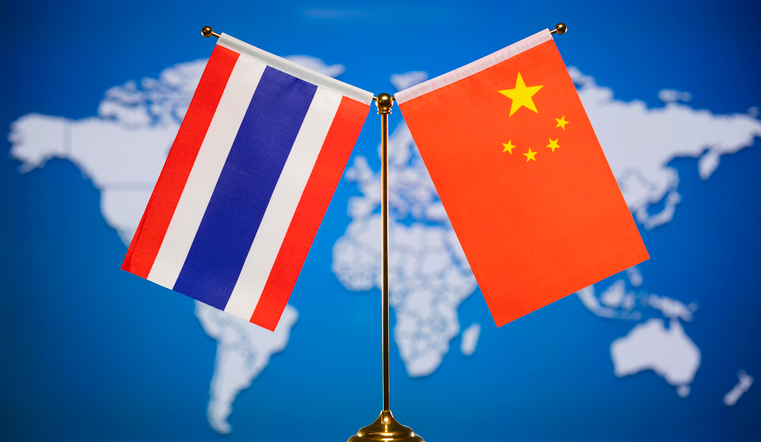
Among the Asia-Pacific geopolitics geographies in transition today, few bilateral relations have so much low-key potential as China and Thailand. For centuries, united by mutual culture, good commerce, and overlapping strategic interests, the two nations have shared a stable friendship traditionally described as “as close as one family.” But in today’s dynamic era of economic rebuilding, technological turnabout, and changing regional relations—the Chinese–Thai relationship is at the beginning of an even more basic, vision-driven transformation. The moment is opportune to convert present good will to significant development.
Various convergent factors make this the moment to expand. Firstly, the global economic context is demanding increasingly diversified partnerships. Thailand and China are both seeing post-pandemic recovery, inflationary stress, and supply chain dislocation. Encouraging bilateral economic ties—i.e., investing in digital trade, green infrastructure, and logistics—can be a stabilizing force on an otherwise volatile backdrop. Regional centrality to Thailand in Southeast Asia, and Chinese backing of the Belt and Road Initiative, is a natural complement to connectivity plans such as the China–Laos–Thailand railway corridor.
Second, the two countries have common interests for envisioning regional stability on the pillars of sovereignty, development, and multipolar cooperation. With the rising great power competition into focus, Thailand’s long-standing steady foreign policy—engaged internationally but not aligned—is a platform for positive interaction. China, too, has been prepared to engage with ASEAN states via such conduits as the Lancang–Mekong Cooperation forum and RCEP. While suspicion deepens in much of the Indo-Pacific, the China–Thailand relationship can be one of realistic, respectful diplomacy.
Third, people-to-people and cultural exchanges are set to be rekindled. Since tourism is recovering and Chinese visitors are returning to Thailand in their thousands, there is new potential for developing soft power interactions in education, cultural industries, and language studies. Thai interest in the Chinese language and culture and China’s growing interest in Thai popular culture and cuisine provide rich ground for people-to-people engagement. This peoples-to-people relationship is one of the longest-standing pillars in the bilateral relationship.
The two countries are also investing in the new industries of the next-generation digital economy, electric vehicles, and new energy. China’s industry is already linking Thailand’s Eastern Economic Corridor (EEC) with high-technology manufacturing and green technology innovation. Deepening these linkages with research centers of collaboration, innovation clusters, and vocational education will not only propel Thailand’s industrial upgrading but make China more integral in the regional value chain.
All that notwithstanding, the cooperation must be based on respect for each other and cultural sensitivity to the local situation. Economic interaction must be encouraged, but China must ensure its investments harmonize Thailand’s social and environmental standards. Transparency, consultation with the public, and equitable benefit-sharing must be there in order to establish long-term trust. Similarly, Thailand ought not to view its relationship with China in the short-term terms of transactionalism but frame a distinctive long-term vision with economic, cultural, and strategic interests.
Conclusion
China-Thailand relations have come to a stage of resurgence. Having done well in the past out of goodwill, economic complementarity already set, and shared regional interests, now is the time to lift this relationship to an archetype of 21st-century diplomacy—in the sense of interconnectivity, mutual gains, and cultural proximity.
In a more globalized world that needs increasingly stable anchor points and cooperative visions, China and Thailand can seize the moment not only to assist each other’s development, but to help forge a more harmonious and multipolar Asia. What is needed today is not just high-level visits or rhetorical declarations, but bold, concrete measures to propel the strategic friendship into a new generation. The window of opportunity is open—and both must step through it together.