


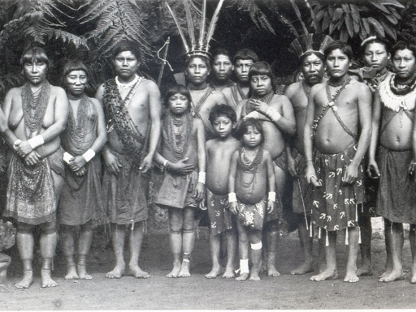
The International Colonial Exhibition held in Paris in 1931, was a massive propaganda event celebrating the peak of the French Empire. Established in the Bois de Vincennes, the exhibition attracted approximately 8 million visitors over six months and recorded 33 million ticket sales. In the Afrique Occidentale Française (French West Africa) section in particular, around 200 African natives brought from Senegal, Mali, Côte d’Ivoire, and other regions were displayed in reconstructed settings such as a Sudanese village, a fetishist village, and lakeside huts, where they reenacted what was portrayed as a primitive way of life. This spectacle presented Africans as exotic objects, reinforcing the colonial hierarchy and becoming a form of ordinary entertainment for millions of Europeans.
In this article, we will examine from an academic perspective the degrading treatment inflicted upon the African participants of the exhibition, the racist stereotypes it promoted, and the mechanisms of colonial ideology. Considering that France kept the remains of Sarah Baartman of Cape Town in the collections of the Museum of Man and returned her bones from Paris to Cape Town only in 2002 through the diplomatic efforts of Nelson Mandela, France’s troubled history regarding Africa becomes easier to understand.
Human Zoos in Western World
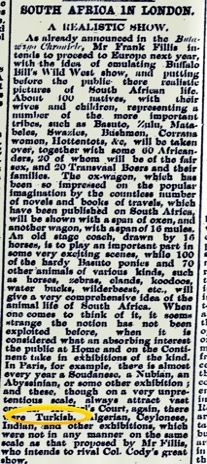
During the late nineteenth and early twentieth centuries, ethnographic exhibitions known as human zoos were among the most striking manifestations of colonialism in popular culture across Europe. In these exhibitions, thousands of people brought from Africa and Asia were presented to audiences in what were claimed to be their natural environments. The 1931 Paris Colonial Exhibition represented one of the high points of this tradition; however, unlike earlier cage-style displays, it adopted the format of cultural villages. The sections exhibiting African people attracted millions of visitors and helped reinforce the legitimacy of colonial power.
In France, so-called Negro Villages had been organized since the 1889 World’s Fair. The African villages displayed at the Jardin d’Acclimatation in 1907 attracted more than one million visitors. The 1931 exhibition transformed these displays into a more sophisticated instrument of propaganda. While the official narrative emphasized the civilizing mission, Africans were simultaneously portrayed as primitive and exotic. Although the exhibition’s commissioner, Marshal Lyautey, described the event as a triumph of the empire, critics characterized it as an expression of exploitation and racism.
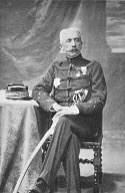
So much so that the counter-exhibition attracted only around 5,000 visitors. For many years, this was not regarded as a source of shame by Europeans. The exhibition of Africans was consistent with the racial hierarchy theories of nineteenth-century anthropology. Under the influence of Social Darwinism, Africans were portrayed as beings occupying a lower stage of human evolution. It should be remembered that aspects of this thinking remained embedded in South African law until 1994.
Africans at the 1931 Exhibition and Their Display
The African section of the exhibition consisted of a vast fortress-like structure, designed in the style of a grand mosque and covering four hectares. It included a Sudanese village, a fetishist street, and lakeside huts. Approximately 200 Africans were brought to the exhibition, including Senegalese men wearing boubous, Moors dressed in blue cloaks, Fulani people, and individuals from Côte d’Ivoire wearing raffia skirts and exposing their torsos. They engaged in handicrafts, dancing, and reenactments of daily life, presenting visitors with what was advertised as the real Africa. Although the official guide promoted these displays as authentic representations of tropical life, they were in reality carefully staged performances.
African families also took part in the opening ceremony alongside thousands of other participants. Visitors toured the grounds on a miniature railway, observing the villages, taking photographs, and purchasing exotic souvenirs. The exhibition possessed a circus-like quality, with dances and simulated warrior rituals designed to arouse public curiosity. While visitors watched Africans much as they might observe animals in a zoo, guards were present to maintain order. Although officials rejected the label of a human zoo, Africans were effectively objectified in practice. In total, around eight million people visited the exhibition, and the African sections were among its most popular attractions.
Racist Stereotypes and the Primitive–Civilized Dichotomy
At the exhibition, Africans were labeled as fetishists, savages, or nomads. The official narrative claimed that France was transforming barbarism into civilization. Bare torsos, raffia skirts, and hut-like dwellings were used to reinforce the image of primitiveness. Some brochures even contained suggestions of cannibalism.
The participants were subjected to the constant gaze of spectators. Their daily routines—eating, dancing, practicing crafts, and socializing—were displayed as though they were actors on a theatrical stage. This situation recalls Michel Foucault’s concept of the surveillance society. Colonial power asserted its superiority through the regulation and control of bodies. Although the Africans in the exhibition were paid performers, their freedom was restricted, and some suffered from poor living conditions.
At the same time, while the exhibition portrayed Africans as the children of France, it actually served to legitimize racial hierarchy. Visitors internalized a distinction between “us” and “them.” This became one of the foundations of modern racism. Although critics such as André Gide and Albert Londres condemned forced labor and colonial abuses, mainstream public opinion largely viewed the exhibition as both educational and entertaining.
African men and women were displayed in traditional or semi-naked attire, a practice that also encouraged sexual exoticism and transformed the female body into a colonial fetish.
This humiliation reflected the psychological violence of colonialism. Africans were treated less as human beings than as cultural specimens.
Conclusion
The 1931 Paris Colonial Exhibition became one of the most effective propaganda instruments of colonialism by publicly humiliating Africans before millions of spectators. The village displays, which often resembled circus attractions, brought racist ideas into popular culture and normalized the dehumanization of colonized peoples. Today, this event remains of critical importance in postcolonial scholarship for understanding the historical roots of racism. The legacy of these practices can still be felt in contemporary debates surrounding migration, identity, and race. Genuine equality can only be achieved through a direct confrontation with such historical injustices.
References
Gençoğlu Halim. 2025, Batı’nın Afrika Talanı, Kronik. İstanbul.
Hodeir, C. (2024). “L’Exposition coloniale de 1931.” Hommes & Migrations. (Yerli katılımı).
Blanchard, P. vd. (ed.). Human Zoos: Science and Spectacle in the Age of Colonial Empires. Liverpool University Press (insan zoo’ları genel analizi).
Le Livre d’Or de l’Exposition Coloniale Internationale de Paris, 1931. (Resmi rehber, AOF bölümü).
Paris Colonial Exposition. Wikipedia. Erişim: 20 Nisan 2026. (Genel ziyaretçi ve yapı bilgileri).
The Colonial Exposition of 1931. Palais de la Porte Dorée. Erişim: 20 Nisan 2026. (Yerli köyleri ve amaç). Ü
Cover graph: Afrique Occidentale Française – Expo Paris 1931. Worldfairs.info.