

The 2026 NATO Summit will be held on 7 and 8 July 2026 at the Beştepe Presidential Compound (Külliye) in Ankara.
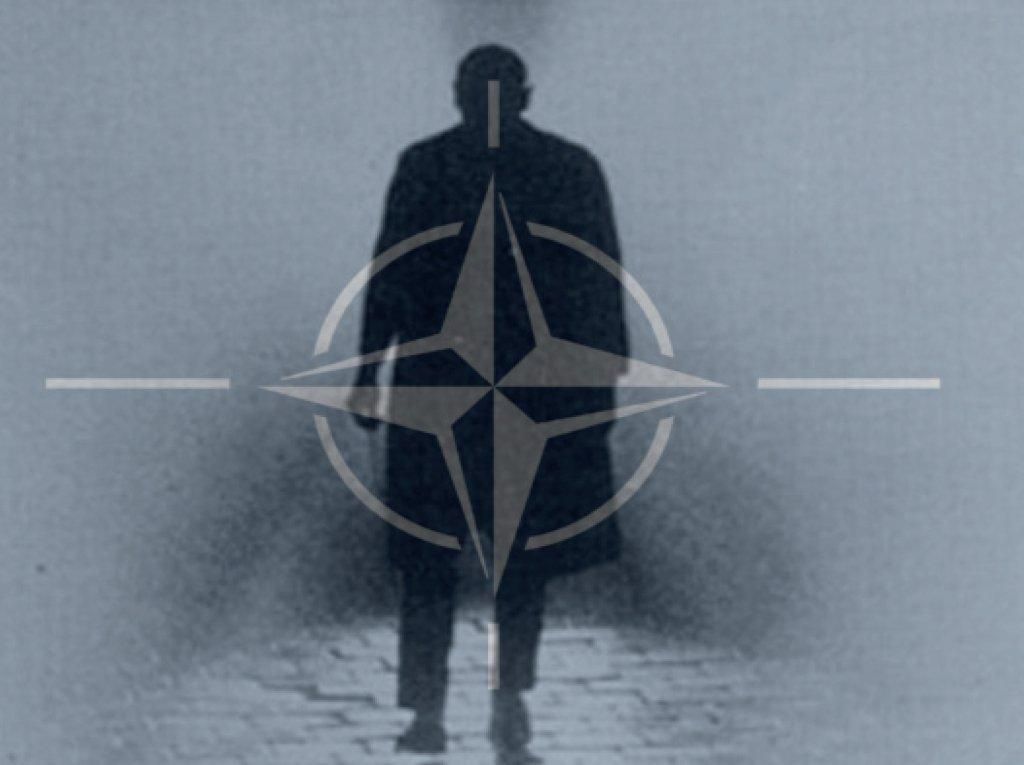
As NATO heads into the 2026 summit, we have prepared a special dossier that revisits Türkiye’s long and often contentious relationship with the alliance that began with the country’s membership in 1952. Drawing on articles and interviews from across Turkish intellectual and political life, the dossier explores NATO’s place in public debate, political developments, and relevant literature in Türkiye for decades.
The dossier opens with an excerpt from “Gladio and Ergenekon” by Doğu Perinçek, currently chairman of Vatan Party, originally published by Kaynak Publications in October 2008.
Bringing together writings and views from the Turkish literature and commentary on the subject, this dossier is intended for readers interested in the history of NATO and NATO-linked organizations in Türkiye, as well as those seeking a deeper understanding of how these issues have been discussed and debated in the country.
What is Gladio
By Dr. Doğu Perinçek, Chairman of the Vatan Party (Türkiye)
In Türkiye, it had become widely known under the name “Counter-Guerrilla.”
Within NATO, it was referred to as “SuperNATO.”
Francesco Cossiga, former President of Italy and head of the Italian Gladio, notes that in the earliest phase of its Cold War it was called “Stay Behind Nets (SBN),” which he describes as meaning “special operations personnel.” (1)
In Italy, it was called “Gladio.”
In our country, people spoke of the “deep state.”
The name of the organization in Türkiye was first publicly identified as “Ergenekon” at the “International Susurluk Conference” organized in 1997 by the Workers’ Party. Even before that, there had already been such reports.
The term “counter-guerrilla” does not really capture the essence of the phenomenon; it tends to evoke images of plots, the interrogations after the 12 March 1971 coup d’etat, assassinations, and torture. What is actually at stake here, however, is a covert organization that steers the visible government and exercises control over the country.
For this reason, some preferred to call it the “deep state.” It is true that it is embedded within the Turkish state. However, this command center is not in the hands of the Republic of Türkiye itself. On the contrary, it is an apparatus that controls the national state on behalf of Atlantic imperialists. That means, the US has effectively gained control over key positions within the Turkish state.
It is known that in every NATO country, the organization carries a different name rooted in that country’s own historical experience. In Greece it is called “Red Sheepskin,” in Germany “Schwert” (Sword), in France “Rose des Vents” (Windmill), in the United Kingdom the “Secret British Network,” and in Belgium “Glaive.” In Italy, the name gained international fame: “Gladio” (the short Roman sword). According to former Italian President and Gladio chief Francesco Cossiga, “Gladio” was actually the code name of the operational plan itself. (2)
In Türkiye, it was first stated that the organization has the name “Ergenekon” during the “International Susurluk Conference” held on 14–15 June 1997 at the Istanbul Provincial Headquarters of the Workers’ Party, as revealed by Erol Mütercimler. (3) My dear friend, the late Adana Police Chief Cevat Yurdakul, who was martyred before the 12 September 1980 coup, had also told Ecevit that there was a figure named “Colonel Ergenekon” behind the events. (4) We do not know for certain whether the Special Warfare Department ever used such a name, though it may well be possible. However, we do not find it appropriate to use this name, because “Ergenekon” is the name of our great epic. Calling a US-led organization with this name in itself constitutes a psychological operation against Türkiye.
In fact, the designation that best captures the phenomenon is “SuperNATO.” It is also the naming used within the core of the organization. Yet the world does not know them by that name. It is rarely used, either in the world or in Türkiye.
After considerable deliberation, we preferred the name “Gladio.” Although it is originally the Italian term, the world came to know “SuperNATO” as “Gladio.”
The overlooked function of NATO
What is NATO for?
NATO was established after the Second World War by the US and European states on both sides of the North Atlantic. As its name suggests, it is the North Atlantic Treaty Organization.
NATO has traditionally defined itself as a defensive alliance against the Soviet threat. That is how it has always been presented. On the opposing side, the Soviet bloc and the Third World assessed NATO as the US’ primary military instrument of aggression. NATO’s actions have repeatedly proved that true.
After all, defense and offense are always intertwined; one is the continuation of the other. In this sense, those who saw NATO as defensive and those who saw it as offensive ultimately pointed to the same conclusion: NATO was an organization directed outward.
How incomplete, and even how misleading, this assessment was revealed after 1990 and afterwards. The Warsaw Pact dissolved and the Soviet Union collapsed. By 1990, the threat that NATO had defined as its very reason for existence for over forty years no longer existed.
Yet NATO continued to exist as if nothing had happened.
This suggests that NATO had another, officially unspoken function: serving as a mechanism to control member states on behalf of the US. One could even argue that this function of the North Atlantic Alliance was more decisive than its declared “defensive” function. Although no direct armed confrontation or war ever took place between NATO and the Soviet Union, the US had, since the end of the Second World War, effectively brought a vast geography stretching from Norway to Türkiye under its strategic influence through NATO.
The area under control was Western and Southeastern Europe. (5) After the Second World War, Europe became the central arena of rivalry between the two superpowers. The struggle for global supremacy, in effect, became a struggle to control Europe.
After the victory of the “Democracy Front” in the Second World War, the US, in its claim to global leadership, stepped and boots. The decisive factor in achieving this goal was control over Europe. Western Europe accounted for a significant share of global production; it was home to highly educated human resources and advanced technology. Blocking the expansion of the rival superpower in Europe was of critical importance. Moreover, Europe was also decisive for encircling and dismantling the Soviet Union. Southeastern Europe, namely Greece and Türkiye, lay on the flank of the rivalry between the two superpowers. Türkiye was a key country in the “Green Belt” strategy designed in the Middle East against the Soviet Union and regional states.
In short, in order for the US to advance its global strategic objectives, it was essential to keep Western Europe under control, extending down to its southeastern flank.
The US’ mechanism for controlling NATO countries
Of course, instruments were needed to ensure this control. NATO was the most comprehensive, most effective, and most functional organization serving this need. However, this is not the whole story. For the US to exercise actual command over NATO countries, a concrete operational mechanism had to be established and activated.
This is where “SuperNATO,” or with its name in Italy “Gladio,” comes into play.
The famous prosecutor Felice Casson, who led the Gladio investigation in Italy, described the nature of the organization as follows:
“Its original purpose was to protect the country against a Soviet invasion. But even before the 1960s, it deviated from this original purpose and began to operate against internal opposition as well. In fact, it suppressed and intimidated groups that the CIA did not approve of. It was not only used against left-wing groups, but any opposition including even Christian Democrats. In other words, anyone who was opposed to the CIA, the US became a target.
This structure was tied to NATO, but it did not end there. It was also linked to the CIA.” (6)
The Italian prosecutor concluded from his own experience that “SuperNATO” is a governmental structure engaged in power struggles and, together with the US and the CIA, suppressing opposition.
Every NATO country has a government. Germany, France, the United Kingdom, Belgium, the Netherlands, Luxembourg, Italy, Greece, Türkiye, and all other member states each have their own governments. You cannot run these governments from Washington or NATO headquarters with a red telephone. However, you can influence and effectively steer NATO countries by establishing a special command center and operational apparatus within the ruling power structures of each individual state. That is precisely what was done.
Gladio, in fact, is an organization of a US-centered system, broader than NATO itself. For example, Gladio was established in Spain and Portugal even before these countries joined NATO, during the fascist dictatorships of Franco and Salazar. Similar organizations were also created in so-called “non-aligned” countries such as Austria, Switzerland, and Sweden, (7) and also in Latin American, Asian, and African countries under the control of the US.
As Francesco Cossiga, head of the Italian Gladio, noted, the center of these special operations organizations was NATO’s SHAPE (Supreme Headquarters Allied Powers Europe) headquarters in Brussels. However, even the US commander of SHAPE did not know about this special operations organization. It was completely secret. Only the NATO Secretary General knew of its existence. (8) This fact itself shows that Gladio is primarily a political organization, not a military one.
The budgets of Gladio networks are also secret. The funding came from the US. The Ministry of Finance transferred the money to the intelligence service but was not informed that it was being allocated to Gladio. (…)
The US established functional command centers in NATO countries and other states closely integrated into its system. These centers were composed of elements positioned at the top levels of government, within the core of intelligence services, inside the military and police, and among influential circles of big capital.
References
1- Nur Batur, interview with Francesco Cossiga, Sabah, 17 February 2009.
2- Ibid., 19 February 2009. Referring to Cossiga, Nur Batur states that the organization’s original name was “Stand by Net.” Elsewhere in the interview, however, it is referred to as “Stay Behind Net.” The latter appears to be the correct designation.
3- Bütün Yönleriyle Susurluk (Susurluk in All Its Dimensions), Istanbul: Kaynak Publications, June 1998, p. 48 ff.
4- Ecevit Kılıç, Özel Harp Dairesi (Special Warfare Department), 2nd ed. (Istanbul: Güncel Publishing, October 2007), p. 273.
5- See Adnan Akfırat, Özel Savaş (Special War), expanded 2nd ed. (Istanbul: Kaynak Publications, April 2002), p. 144.
6- For Felice Casson’s findings, see Aydınlık, no. 1099, 10 August 2008, pp. 26–27.
7- Nur Batur, interview with Francesco Cossiga, Sabah, 17 February 2009.
8- Ibid., 18 February 2009.