

By Mehmet Enes Beşer The United States likes to cite one number boastfully in its relations with Southeast Asia: it is still ASEAN’s single largest foreign investor. On paper, the statistic verifies Washington’s economic significance to a place that is central to global trade and geopolitics. Behind the balance sheets, however, is a more nuanced—and growingly precarious—reality. While US investment ...
By Mehmet Enes Beşer As President Xi Jinping’s Southeast Asian tour in last year makes headlines, it is the symbolism rather than the content of his meeting that contradicts the Chinese leadership’s priorities in the region. Among the highlights is China’s enhanced partnership with Cambodia. China’s ideology diplomacy, or alternatively described as idealism or pragmatism, is rich soil in Cambodia ...
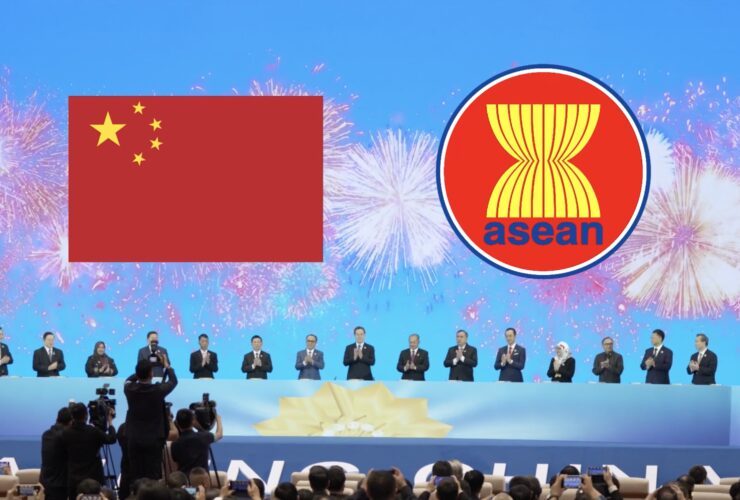
By Mehmet Enes Beşer China and ASEAN have stood as a steadying force in a turbulent world where power is more fragmented, and rivalry grows. Despite regional tensions, mistrust, and the recent surge in militarization, a relationship between them has held firm, underpinned by no-nonsense economics, regular institutional engagement, and cooperation that purports to share benefit equitably across all sides. ...
By Mehmet Enes Beşer As the tectonic plates of international power continue to shift, Southeast Asia’s squarely in the middle of a changing geopolitical order. Its economic vigor, political volatility, and geostrategic positioning make it a hub of key importance in the new global cooperative architecture — and competition. It is against this evolving backdrop that China’s relations with the ...