

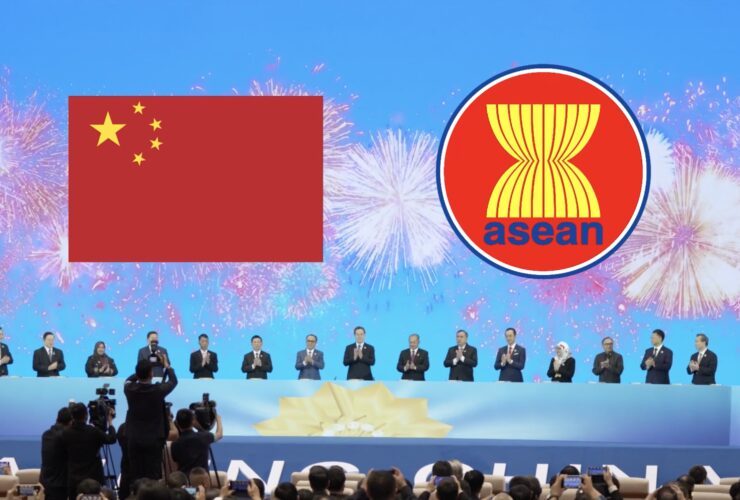
By Mehmet Enes Beşer China and ASEAN have stood as a steadying force in a turbulent world where power is more fragmented, and rivalry grows. Despite regional tensions, mistrust, and the recent surge in militarization, a relationship between them has held firm, underpinned by no-nonsense economics, regular institutional engagement, and cooperation that purports to share benefit equitably across all sides. ...

By Mehmet Enes Beşer America has occupied a unique position in the world order for decades now—not only as a superpower but also as a financial and institutional safe haven. In crises, capital seeks refuge in the U.S., its Treasury bonds are deemed risk-free assets, and its political system—dysfunctional at times—is presumed to be undergirded by a foundation of checks, ...
By Ahmed Mahmoud, Managing Editor at Ahram Online (Egypt) I still remember the day the President Abdel Fattah el-Sisi was inaugurated as Egypt’s president for his first term in 2014, and the Turkish stance on the June 30th revolution which caused deterioration in the mutual relations between the two countries. On that day, I was a guest on Nile TV ...
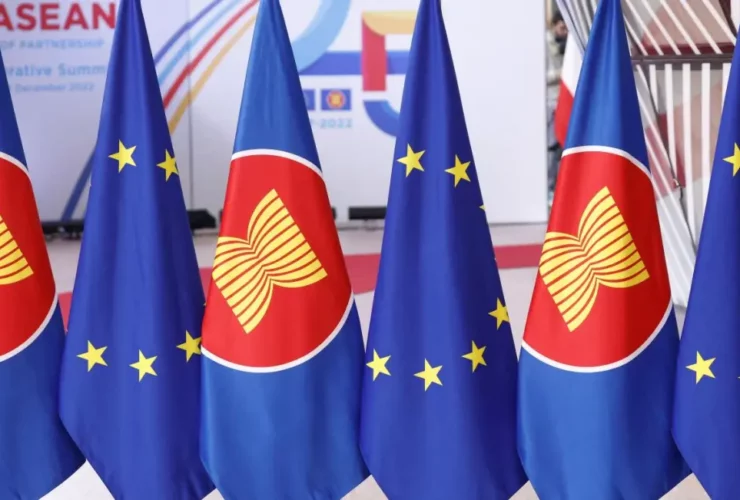
By Mehmet Enes Beşer While the international economy struggles with the challenge of increasing volatility—ranging from supply chain redefinitions and inflationary shocks to climate-induced disruptions and fragmentation driven by geopolitics—the regional blocks like the European Union (EU) and Association of Southeast Asian Nations (ASEAN) are faced with a short-term imperative: to move beyond rhetorical assurances and towards a more strategic, ...
By Orçun Göktürk, from Beijing / China The recent China–EU summit held in Beijing was remarkable in many aspects — from its shortened duration to its content, from leaders’ statements to the diplomatic tone. Initially planned as a two-day event, the summit was reduced to one day at China’s request. This is not just a scheduling change but should be ...
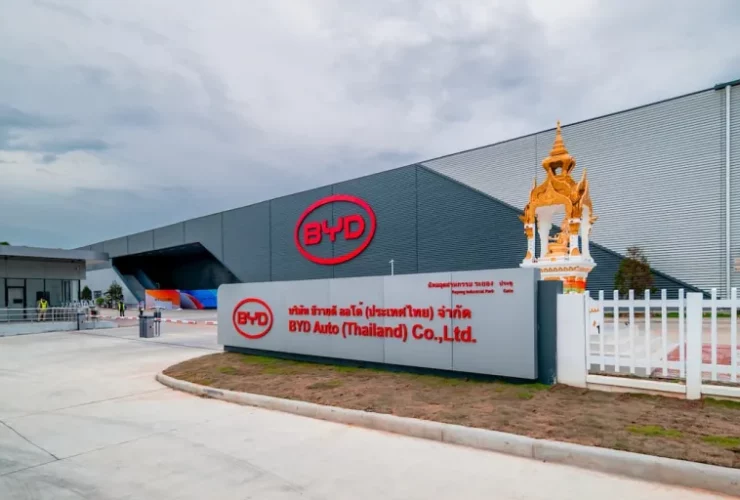
By Mehmet Enes Beşer For decades, Thailand has been Southeast Asia’s automotive powerhouse, earning the title of the “Detroit of Asia.” Thailand boasts a robust manufacturing base, world-class logistics centers, and stable policy backing, which have attracted investments from top carmakers and made it a regional export hub. But a nuanced shift may be in the works. Chinese electric vehicle ...
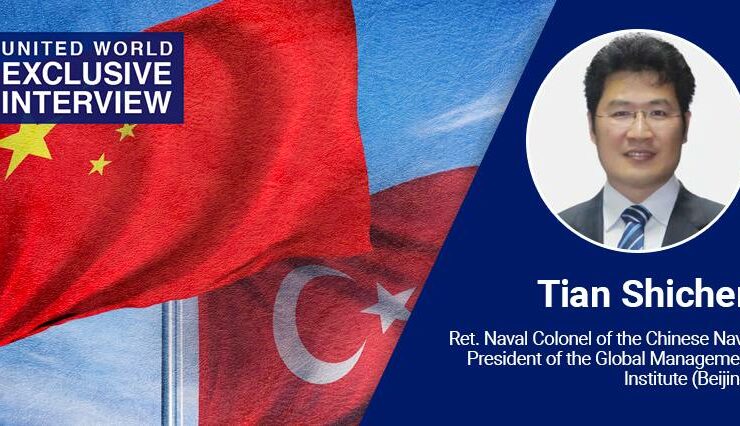
By Özgür Altinbaş Chinese retired naval colonel and academic Tian (Andy) Shichen spoke about the recent geopolitical developments. Tian, who is also the founding president of the Beijing-based Global Management Institute, made evaluations on the risks in the South China Sea and the consequences of tariffs on the global level. Touching on the relations between Türkiye and China, Tian said ...
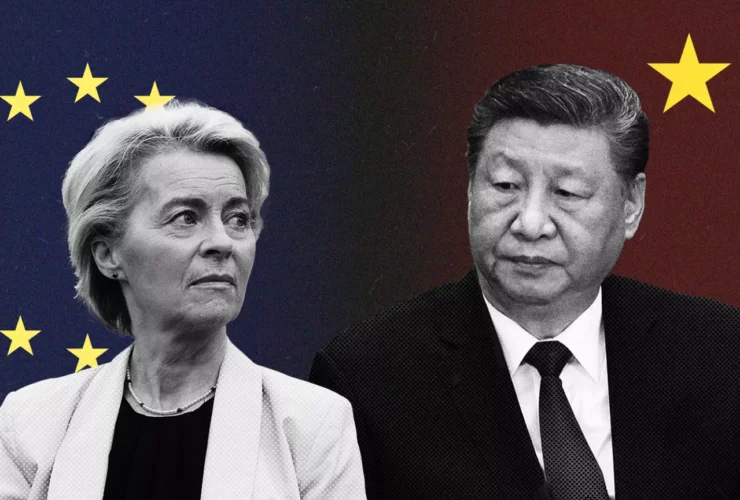
By Mehmet Enes Beşer With the return of Donald Trump to the White House, the European Union finds itself facing an uncomfortable truth: its long-standing dependence on the United States—strategically, economically, and ideologically—is becoming a liability. As U.S. foreign policy pivots further inward and transactional, Europe is forced to confront a rapidly evolving global order where its role is no ...
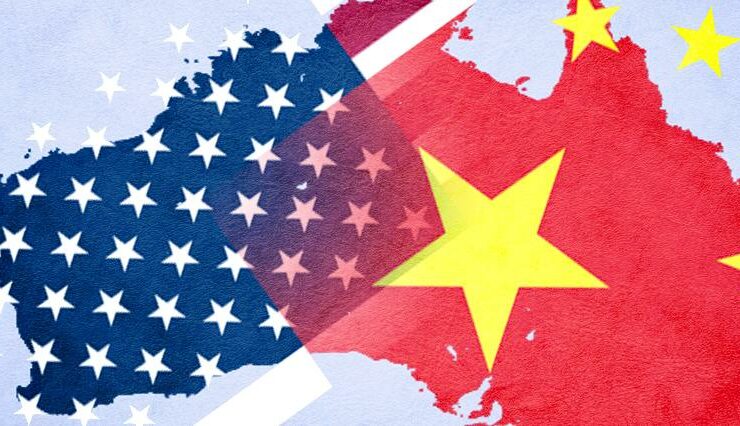
By Mehmet Enes Beşer The rekindled US-China tensions once more left Australia in a delicate economic position. A nation deeply engaged with both superpowers—strategically aligned with Washington but economically with Beijing—Australia is faced with a sour dilemma endangering its long-term stability. Though previous episodes of trade and diplomatic tensions between China and the U.S. have exposed Australia’s economic model vulnerabilities, ...

By Michael Roberts * Daron Acemoglu, Simon Johnson and James A Robinson have been awarded the Nobel (really the Riksbank prize) in economics “for studies of how institutions are formed and affect prosperity.” Daron Acemoglu is a professor at the Massachusetts Institute of Technology. Simon Johnson is a professor at the same university. And James Robinson is a professor at ...
By Michael Roberts * Published on October 30 before the elections, Roberts’ article provides deep insight into Brazil’s economic situation and challenges. These have not changed with the election results, quite the contrary, Roberts’ article describes the landscape that President-elect Lula faces. Therefore, we consider the article of great value, UWI. The latest polls put Workers Party leader Lula de ...
In the last decade, the Mediterranean has become a global epicenter of geopolitical and geo-economic interests. It has taken an increased importance because of the profound transformations that have taken place and that continue to manifest themselves in ever fluid and changing forms. The regional conflicts in Libya and Syria, the never-ending tensions between Turkey, Greece and Cyprus (Greek Administration ...