

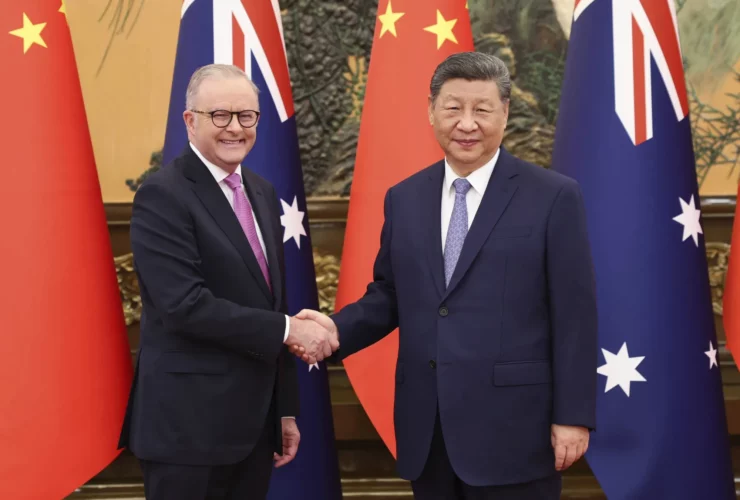
By Mehmet Enes Beşer In a world in which geopolitics between states too-often play out in the headlines rather than in hard reality, the China-Australia relationship has become a case study in how frenzied reporting on national security can drown out sensible diplomacy. There exists a healthy and business-minded partnership between the two, but of late, it has been characterized ...
By Orçun Göktürk, President of the Center for Sino-Turkish Studies, Beijing / China As we enter a period where increasing US-Israel aggression toward Iran and military options from Washington are being voiced at the highest levels, the stance China will take is a matter of great curiosity. However, Beijing’s attitude during previous US-Israel attacks on Tehran provides a projection. As ...
By Mehmet Enes Beşer In a world that is grappling with an evolving geopolitics order—defined by frayed multilateralism, economic nationalism, and intensifying great-power competition—the evolving China-Vietnam relationship has another tale to tell. Too often seen in the narrow context of their border conflicts and historical challenges, Sino-Vietnamese relations are being constructed in low-key style as a pragmatically rooted, forward-looking relationship ...
By Mehmet Enes Beşer The United States likes to cite one number boastfully in its relations with Southeast Asia: it is still ASEAN’s single largest foreign investor. On paper, the statistic verifies Washington’s economic significance to a place that is central to global trade and geopolitics. Behind the balance sheets, however, is a more nuanced—and growingly precarious—reality. While US investment ...
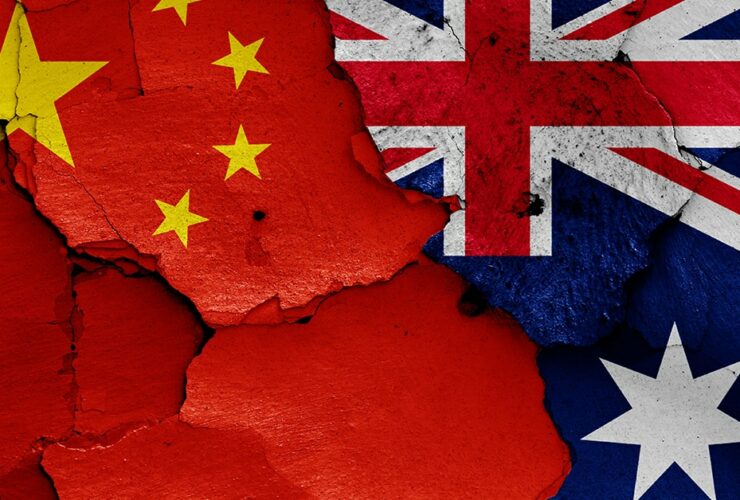
By Mehmet Enes Beşer After decades of tense relations with diplomatic chill, trade warfare, and suspicion, recent developments have indicated that China–Australia relations are stabilizing gradually. Diplomatic dialogue has been renewed, trade prohibitions have begun to be repealed, and reciprocating visits are resumed. These are reassuring signals—minimal but important actions indicating both sides to move away from confrontation and head ...

By Mehmet Enes Beşer Russian strategic thinking has historically been motivated by the desire to project power beyond its near-abroad and secure a seat at the table of a multipolar world order. With relations with the West growing ever more strained, the Kremlin has increasingly had reason to look east—not just to China or India, but to Southeast Asia, one ...

The Center for National Strategy (USMER) has organized an international conference on the Eastern Mediterranean and the Black Sea on July 18 and 19 in Istanbul, Türkiye. Today, we present the speech of Aboulghasem Tahmasebi Shahrbabek, general consul of the Islamic Republic of Iran in Istanbul, Türkiye. The Strategic Importance of Iran and the Black Sea Region: A Vision for ...
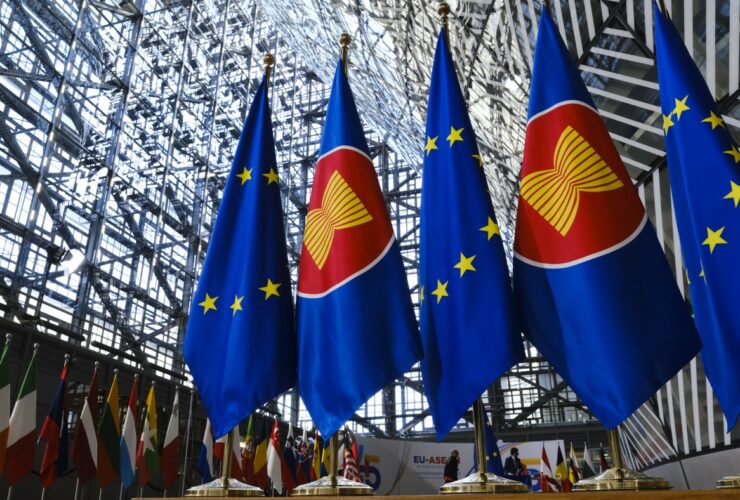
By Mehmet Enes Beşer As the pecking order in the world’s capital economy, Europe has long been at the top of the list as one of the safest and most developed sources of foreign direct investment (FDI). For most of the developing world, European capital has been a capital with credibility, technology transfer, and access to value-high markets. Southeast Asia ...
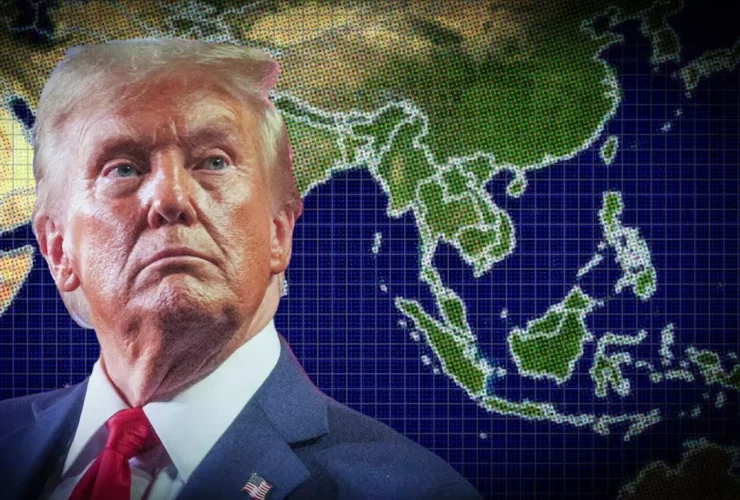
In 2011, long before entering active politics, Donald Trump tweeted that China was the enemy of the United States and that his goal was to destroy it. He later asserted, “On trade, the Chinese are cheats.” A year later, in 2012, he commented, “The concept of global warming was created by and for the Chinese to make US manufacturing uncompetitive.” ...
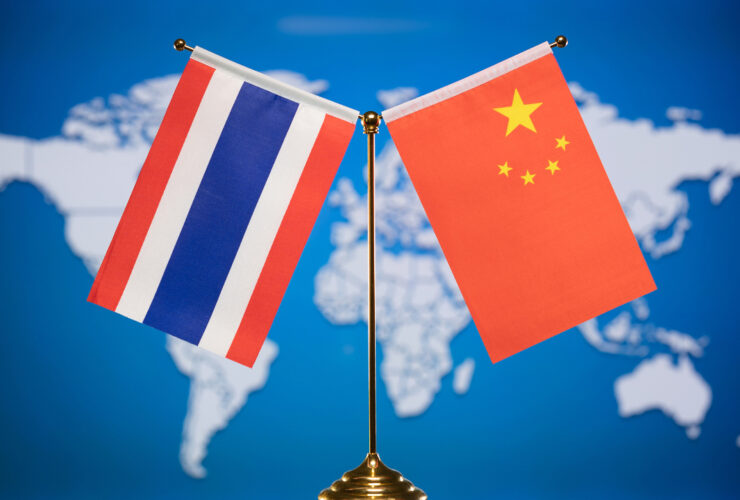
By Mehmet Enes Beşer As the world’s alliances are being recalibrated and old friends have proven themselves unreliable, one bilateral relationship is ready to be reborn and reenergized: China and Thailand. Historically linked by cultural affinity, economic interdependence, and regional interest, the two countries are now exceptionally well positioned to move their relationship in a more strategic, forward-leaning direction. Whereas ...

By Mehmet Enes Beşer As America doubles down on its dependence on tariffs and unilateral trade measures in the name of “economic security,” the world is now retaliating in kind—not by overt confrontation, but by subtle, incremental drifting apart. A process years in the making has now reached a new phase: de-Americanization of global trade. It is not a call ...
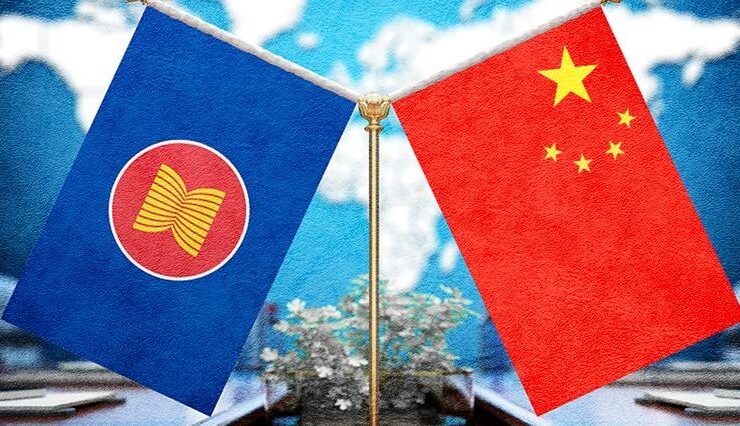
By Mehmet Enes Beşer As the tectonic plates of international power continue to shift, Southeast Asia’s squarely in the middle of a changing geopolitical order. Its economic vigor, political volatility, and geostrategic positioning make it a hub of key importance in the new global cooperative architecture — and competition. It is against this evolving backdrop that China’s relations with the ...