

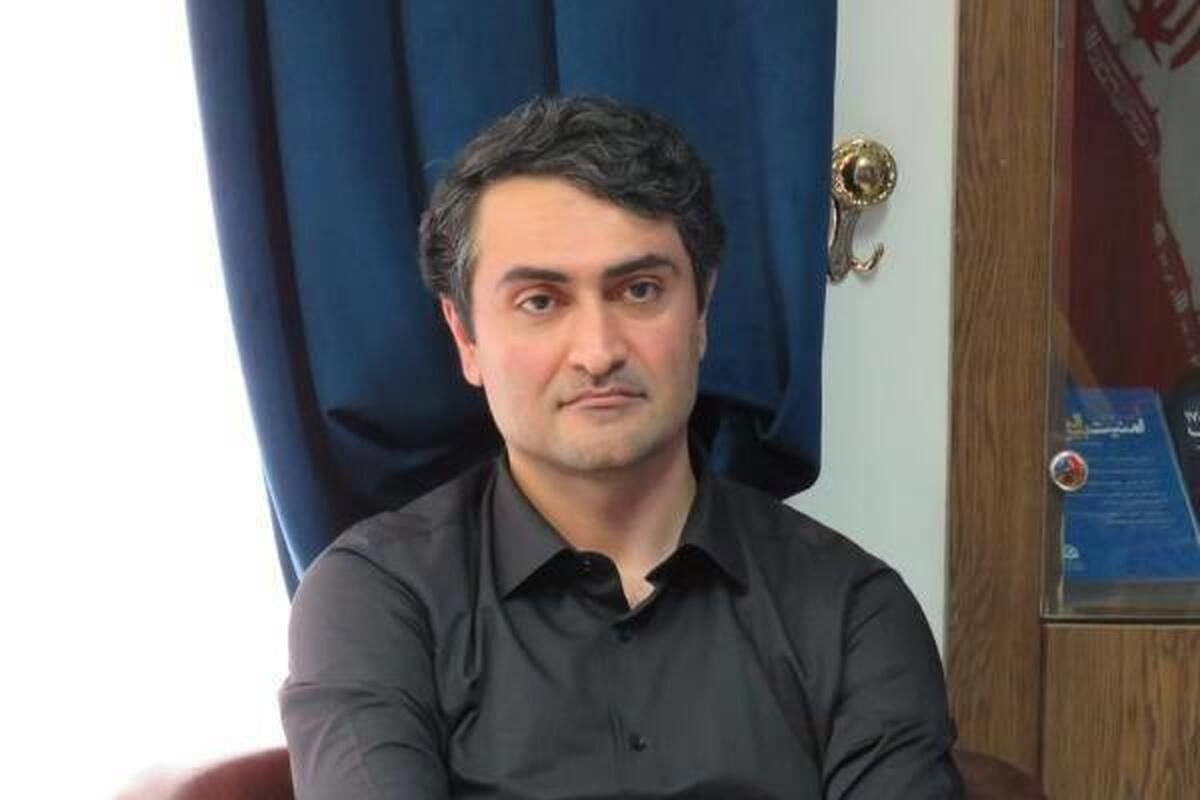
Interview with Dr. Abed Akbari, an expert in international relations.
Interview with Dr. Abed Akbari, an expert in international relations.
By Azar Mahdavan from Tehran / Iran
In the early hours of Monday, June 15, it was announced that Iran and the United States had reached a preliminary agreement. Yesterday, Masoud Pezeshkian, the President of Iran, and Donald Trump, the President of the United States, also finalized the signing of this preliminary agreement, paving the way for a new round of talks over a 60-day period.
Although it was previously announced that the negotiations scheduled for Switzerland were postponed, reports confirm that the negotiation process has officially begun in Switzerland today.
At the same time, Iran’s Supreme National Security Council issued a statement declaring: “Based on the agreements reached, the war and military operations on all fronts, including Lebanon, will come to an immediate and permanent end as of tonight. In addition, the naval blockade against Iran will be fully and immediately lifted.”
However, given the experience of the 2015 agreement, it remains unclear whether this agreement will lead to a lasting outcome this time or once again end in failure.
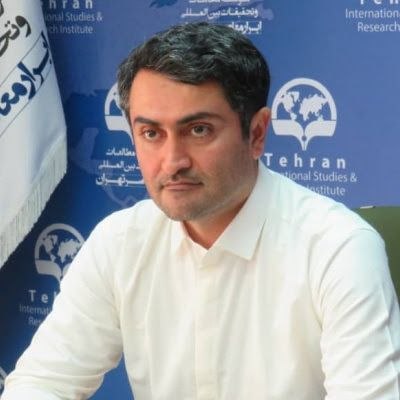
We have conducted a conversation regarding this matter with Dr. Abed Akbari, an expert in international relations, which follows below.
With the publication of the official text of the memorandum of understanding between Tehran and Washington, a significant portion of American elites and media outlets have described it as a sign of Trump’s and America’s defeat vis-à-vis Iran. What is your assessment, and which provisions of the text indicate a strategic defeat for the United States against Iran?
Based on the provisions of the document, what is evident is not merely a diplomatic agreement, but rather an imposed recalibration of the balance of power between the two actors—one in which the effectiveness of the traditional instruments of U.S. foreign policy has been significantly diminished. The key provisions, particularly Articles 7, 10, and 11, demonstrate that the maximum pressure policy failed to achieve its primary objective: fundamentally altering Iran’s behavior or creating a sustainable bargaining leverage. Instead, it ultimately resulted in the acceptance of structural sanctions relief, the release of Iranian assets, and the restoration of Iran’s economic flows.
From an analytical perspective, the significance of this development lies in the fact that the United States has been compelled to move from the position of an actor “imposing conditions” to that of an actor “committed to lifting restrictions.” In the literature of international relations, such a shift in the logic of power is generally interpreted as evidence of the declining effectiveness of economic coercion against a resilient actor with a high capacity for endurance.
By contrast, Iran has managed to move beyond the defensive position created by sanctions and to consolidate conditions under which a return to normal economic and political status is not treated as a unilateral concession, but as part of the formal architecture of the agreement. Therefore, if “strategic defeat” is defined as the failure to achieve the maximalist objectives of the pressure policy, the evidence contained in this text points to the failure of that policy and to the need for Washington to redefine its role in light of the new realities of power.
Article 14 provides that the final agreement will be adopted in the form of a binding United Nations Security Council resolution. To what extent can this mechanism address the mistrust caused by the United States’ withdrawal from the JCPOA, and how does it differ from the guarantees contained in the 2015 nuclear agreement?
The most important challenge in this document is the “imbalance in the nature and timing of the parties’ executive commitments.” The structure of the agreement shows that a large part of the immediate and costly measures falls on the United States, including sanctions relief, the release of assets, the suspension of economic restrictive measures, and a gradual military pullback, as reflected in Articles 4, 7, 10, and 11.
By contrast, Iran is largely placed in a position where it seeks to preserve the existing situation and manage the transitional phase, as reflected in Article 9. This difference indicates that the weight of the commitments on the American side is considerably heavier and politically more sensitive.
Therefore, the main challenge does not lie in the agreement itself, but rather in whether the United States is capable of implementing its commitments in a way that remains insulated from domestic political shifts and external pressures. The history of U.S. foreign policy in similar agreements shows that this is usually the very point at which such agreements become unstable.
Article 14 provides that the final agreement will be adopted in the form of a binding United Nations Security Council resolution. To what extent can this mechanism address the mistrust caused by the United States’ withdrawal from the JCPOA, and how does it differ from the guarantees contained in the 2015 nuclear agreement?
The provision requiring the agreement to be adopted as a binding United Nations Security Council resolution under Article 14 represents an attempt to create an additional layer of international legal authority. In practice, however, it cannot fully resolve the asymmetry of trust between the parties.
The key point is that the issue of mistrust in this case is behavioral and structural more than it is legal. The experience of the United States withdrawing from international agreements and using legal mechanisms instrumentally has shown that even the strongest multilateral frameworks cannot, by themselves, create a lasting guarantee.
Compared with the 2015 agreement, this document seeks to elevate the level of commitments from a political agreement to a higher-ranking legal framework. Yet the fundamental difference remains: while Iran is recognized as the party committed to the continuity of its obligations, the main issue regarding the United States is the extent to which its commitments are subject to change as a result of domestic political developments. From this perspective, Article 14 functions more as a tool for increasing the cost of violation than as a genuine guarantee.
If this text is read not as a diplomatic agreement, but as a document marking the end of a war, what picture do its provisions present of the balance of power among Iran, the United States, and Israel?
If this document is analyzed as the conclusion of a military or quasi-military conflict, the picture that emerges indicates a meaningful shift in the practical distribution of power among the parties.
Within this framework, Iran is positioned as an actor that has succeeded in incorporating the main terms of the post-conflict order into the text of the agreement: the formal end of hostilities under Article 1, the complete lifting of sanctions under Article 7, the release of financial resources under Article 11, and participation in large-scale economic reconstruction under Article 6. These elements indicate Iran’s transition from the position of the “target of pressure policy” to that of a “decisive actor in defining the framework of the agreement.”
On the other side, the United States faces clear limitations in continuing its pressure policy and has been compelled to accept a set of commitments that reduce a significant portion of its traditional tools in the economic and military domains. The retreat from blockade measures, the reduction of military intervention, and the commitment to lifting sanctions all point to this structural limitation.
At the regional level, this development may also lead to a reduced role for the pressure coalition and to greater strategic autonomy for regional actors, while Israel would face an environment in which the traditional levers of full coordination with U.S. policy have been weakened.