


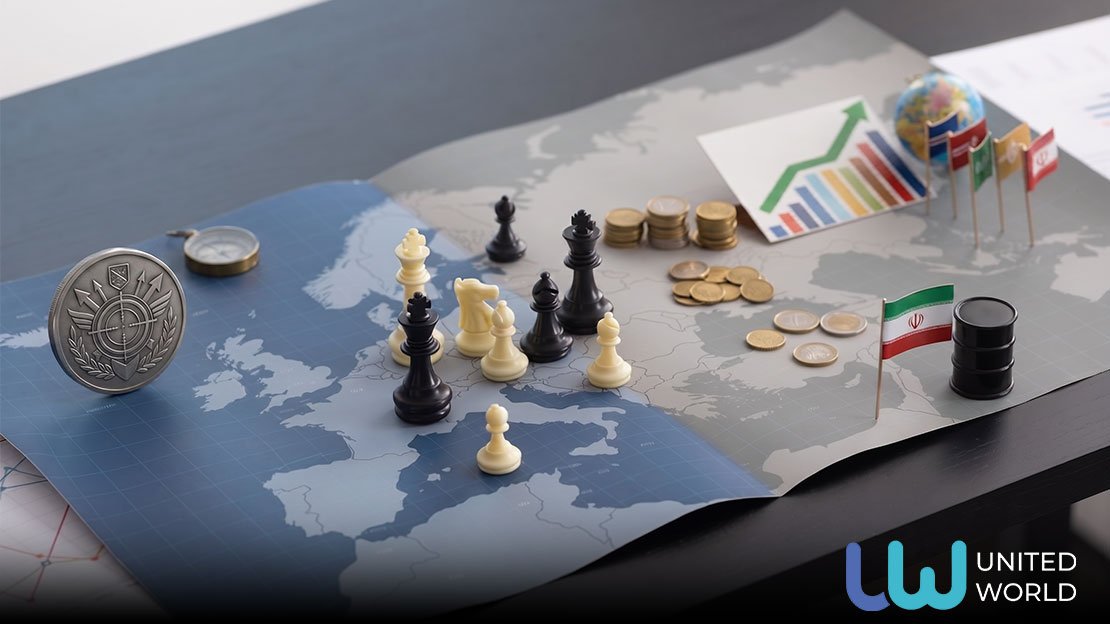
Teori, monthly theoretical political, geopolitics and international relations analysis magazine from Türkiye, spoke with Pierre Duval, a French journalist, political analyst and contributor to Observateur Continental, about the state of the European economy, US-EU relations, the US-Israeli attack on Iran, the difficulties of Europe’s turn towards Asia and the future of Europe.
The interview was conducted for Teori by Ali Rıza Taşdelen and published in print in Turkish in the magazine’s August 2026 edition.
Translation and subheadings by UWI.
How does the contradiction between the US and Europe manifest itself within the “Atlantic system”?
Pierre Duval (P.D.): Trump threatens to impose additional tariffs on European goods and to withdraw militarily from Europe, yet he continues to exert military, political and economic pressure on Europe.
The contradiction within the “Atlantic system” pits American unilateralism against European sovereignty. It manifests itself in a military divide (the reduction of the American security umbrella and Europe’s search for autonomy), in commercial conflicts (tariff wars), and in geopolitical divergences (priority given to the Indo-Pacific and crises in the Middle East).
However, the EU currently possesses neither genuine sovereignty nor political, economic or military coherence. It still needs US power to guarantee its defense.
Tango towards the abyss
We have two blocs dancing the tango, an improvised dance in the sense that the steps are not predetermined and repeated in sequence, but in which the two partners move together in an improvised direction at every moment: toward the abyss.
We have two worlds that together represent the West but are incapable of living in harmony. The contradictions between the US and Europe also define the end of Western hegemony within their own countries.
Does Europe have the economic and military means necessary to constitute an alternative pole to the US and Asia?
The EU is regarded as the world’s leading trading power, as written in the article by Vincent Lequeux, but its share has been gradually declining for around two decades.
The whole EU zone, and particularly the founding member states, is going through a historic crisis: a social crisis, an economic crisis, a financial crisis, a political crisis and a geopolitical crisis, compounded by the absurd and dangerous determination to continue supporting Ukrainian President Volodymyr Zelensky.
Inactive potential of Europe
Europe possesses the economic and military foundations required to constitute a global pole, but its capacity to do so is being undermined by the financial and economic realities facing the bloc, as well as by ignorant and arrogant political leaders who make decisions aimed at waging war against Russia and supporting Israel.
Although its capabilities make it the world’s third major power center, its genuine geopolitical autonomy remains incomplete compared with the American and Asian blocs.
The EU has become a place that is no longer synonymous with peace and well-being for its population. The peoples of the world want a strong alternative pole, but one that is neither aggressive nor arrogant and that acts as a force for peace, because the human dimension is equally important.
BRICS, with Russia, represents such an attractive pole with a human dimension, centered around a country that possesses political, economic and military sovereignty together with a civilizational moral framework.
The EU has neither sovereignty nor political coherence. The countries of the European Union together have around 1.33 million active-duty military personnel. There is no single European army, but rather a coalition of national armies disputing for military and political power. In comparison; China’s military, the People’s Liberation Army (PLA), has around two million active-duty personnel, and the Russian Armed Forces number approximately 2.4 million personnel, including nearly 1.5 million active-duty military personnel.
The European Union possesses the economic potential to finance its defense, but doing so requires a massive reallocation of capital and bold political decisions. While total military spending in Europe is expected to reach €381 billion, exceeding 2% of GDP, the EU’s own funding for the defense industry remains limited and depends on specific mechanisms such as the European Defense Fund.
Moreover, EU armies are incapable of sustaining high-intensity warfare over several years in the way Russia can.
What does the new European security architecture mean, and how will Europe finance this rearmament?
The new European security architecture refers to the transition toward an autonomous and integrated continental defense system. Its objective is to reduce dependence on NATO and the US.
This rearmament is being financed through increases in national defense budgets, backed by the €150 billion SAFE large-scale loan program and investments through the European Investment Bank.
Ukraine as “financial proxy and a testing ground”
Brussels is currently reaching agreements with Ukraine to manufacture drones and weapons used in modern warfare. By using Ukraine as both a financial proxy and a testing ground for battlefield experience, the EU is attempting to mass-produce these weapons.
The danger is that Kiev could acquire excessive influence over strategic decisions concerning the new European security architecture, threatening the stability and security of the bloc, including countries such as France which has nuclear weapons.
At present, French President Emmanuel Macron is effectively handing France’s nuclear deterrent over to Germany, which would be disastrous for peace and diplomacy. Berlin supports Israel one hundred percent.
What are your views on the future of the European economy?
The outlook for the European economy is currently one of moderate growth combined with profound uncertainty, constrained by persistent inflation, energy shocks, and political and social instability.
Europe is attempting a strategic shift centered on competitiveness, technological innovation and decarbonization, but it is simultaneously confronting major demographic and geopolitical challenges. Achieving these objectives will be extremely difficult because of the historic economic crisis sweeping across the continent.
“Migratory invasion authorized by Merkel in 2015”
The madness of continuing to support Kiev will ultimately cause the bloc to explode. There is a risk that European nations themselves could disappear, particularly because the migratory invasion authorized by Merkel in 2015, which brought large numbers of non-European populations into Europe, threatens either to lead to civil war or simply to the collapse of the EU’s historic founding countries, France and Germany.
The European Central Bank has warned about the deteriorating situation in the euro area in its report “Eurosystem staff macroeconomic projections for the euro area, June 2026”: “The economic outlook for the euro area remains highly uncertain in the context of the war in the Middle East, the closure of the Strait of Hormuz and elevated oil price volatility”; “Rising energy costs also push up food prices, raising inflation and further dampening global demand”; “Nominal wage growth is expected to ease further throughout 2026”; “Import price growth is expected to increase sharply in the short term”; and “The euro area budget deficit and debt ratios are projected to increase.”
In short, the future of the European economy looks very bleak. Already today, in civilizational terms, France no longer resembles a European country at all.
The introduction of artificial intelligence (AI) into the labor market means that the future of the European economy depends on its ability to compete with the US, China and, for example, India. The position of the BRICS countries in artificial intelligence is uneven, with China clearly dominant and competing directly with the US.
It should also be noted that decarbonization (the collection of policies and measures designed to reduce or completely eliminate greenhouse gas emissions associated with fossil fuels such as coal, oil and gas across all economic activities) is absurd when the EU simultaneously continues to support the war in Ukraine. Decarbonization policy is an example of measures introduced to control and restrict individual freedoms. If decarbonization were truly an ecological project, the EU would not be fueling the war in Ukraine, which is itself destroying the environment.
We know that political pressure is exerted in Europe against ideas advocating partnership between Europe and Asia’s leading countries. Could you tell us a little more about this?
Political pressure in Europe against a Eurasian partnership is primarily driven by the desire to reduce strategic dependence, particularly on Beijing, and by alignment with transatlantic security doctrines.
Brussels and several member states favor “de-risking” policies rather than complete decoupling, thereby holding back ambitions for major agreements.
Pressure over those advocating cooperation with BRICS
Traditional political parties in the euro zone, including Macron’s party, are introducing new laws to censor information online and give the bloc’s intelligence services greater powers to pursue and neutralize opponents who advocate cooperation with BRICS countries, including China and Russia.
Those who advocate working with Russia, China or Iran are blacklisted and persecuted, and some are even assassinated. There is already a long list of journalists, politicians and former military officers who have died suddenly. Political pressure is intense and extremely dangerous for those advocating a partnership between Europe and Asia’s leading countries or cooperation with countries that provide Europe with an opening toward the wider world.
Türkiye, a wonderful country, is also a platform providing access to Asia, and considerable political pressure is exerted within the EU to prevent Türkiye from joining the Union.
This political pressure comes from an elite that is ageing both physically and mentally. But it will not last much longer, because the dynamic forces centered on Asia’s leading countries will logically break through this blockade.
Today, dynamism can be found in Türkiye and in Asia’s leading countries. Under Ursula von der Leyen, the EU has effectively imprisoned itself by imposing successive packages of sanctions on Russia, a country that forms part of a strategically important group of states closely connected to the sphere of Asia’s leading powers.
At present, the EU is attempting to draw five Central Asian countries (Kazakhstan, Kyrgyzstan, Uzbekistan, Tajikistan and Turkmenistan) away from Russia’s sphere of influence.
Landesbank Baden-Württemberg, a German bank, is working together with the Savings Banks Foundation to help finance export development and support Kyrgyzstan’s banking sector. The EU is also expanding trade agreements in these regions. However, these five countries are themselves using the EU to support the Russian economy.
The consequences of the war in Iran
How has the latest war between the US, Israel and Iran altered the regional and global balance of power?
Since February 27, 2026, when Trump gave the order to launch Operation Epic Fury, Iran has once again come under attack. Israeli-American airstrikes began on February 28, even as Iran and the United States were engaged in diplomatic talks. This was an extremely grave act and demonstrated a disregard for international law. The attack showed that countries unwilling to submit to Western dictates will not be respected even when they seek to resolve disagreements through diplomacy.
The US deployed some of its most powerful military capabilities. US warships launched Tomahawk missiles, while the US military used HIMARS launchers. Undisclosed long-range strike weapons were also deployed. The US military said it had used B-2 stealth bombers, as well as B-1 Lancers and B-52 Stratofortresses, to strike fortified ballistic-missile facilities in Iran. Immediately after the US attack began, the Israeli Air Force launched an unprecedented wave of decapitation strikes. On July 13, the Pentagon used maritime drones against Tehran for the first time.
Supreme Leader Ali Khamenei and several senior officials, who were attending three meetings at his residence, were killed, along with members of his family, at a time when Iran had been relying on diplomacy to resolve the conflict. This recalled Trump’s order to assassinate Qassem Soleimani in Baghdad on January 3, 2020.
Iran retaliated immediately, revealing powerful capabilities that surprised the West as it bombarded Israel and several Gulf states. This war has clearly demonstrated to people around the world both the Israeli-American alliance and Iran’s power. After at least 26 high-intensity US bombardments of Iran, the US failed to achieve its objectives. US threats demanding that Iran reopen the Strait of Hormuz did not work.
The memorandum of understanding signed last June to end the conflict was supposed to give the parties 60 days for negotiations. Yet the agreement did not last even a month. Despite the memorandum, Israel continued to bomb Lebanon and Hezbollah, Iran’s key ally in the region.
Israel’s influence over the negotiating process can also be seen inside the US. US Vice President J.D. Vance sharply criticized parts of the Israeli leadership. According to him, influential forces in the United States are interested in derailing agreements and prolonging the conflict. “There are people who are manipulating and trying to shape American public opinion in order to prolong the war indefinitely,” he said.
This war is particularly useful to Israel’s current leadership. Parliamentary elections to the Knesset will be held on October 27. 60% of Israelis do not trust Netanyahu. Against this background, crisis and war in the Middle East serve his interests.
Iran retains control over the management of the Strait of Hormuz. The Hormuz is crucial because it is the world’s most important maritime chokepoint for hydrocarbons. Roughly 20–25% of global oil and nearly 20% of liquefied natural gas (LNG) pass through it every day from Gulf countries, making it an indispensable link in the international economy. On the ground, Tehran exerts considerable military and geopolitical pressure over this passage and continues to hold the US, Israel and their allies in check.
Iran is a full member of BRICS since January 1, 2024, and is demonstrating the strength of this new bloc, showing the world that BRICS represents the future for countries seeking to free themselves from subordination to the Israeli-American bloc and pursue a better global order in opposition to the Western bloc. European peoples are also beginning to understand that they live under Israeli-American control, trapped under governments that do not represent the interests of their nations.
“Trump’s threats shocked many Europeans”
This latest war against Iran marks the beginning of the collapse of the West, US dominance and the role of the dollar in the world. Iran is the strategic forward position of BRICS in the Middle East. Trump’s threats, going so far as to say that “an entire civilisation will die tonight, never to rise again,” or that “we will completely destroy every region of Iran” if the Islamic Republic attempted to kill him, shocked many Europeans and demonstrated that the world must rid itself of this destructive Western power and the Israeli-American axis.
This is all the more significant given that Benjamin Netanyahu, in an interview with CNN, said that Türkiye was not a “friendly country” of the US, effectively announcing Israel’s next target.. The new balance emerging in the Middle East thanks to Iran could push Türkiye to reconsider its position toward NATO, which operates like a criminal organization. All European countries, for example, are being pushed toward war with Russia by this organization.
The moral authority of the West shaken
One thing is certain: the moral authority of the West, built around the Holocaust, which European children are required to learn about at school, has been fundamentally shaken. Israel and the US are acting like the Nazis and those war criminals.
This war has therefore transformed the balance at several levels: geopolitical, financial, military, social and ideological, ushering in a new geopolitical landscape and also giving hope to those in the West who suffer under the Israeli-American axis.
Iran has become a major power in the Middle East, one that should help rebalance the region and bring peace, hopefully by compelling Israel to make amends for its war crimes, particularly those committed against the Palestinian people. The harmful role played by the US in the region should diminish. Iran is showing peoples around the world that they must not submit to Israeli-American power, which lies at the center of the world’s problems.