


By Dr. Fernando Esteche
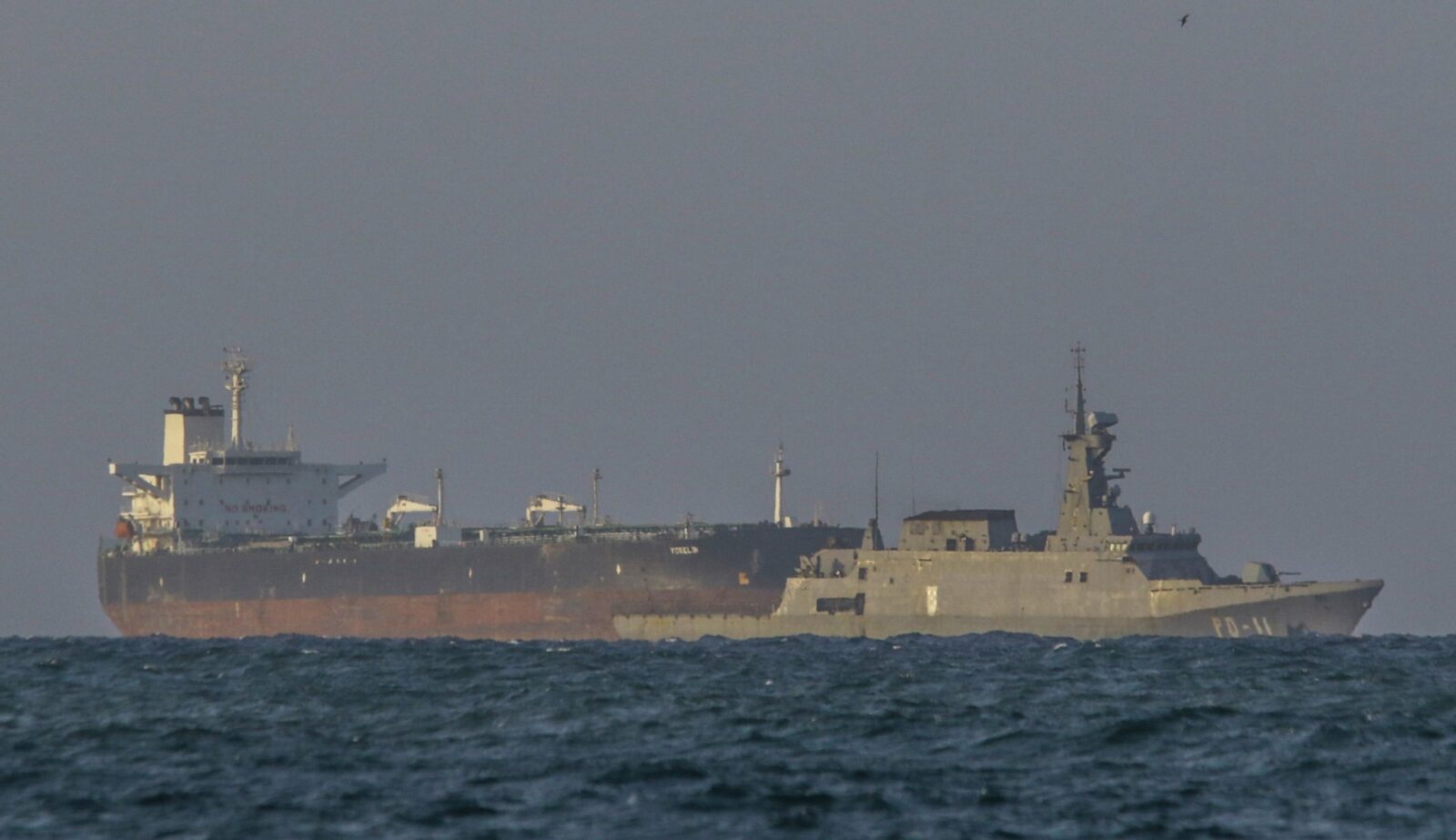
On December 8, 2025, the U.S. Department of Justice executed a seizure warrant against the vessel “Skipper” in international waters off the coast of Venezuela. The indictment was based on previous 2022 sanctions against the vessel (when it sailed under the name “Adisa”) for its involvement in an illicit oil shipping network that allegedly financed Iran’s Islamic Revolutionary Guard Corps (IRGC) and Hezbollah. The vessel had loaded 1.1 million barrels of Venezuelan heavy crude (Merey) at the Port of José between December 4 and 5. The boarding operation was carried out by helicopters that took off from the aircraft carrier USS Gerald R. Ford, with special forces, Coast Guard, and Marines rappelling onto the tanker’s deck.
This case is significant because it occurs at a time of escalation in the Caribbean, where the U.S. has intensified its naval presence ostensibly to combat “narco-boats”, but where the geography of the seizures suggests broader objectives related to controlling energy flows to and from Venezuela.
Three years ago, on June 8, 2022, a Boeing 747-300F, registration YV3531, operated by the Venezuelan company Emtrasur (a subsidiary of Conviasa), landed at Ezeiza International Airport in Argentina. The aircraft was transporting auto parts from Mexico and had previously been owned by the Iranian airline Mahan Air, which was sanctioned by the U.S. for its alleged ties to the Islamic Revolutionary Guard Corps (IRGC).
The crew included five Iranians and fourteen Venezuelans. Argentine authorities, under pressure from the United States and Israel, detained the aircraft and launched an investigation. The United States formally requested the seizure of the plane, alleging that it had been illegally sold in violation of sanctions, as Mahan Air remained the rightful owner.
After more than two years of litigation, in February 2024, the plane was transferred to the United States. The Argentine Supreme Court rejected the appeals filed by Iran and Venezuela, upholding the transfer to Florida. This case generated significant diplomatic tensions: Venezuela denounced a “hijacking” and accused Argentina of capitulating to foreign pressure, while Iran condemned the decision as a violation of Argentine sovereignty and international law.
Other historical cases of seizure
In July 2019, the United Kingdom, acting on intelligence provided by the United States, detained the supertanker “Grace 1” in Gibraltar, accusing it of transporting Iranian crude oil to Syria in violation of European Union sanctions. The vessel was released after weeks of diplomatic tension, but the US issued a seizure order that could not be executed when the tanker (renamed “Adrian Darya 1”) sailed into less vulnerable territorial waters.
Between 2020 and 2023, the United States seized at least four large shipments of Iranian oil, valued at over $100 million. In July 2023, the Department of Justice confirmed the seizure of nearly 1 million barrels of Iranian crude oil from the tanker “Suez Rajan”, which was carrying fuel to China. The cargo was diverted and unloaded in Texas.
In November 2024, the US destroyer USS Stockdale intercepted the Russian oil tanker “Seahorse” as it headed to Venezuela. The vessel, sanctioned by the European Union and the United Kingdom, was carrying naphtha (a key diluent for Venezuelan heavy crude). Following the interception, the Seahorse changed course for Cuba and remained adrift in the Caribbean after two further unsuccessful attempts to approach Venezuela. This case is significant because, although there was no physical seizure, the US military presence achieved the objective of blocking the delivery.
During the Biden administration, in its attempt to sabotage any possibility of a peace process in Ukraine’s proxy war, the Treasury Department imposed sanctions on 183 vessels belonging to Russia’s “ghost fleet”, described as “an unprecedented number”. Among them, 69 belonged to the state-owned company Sovcomflot, including 54 oil tankers and four LNG carriers. Russian marine insurance providers such as Ingosstrakh and Alfastrakhovanie were also sanctioned. These vessels, many registered in Panama, Vietnam, Gabon, Antigua and Barbuda, Sierra Leone, and other flags of convenience, transport Russian oil to India and China. Some have carried both Russian and Iranian crude, revealing the interconnectedness of these evasion networks.
Illegitimate legality and extraterritoriality
US seizures are based on three legal pillars: unilateral sanctions, extraterritoriality, and the complicity of judicial cooperation from weak governments.
Since 1979, the United States has maintained sanctions regimes against Iran; against Venezuela since 2017, expanded in 2019; and against Russia since the proxy war in Ukraine. These sanctions prohibit transactions with designated entities, including the purchase and sale of oil, the transfer of assets, and the provision of services.
Washington applies its sanctions laws extraterritorially, threatening “secondary sanctions” against companies or governments of third countries that conduct transactions with sanctioned entities. This pressures nations like Argentina to cooperate, even when they have no direct legal obligations under their own domestic law. It is the outright trampling of any claim to sovereignty that does not respect US impositions.
It uses mutual legal assistance treaties and the Interpol network to request the preventive seizure of assets in friendly jurisdictions. Diplomatic and economic pressure is decisive; countries dependent on US investment, trade, or security inevitably comply with these requests.
However, this legal framework faces significant challenges. Iran, Venezuela, Russia, and China argue that unilateral sanctions violate international law because they lack the backing of the UN Security Council. Extraterritorial application is seen as an illegitimate extension of US sovereignty over third-party states. Organizations such as the UN have warned that broad sanctions can constitute collective punishment affecting civilian populations. It is clear that these declining bodies can only issue pronouncements with little impact on reality.
China and the ghost fleet
The official US narrative regarding its military presence in the Caribbean focuses on combating drug trafficking, particularly the interception of Venezuelan “narco-boats.” However, an analysis of the operational geography and deployed resources reveals more complex geopolitical objectives, as evidenced by the capture of the oil tanker Skipper.
China occupies a unique position in this geopolitical architecture. Although it is not directly subject to the same sanctions as Iran, Venezuela, or Russia, its role as the main buyer of sanctioned crude oil places it at the center of the evasion strategy and, consequently, of US scrutiny.
China buys approximately 90% of Iranian oil exports and between 55-80% of Venezuelan exports in 2025. Chinese companies and refineries, especially the independent ones (so-called “teapot refineries”) absorb large volumes of Venezuela’s sanctioned crude, offered at significant discounts. Venezuela sells its heavy crude to China at discounts of up to $15 per barrel below the Brent price ($80 and $90).
The Financial Times reported in 2024-2025 on a sophisticated network of more than 30 oil tankers using ship mortgages to evade sanctions. The network, apparently controlled by Chinese entities, transported more than $1 billion worth of sanctioned crude oil from Iran, Russia, and Venezuela. Eight of the companies that owned the tankers shared the same Chinese phone number registered to Li Yi, who is listed on US sanctions lists along with Shen Luqian and the company Pegasus 88.
Sanctioned oil is frequently transferred between ships on the high seas near Malaysia, Singapore, and the Riau archipelago to conceal its origin. A CBS News report, clearly influenced by US intelligence, documented these operations more than 80 nautical miles from Singapore. Iranian exporters, with support from Chinese companies, use these tactics to make Iranian crude appear to originate from Iraq or Malaysia, and Venezuelan crude as being of Malaysian origin.
The United States has sanctioned multiple Chinese entities for facilitating trade in Iranian and Venezuelan oil. In 2024-2025, Washington sanctioned Chinese refineries, Hong Kong-based shipping companies, and oil terminal operators. The Panama-registered company, Ocean Glory was sanctioned in December 2024 for owning vessels that transported Iranian crude. However, these sanctions face practical limitations. Beijing has a strategic interest in maintaining access to cheap oil and has shown limited willingness to comply with unilateral US restrictions.
Sanctions against Chinese entities create a dilemma, as putting too much pressure on Beijing could escalate broader trade and geopolitical tensions.
The central phenomenon in these logistical geopolitics is the “ghost fleet” or “shadow fleet,” which are ships that deliberately operate outside international regulatory frameworks to transport sanctioned oil.
According to estimates, approximately 1,200 vessels (more than 10% of the global fleet) are transporting sanctioned oil from Iran, Russia, and Venezuela. Fifteen percent of the world’s supertanker fleet (with a capacity of 2 million barrels per voyage) has been sanctioned. These vessels are typically over 20 years old and lack adequate property and casualty insurance (P&I), which is mandatory for commercial vessels. Between 90% and 95% of the insurance market is controlled by European and British companies that enforce sanctions, forcing these vessels to operate with minimal or fraudulent coverage.
These tankers turn off or falsify their AIS (Automatic Identification System) transponders, frequently change names and flags, use shell companies registered in tax havens, perform offshore cargo transfers (STS) to conceal origins, and falsify provenance documents.
What is significant is that the same vessels frequently transport Iranian, Russian, and Venezuelan crude oil on successive voyages, revealing a shared logistical infrastructure among the three sanctioned nations. This convergence is not accidental and reflects a tactical alliance where countries under US pressure cooperate to build parallel trade and transportation systems that circumvent Western financial and regulatory architecture.
The new corsairs of the Caribbean: SouthCom
The oversized US military presence in the Caribbean serves functions that go beyond combating drug trafficking.
Most ships transporting additives or fuels to and from Venezuela must cross the Caribbean or its vicinity. The U.S. naval presence allows for satellite monitoring, aerial reconnaissance, and electronic tracking of these vessels, facilitating subsequent seizures in international waters or through pressure on coastal states.
The visibility of U.S. military assets discourages shipowners, insurers, and oil companies from engaging in trade with Venezuela. The risk of seizure, loss of the vessel, and secondary sanctions dramatically increases operating costs and reduces the availability of shipping for Caracas.
The 19th-century Monroe Doctrine proclaimed the Western Hemisphere a sphere of U.S. influence. Current operations in the Caribbean update this doctrine, as outlined in the National Security Document 2026; Washington seeks to maintain hegemony over maritime routes, ensuring that extra-regional powers such as Iran, Russia, or China cannot establish sustainable logistical corridors to Latin American allies.
Since 2019, Southern Command (SOUTHCOM) has intensified its operations in the Caribbean through Operation Orion (2020) and Operation New Horizons, which involved warships, submarines, P-8 Poseidon maritime patrol aircraft, and special forces. The volume of resources far exceeds what is needed to intercept low-tonnage drug trafficking vessels.
In 2008, the Fourth Fleet, inactive since 1950, was reactivated with responsibility for Latin America and the Caribbean. Its presence has intensified during the Trump and Biden administrations, with joint naval exercises with Colombia, patrols near Venezuela, and a presence at strategic locations such as the Panama Canal and the Florida Straits.
Washington maintains or has negotiated access to facilities in Colombia, Aruba, and Curaçao, and has expanded cooperation agreements with Guyana, Brazil, and Central American countries. These locations allow for rapid power projection over Venezuela and Caribbean maritime routes.
The narrative of drug trafficking used to justify the military saturation of the Caribbean falls apart under its own weight.Since the flow of drugs from the south into the United States has not decreased, DEA data shows that cocaine seizures in Caribbean waters represent a small fraction of the total trafficking, much of which moves along Central American land routes or Pacific maritime routes.
Intercepting drug-running boats does not require destroyers, nuclear submarines, or amphibious assault ships. Deploying these high-capacity assets indicates preparedness for state conflict scenarios or for effective patrolling and privateering operations, not for maritime policing against traffickers.
Both Iran and Venezuela have developed asymmetric responses, increasingly coordinated with Russia and backed by China.
Venezuela and Iran have deepened their cooperation, with Tehran sending technicians, spare parts, and expertise to rehabilitate Venezuelan refineries. Iran has also provided oil tankers, cargo planes, and defense technology. Russia has become a crucial supplier of naphtha (a diluent) for Venezuelan heavy crude, as evidenced by the Seahorse case. China has expanded its financial and political support, purchasing Venezuelan and Iranian crude despite threats of secondary sanctions, acting as a market of last resort for sanctioned oil.
The “ghost fleet” of 1,200 vessels represents an alternative shipping system, operating outside of Western insurance, financing, and regulatory institutions. Russia has developed its own marine insurance companies (Ingosstrakh, Alfastrakhovanie) to replace London-based coverage. China provides financing through ship mortgages, bypassing the traditional banking system.
In November 2025, Iran seized the oil tanker “Talara” and detained its crew, accusing them of fuel smuggling in the Persian Gulf. Although the Iranian government denied that it was direct retaliation for US seizures, the timing suggests a symmetrical response designed to raise the costs of the US strategy and demonstrate that Tehran, too, can exert control over critical shipping lanes.
Bombings, invasions or seizures and patrols
Seizures generate less domestic and international controversy than bombings or invasions. They are presented as the legitimate application of international sanctions, not as acts of war.
Although each individual seizure may have a limited impact, the accumulation of dozens of cases dramatically raises operating costs for the target countries, reducing their foreign trade capacity and revenue generation.
Each seizure sends a clear message to companies, banks, and governments of third countries: cooperating with sanctioned entities carries real risks of asset loss and secondary sanctions.
As Iran, Venezuela, Russia, and their Chinese facilitators develop more sophisticated evasion methods, seizures become less effective. The clandestine trade persists, albeit at a higher cost. The existence of a ghost fleet indicates that the system has reached a critical mass sufficient to sustain itself, absorbing the occasional losses of individual vessels.
Retaliatory captures, like that of the Talara, can escalate tensions and generate diplomatic crises. There is a risk of incidents that could trigger unforeseen armed conflicts. The interception of the Russian Seahorse by the USS Stockdale occurred in a context where any miscalculation could have escalated into a direct confrontation between US and Russian forces.
The extraterritorial application of unilateral sanctions is a violation of sovereignty and international law. This fuels narratives of victimization in sanctioned countries and erodes the legitimacy of the international institutions that North America seeks to uphold.
Paradoxically, US pressure is accelerating the formation of parallel economic systems. China and Russia offer alternative trade routes (the Silk Road, Eurasian energy corridors, payment systems like CIPS and SPFS) that reduce dependence on Western financial and logistical systems. The convergence of Iran, Russia, Venezuela, and China in shared logistical structures represents the embryo of a multipolar economic, financial, and energy order that challenges the hegemony of the dollar and the Bretton Woods institutions.
The Caribbean as a frontier of global geopolitics and the emergence of a multipolar order
The cases of the “Skipper” oil tanker off the coast of Venezuela, the Iranian-Venezuelan Boeing in Argentina, the blockade of the Russian “Seahorse”, and the massive sanctions against 183 ships of the Ghost Fleet are not isolated incidents, but rather manifestations of a comprehensive US strategy of logistical coercion against sanctioned powers. This strategy transcends the rhetoric of combating drug trafficking, revealing itself as a power projection instrument designed to maintain hemispheric hegemony and hinder the formation of alliances between geopolitical adversaries: Iran, Russia, Venezuela, and, increasingly, China.
The Caribbean, far from being merely a theater of counternarcotics operations, has become a geopolitical frontier where control of maritime routes, energy flows, and the capacity of sanctioned states to withstand economic pressure are being contested. The intensification of the US military presence in the region responds to a logic that prioritizes long-term strategic objectives—containing Russian, Iranian, and Chinese influence in the Western Hemisphere—over immediate operational effectiveness against drug trafficking.
However, the sustainability of this strategy faces growing questions. The consolidation of a phantom fleet of 1,200 vessels, the sophistication of evasion networks financially backed by China, and the operational convergence between Iran, Russia, and Venezuela suggest that these actors have reached a critical logistical mass capable of withstanding sustained US pressure. More significantly, this pressure is unintentionally accelerating the formation of alternative economic systems—transport corridors, payment mechanisms, insurance networks—that operate outside of Western control.
The fundamental question is not whether logistical coercion can maintain pressure on specific adversaries—it clearly can—but whether the costs of this strategy (erosion of international law, consolidation of alternative blocs, humanitarian suffering that generates political costs) will eventually outweigh its strategic benefits. The evidence from 2024–2025 suggests that we are witnessing not the collapse of sanctioned states, but the emergence of a multipolar economic order where US control over global trade and financial routes is no longer absolute.
In this 21st-century geopolitical chessboard, control of logistics—ships, aircraft, maritime routes, insurance, financing—has become a battleground as critical as traditional territorial control. And in this battleground, the Caribbean is much more than a space for intercepting drug-running boats; it is a node where US power is projected, where that power is resisted through asymmetrical alliances, and where the outline of a post-hegemonic international order is taking shape, the implications of which we are only beginning to understand.