


I have been to many cities and states across the US, from Washington to New York, from California to Texas, and from Chicago to Atlanta. I have been to all G-8 countries except Japan. I have also traveled to numerous European countries outside the G-8. I am familiar with major Russian cities from the far east to the far west of the country. I have been to Dubai in the Gulf. Among countries of this scale, only China was missing.
An 11-day trip to China
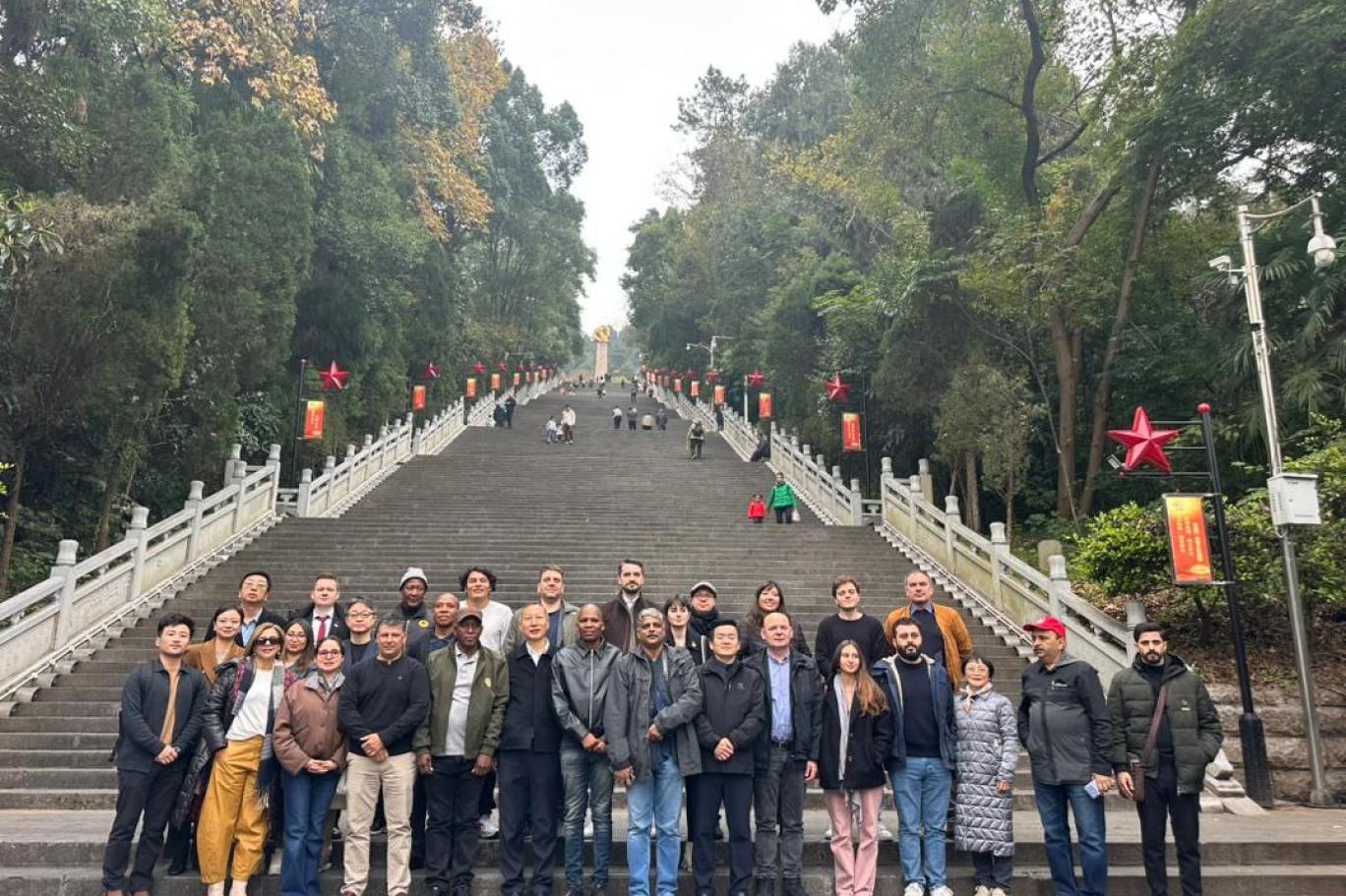
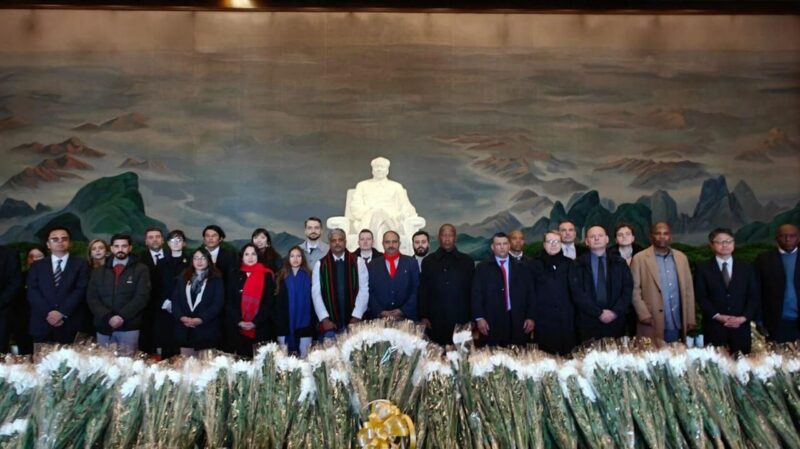
Between 16 and 27 November 2025, I was in China for the first time. I represented the Vatan Party at the invitation of the Communist Party of China (CPC) to participate in an 11-day “Workshop for Cadres of Theoretical Research of World Communist Parties, 2025” held in different cities across the country.
The Workshop brought together numerous communist parties from South America to Europe, from Asia to Africa, both in ruling and main opposition positions. We held many meetings with senior CPC officials, managers of public and private companies, regional party schools, and even village cooperatives. A wide range of topics were discussed at a theoretical level, from the duties of the global communist movement to socialism with Chinese characteristics and the current political developments in various countries.
Besides Beijing, I had the opportunity to make observations in regions, cities, towns and villages such as Guizhou, Moutai, Zunyi, Bozhou, Huamao, Guiyang, Fujian, Fuzhou, Sanming, and Xiamen.
I would like to share some of my impressions and the conclusions I have drawn from this trip.
For the West, it’s too late!
1. For the West, everything is now too late. The Atlantic bloc can no way stop China anymore. If they had managed to “crush the dragon’s head” 15–20 years ago, they might have had a chance. But now it’s too late.
Seeing China helped me better understand Trump’s hysteria and Merz’s crying hiccups. I don’t share their feelings, but from their point of view, their concerns are very accurate.
As I mentioned above, I have had the chance to see most of the advanced capitalist-imperialist countries. But China’s speed of development and dynamism can’t be grasped just through statistics or presentations, even with the naked eye, it impresses you as you wander through its cities.
There is not just one Beijing or one Shanghai in China. Every city we saw is a New York, an Istanbul. Every city is a center. You drive for a long time within the city, think you’ve left it, and yet the massive structures continue: towering residential complexes, endless commercial and financial centers.
Even in the villages and small towns you pass on intercity roads, you could clearly see the same renewal and dynamism.
Considering that just 75 years ago a significant part of the country was addicted to opium, this result is astonishing.
When it comes to China, everyone has to be a communist
2. After my trip to China, I reached another firm conclusion: No matter where you are in the world, no matter your ideology, political view, or belief is -whether you’re a liberal, an anti-communist, a devout Catholic, or an Islamist- anyone who breathes and lives, when it comes to China, has to be a communist and has to support the CPC. You may dislike communists in your own country, but you should be praying for the success of the CPC on China’s socialist path.
Can you imagine someone like Trump, Biden, or Macron running this economic, military, and political powerhouse with a population of nearly 1.5 billion? Let me be blunt: they would shake the world to its core. So, the future of socialism in China doesn’t concern only the Chinese people, it concerns the entire world.
The future of socialism in China will also be a guarantee of fairer distribution and peace across the globe. A socialist China is an important ally for developing and oppressed countries in their struggle against imperialism and for development. China’s line of “Shared Development” is important in this respect.
That said, the CEO of a major international company we met in China also uttered that while “solidarity” may exist in relations between states, their companies’ relationships with other countries are shaped by free market.
The end of liberalism’s tall tale of the “bogeyman” state
3. The dynamism China has achieved in development completely tears apart liberalism’s impositions about state interference in the economy. It is clear that China owes its production boom and technological progress completely to state planning and intervention.
This becomes much clearer when you witness how a small family business that started out producing simple snack foods, after achieving modest success, entered under the umbrella of the state and transformed into a global giant. In China, public companies don’t grow by being privatized; private companies grow by becoming nationalized. The state, through nationwide, and even global, planning and support, carries its companies into international success.
Just like a master orchestra conductor governing talented musicians in harmony.
During the trip, we saw various examples of this. We toured factories and held long meetings with their CEOs.
All this makes one thing obvious: it’s no coincidence that even imperialist–capitalist centers were forced to return to state intervention, especially after the pandemic. They themselves no longer believe the lie that state intervention makes the economy less efficient.
State intervention is also important in the fight against poverty. We learned that university graduates have started turning toward factory work and agriculture. In fact, better conditions and decent incomes have brought about a reverse migration, with many university graduates returning to villages for farming.
Even so, CCP officials say that compared to the past, the balance between the public economy and the free market has shifted somewhat in favor of the latter. They emphasize that the existence of vast peasant masses makes this legitimate, that they are still in the early stages of socialism, and that only praxis will show what more advanced stages will look like.

Socialism, but with Chinese characteristics
4. Whenever socialist experience is discussed in China, they always add one phrase: “with Chinese characteristics”. In other words, they place great importance on adapting socialism to each country’s specific conditions. They nationalize a universal ideology.
Practices of different countries are important as examples for other countries, but they believe that each country will have socialism with their own “characteristics”.
Made in China? Then take it
5. From everyday life to factory production lines, you can see that China has made a massive leap forward in technology and artificial intelligence. On some Chinese TV channels, news is now presented by AI anchors. In daily life, not only cash but even bank cards are out of use. And the quality of products has shattered the bad reputation of “made in China”.
Viaducts covered in vines
6. China, especially Beijing, suffered badly from air pollution in the past. That is why they now take great care to green energy and environmentally friendly development. In Beijing, all taxis are electric. So, also cheaper than the oil-producing countries.
Some skyscrapers have been demolished in recent years because they were blocking airflow and worsening air pollution. The Beijing municipal government has allocated a massive $120 billion budget to clean the air.
At times, the food we were served was produced entirely using green energy. They emphasize this. The word “ecology” is on their lips.
Greenery in cities has not only been preserved, but it has also clearly been expanded through deliberate effort. One thing I observed was that massive, snake-like viaducts in major cities were completely covered with vines without leaving a single centimeter uncovered. I liked that.
The population is huge, the demand for housing is massive, and at the same time green areas must be protected. so cities grow vertically rather than horizontally. I haven’t seen this many high buildings anywhere else.
Women in the lead, and safe
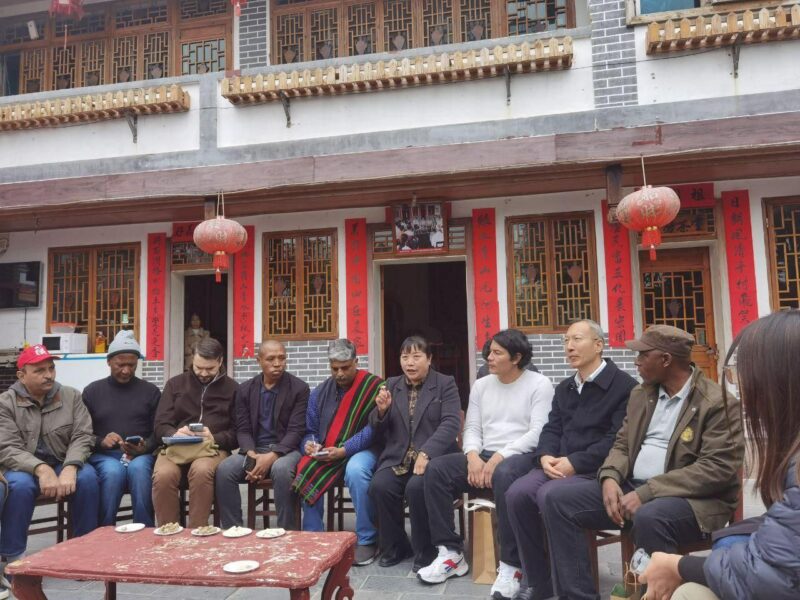
7. You see a large number of women among senior state and party officials, managing directors and top managers in both public and private companies. Not only in big cities and corporations: for example, the head of the 90-member party committee of Huamao Village is also a woman, who welcomed us with the same confidence you see everywhere in the country.
Socialism liberates women and brings them into the lead.
Not only in the state or the party. Women are present everywhere in daily life. Seeing women bus drivers is quite ordinary. According to China’s National Bureau of Statistics, more than 43% of total employment consists of women. China is among the top countries in the world in this regard.
The issue of public safety, which affects women and children the most, has also been seriously addressed in China. I had heard this before from some Turkish businessmen who have nothing to do with socialism. Jin Xin, Vice Minister of the International Department of the CPC, also told us that according to the US’s statistics, China is among the three safest countries in the world.
Women walking calmly in the streets late at night confirm this.
Ideological unity and discipline
8. We also visited Party schools in the cities we went to. These Party schools are enormous complexes. They are like universities. Ideological unity and discipline are treated as essential in building socialist China. Across the country, Party members go through programs that cover many things from Congress resolutions and economic plans to development models and political developments. It’s worth noting that the Party employs hundreds of thousands of instructors for these schools.
As the leader of the revolution and the founder of the state, Mao naturally holds the top place in the agenda of these schools. But when it comes to economics, Deng Xiaoping takes center stage.
Party grassroots organizations also function in a disciplined way in factories and companies. You can see their presence in wall notices, bulletin boards, and posters.
Yet, when local officials talk about economic acceleration in a region, they might present the opening of the first McDonald’s as a milestone of success in attracting foreign capital. Our tour guide proudly told us about the first Starbucks that opened in the city eleven years ago while showing us around historical sites.
When we asked about the Party’s stance on LGBT propaganda, professors from a university’s School of Marxism answered by steering clear.
Also, you can observe the influence of Western culture among young people on the streets.
These too are part of present-day China.
The meeting where everyone speaks up
9. For Communist Parties, being democratically centralized is typical.
At the end of events, an evaluation session is held. Everyone expresses their thoughts and criticisms. (You can read my speech in Xiamen here https://uwidata.com/39375-who-are-the-friends-of-the-world-scientific-socialist-movement/)
Everyone spoke up in our meeting. Not only foreign guests and high-ranking CCP officials, but also the translator, the young guide, and even the lowest-ranking cadres accompanying the delegation. That day was no exception: from the very top of the CCP to the very bottom, whether they wanted to or not, everyone was given the floor and asked to evaluate the 11-day program.
The construction of socialism and the importance of state tradition
10. Of course, all of China’s achievements rise upon a deeply rooted state tradition. You can see this civilizational heritage and state tradition stretching back thousands of years in Beijing’s National Museum of China. To understand today’s China, one should look at its history alongside its present day. (I should also note that in this museum we witnessed the depth of the roots of Turkish state tradition and civilization.)
This includes also the museums and exhibitions we visited in other cities that present the history of the CCP and the revolution.
It is also worth mentioning that in all these museums, science, art, and technology are used quite well, the content speaks to younger generations, visitor numbers are high, and entrance is free.
China is employing its history as a production means in building the future.
Development model through football
11. In this sense, culture, arts, and sports are also prominent. This article isn’t about China’s artistic or sporting achievements but let me share a few observations.
A football league, established specifically for a development project in the Guizhou region and operating within an international framework, was a striking example of how economic development and sport can be used in tandem. We spent a few hours at the Zunyi Party School listening to the economic development model created around this football league, and it was well worth it.
We saw that there were plenty of art and handicraft workshops in the villages we visited. Not only adults, but also little children take courses at these workshops.
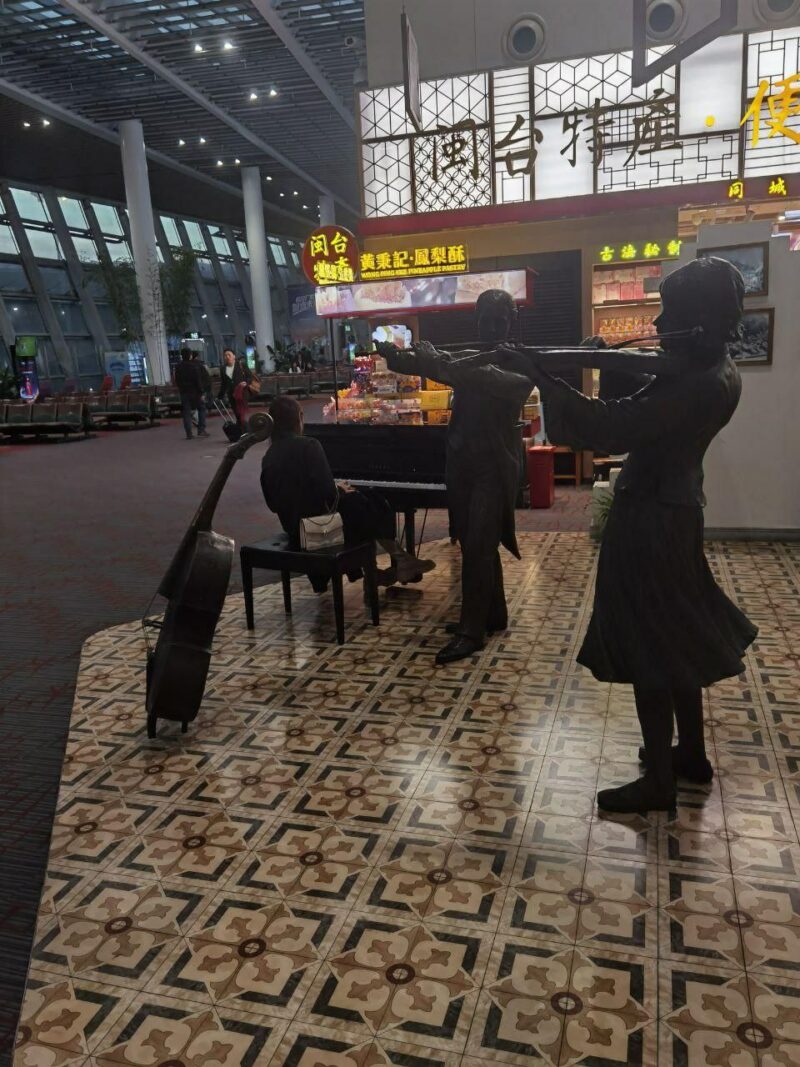
The piano standing in the middle of the vast area where the boarding gates are at Xiamen Airport, which anyone waiting for a flight could play, was also remarkable, as it shows that art does not exclusively belong to a certain segment of society.
The Uyghur issue
12. Many may expect me to write something about the Uyghur issue. We did not visit the Xinjiang-Uyghur region.
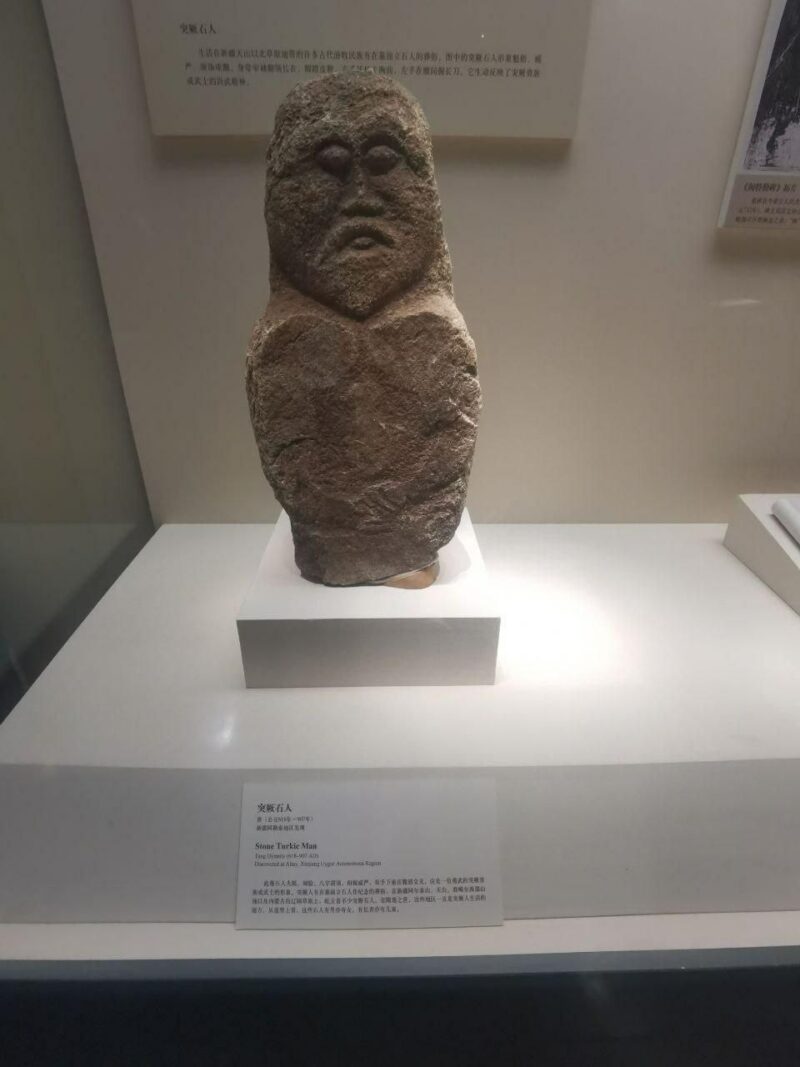
At China’s largest museum, the National Museum of China, which requires online reservation days in advance (as I mentioned, the entrance is free) and is always packed, there stands the “Turk Man Statue” in all its majesty, with inscriptions in English and Chinese. Dating from 618-907, this statue originates from the Altai region in Xinjiang-Uyghur. Artifacts of Turkic civilization are presented as part of Chinese civilization in this museum.
In Zunyi, at the Science and Technology Museum, you can also encounter materials related to the traditions and culture of the Xinjiang-Uyghur region. With the help of artificial intelligence, you can even take photos dressed in traditional Uyghur clothing, with your face altered to resemble a Uyghur.
From Xiamen to Taiwan in a jump
13. My determination that “It is too late for the West” also applies to the Taiwan issue. The Chinese Army and Navy are now a big force. We already read the frustrated assessments from US Pacific Fleet commanders, but something else caught my attention.
I didn’t know this before. We were in Xiamen, at the southernmost part of China, on top of a skyscraper overlooking the coast. A CCP official pointed through the glass and said: “Our border with Taiwan starts just a few kilometers from here”.
The islands under the administration of Taiwan begin only a few kilometers from China’s coastline. No more than 10 kilometers.
How could they separate Taiwan from China, coming from the other side of the world? Who has the power for that? Not likely.