


By Mehmet Enes Beşer
Today, it is entering its fourth year with no endgame on the horizon. The military regime is as entrenched as ever, and anti-junta forces have become more united in their efforts, while humanitarian conditions continue to deteriorate month after month. Within this maelstrom of uncertainty and dysfunction, Thailand has sought to position itself as a force for peace—but in truth, Thailand’s mixed-bag diplomacy has made a bad situation worse and exposed a lack of overall cohesion and leadership to this crisis among ASEAN as a whole.
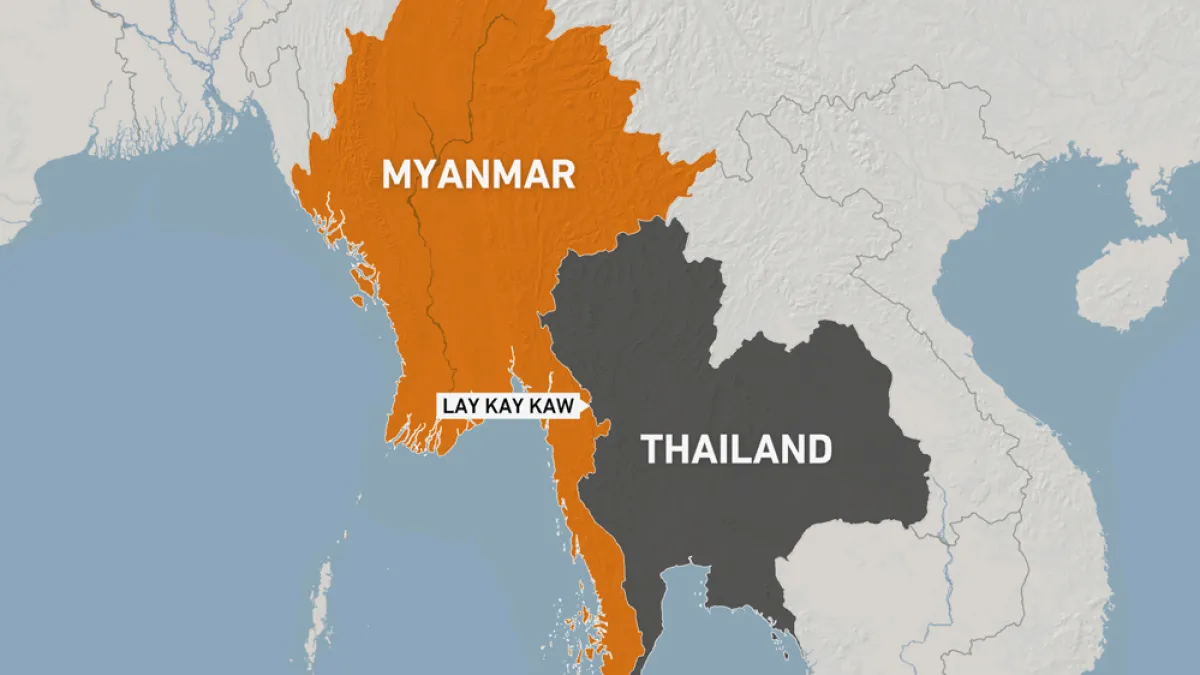
Thailand’s proximity to, economic ties, as well as a share border with Myanmar, position it front row when it comes to what is happening in the country. However, Thailand’s response to what is happening in Myanmar since the coup in 2021 appears to be marked by a tendency to be inconsistent while also siding with the Burmese government. This is a position that differs from the rest of ASEAN, primarily represented by Malaysia and Indonesia, which have shown a certain level of resistance to the Burmese military government.
Such ambivalence is not only a question of diplomatic mannerisms, either. It also betrays a certain strategic intent. The Thailand military-backed administration looks upon the Myanmar military junta as a kindred spirit rather than a pariah state. Both regimes are imbued with a disdain for popular uprisings and a deference to military authority, as well as a record of suppressing dissenting voices. Thus, the terms of Thailand’s mediation are inherently problematic—as it does not seek to interpret this crisis in democratic or humanitarian terms, but in terms of Southeast Asian regional cohesion and regime survival itself.
The consequence is that Thailand’s efforts are not viewed as being either unbiased or reliable for the pro-democracy opposition in the Myanmar politics. The ethnic armed organizations (EAOs), the civil society organizations, as well as the National Unity Government (NUG), have continued to express their lack of confidence in the Thai intentions. The lack of trust between the parties makes mediation between them not possible. Thailand’s secret diplomacy is instead increasing the lack of trust.
Further, Thailand’s solo actions have weakened the already weak consensus in ASEAN on the Myanmar issue. The “Five Point Consensus” adopted by ASEAN in 2021 has had little effectiveness, partly due to countries such as Thailand not taking it seriously. The five points included an end to the violence, talks involving all parties, provision of aid, and establishing a special envoy. Almost all of these objectives have not been achieved.
Nevertheless, it must be noted that ASEAN’s framework, which is premised on non-interference and consensus, was never designed to cope with domestic crises of this nature. However, its inability to at least present a united stance has given member states an opportunity to pursue divergent policies. Thus, ASEAN has lost its potential and credibility in its role as a peace-making organization.
However, there are more reasons for Thailand’s involvement in the conflict in Burma. There are over 2,000 miles of shared borders between the two countries. There are also 90,000 refugees in refugee camps in Thailand. Thailand fears that if there is more conflict in Burma, the conflict would cross the borders. But instead of solving these issues through proper diplomatic means, Thailand relies on maintaining peace in the short term in order not to sacrifice long-term justice.
However, the true cost lies with the citizens of Myanmar. The military state shows no signs of slowing its brutal attacks on civilians and destroying villages. Access has not improved for humanitarian missions. Additionally, the opposition movement has strengthened among ethnic states and even within central Myanmar, which means there could be a long conflict and a disjointed state. A weak and divided ASEAN with a non-compliant mediator like Thailand provides no glimmer of hope for a better future.
There are, however, alternatives. Indonesia, during its leadership of ASEAN, was more principled in its approach, maintaining back-channel contact with the NUG and EAOs, not seeking to legitimize the military government, but stressing humanitarian corridors. Malaysia has advocated an improved ASEAN system, with more active contact with the opposition. While it is not very effective, it is at least seeking to go beyond the stalemate of consensus.
If Thailand is committed to having a peaceful Burma, it needs to rethink its role in this respect. First, it must desist from working against the agreed frameworks in ASEAN, in favor of the bloc’s formal diplomatic efforts. Second, it needs to accept that any credible mediation efforts have to target all stakeholders in Burma, not merely the military government. Third, it needs to promote the formation of a humanitarian task force in the concerned region to coordinate the provision of assistance in collaboration with UN bodies and civil organizations.
Regarding Thailand, ASEAN has to consider that there are also limitations to its strategy at hand. It has to formulate an appropriate measure for failure to enforce the Five Point Consensus and work toward a better method for decision-making during a crisis. It has to also strategize and be deliberate with envoy appointments, rather than appointments that are meaningless and ineffectual.
Conclusion
The crisis in Myanmar has become the test case for ASEAN. The very security and reputation of the region will be shaped by its handling of the crisis on its borders. The experience of Thailand’s duplicity in its own foreign policy practice has revealed the way in which national calculation may impede regional collaboration.
For ASEAN to mean more than just issuing press releases and holding summits, it needs to assert its relevance by rebirthing diplomacy, identifying capable actors, and aligning the moral agenda with its strategic goals. Otherwise, it will neither save Myanmar nor itself.
The people of Burma deserve better than an easy consensus. They want peace with justice, and an Asia that will not turn its back on them.