

By Orçun Göktürk, PhD Candidate in International Relations, from Beijing / China
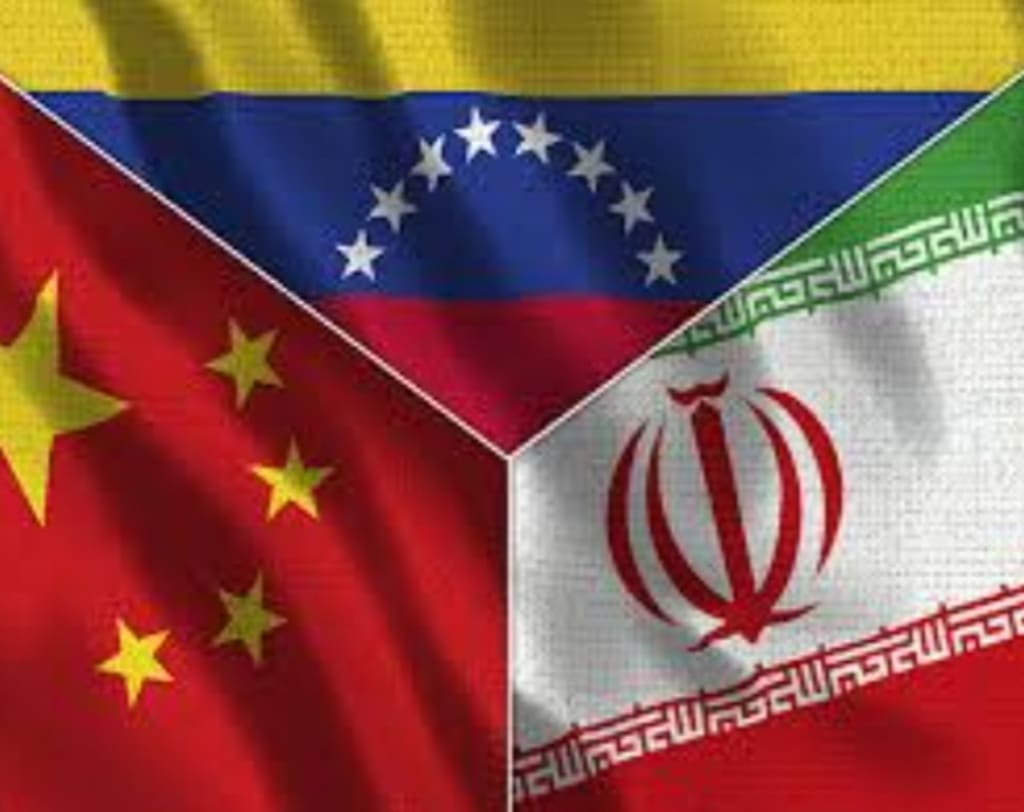
In recent times, some texts spreading rapidly on social media claim that China is waging a “silent but devastating” economic and geopolitical war against the US through Venezuela and Iran. In these narratives, China is presented as an actor that paralyzes global finance within a few hours, halts US ports, sends oil prices skyrocketing in a single day, and effectively declares a multipolar world. The problem is that this picture does not help in understanding real Chinese foreign policy; on the contrary, it places it in a completely wrong context.
China is a powerful actor today, but it is not unlimited. The steps it specifically refrains from taking are far more instructive for understanding Beijing’s strategic mind than the steps it actually takes.
A Brief Historical Framework
From 1949 until the late 1970s, China engaged in high-risk foreign policy moves driven by ideological motivations. This line was abandoned with the “Reform and Opening Up” post-1978. During the Deng Xiaoping era, China adopted a strategy centered on economic development and avoiding direct conflict with major powers. This approach is summarized by the principle of “hide your light and bide your time” (韬光养晦). In the Xi Jinping era, China has become more visible, but this fundamental risk calculation has not disappeared.
Today, the Venezuela and Iran issues are handled within this framework.
What Does Venezuela Represent for China?
Venezuela is important for China for three reasons: energy supply, political and economic presence in Latin America, and a principled stance against the US’s practice of unilateral sanctions.
However, this importance does not make Venezuela a “strategic red line” for China. Venezuela is not an irreplaceable country in China’s global energy basket. China can procure its oil from West Asia, Russia, and Gulf countries. The Chinese presence in Latin America is growing, but this region is not a military or security-centered priority area for Beijing.
For this reason, China does not turn the crises in Venezuela into a direct arm-wrestling match with the US. It provides diplomatic support, maintains commercial relations, and raises principled objections to sanctions, but it specifically avoids moves that would create military, financial, or logistical shocks.
This can be read as a weakness, or as a conscious drawing of boundaries…
China’s Incapabilities and Limitations
The narratives circulating on social media claim that China could, within a few hours, stop all transactions with American defense companies, lock down US ports, cut off oil shipments to spike prices, and paralyze the global financial system. Almost all of these claims contradict China’s own interest structure.
First, the Chinese economy is still deeply integrated into the global trade system. Bypassing US ports would hit Chinese exporters and large capital groups within China, not just the US. Much of China’s maritime trade is built on mutual dependence. Severing this bond in one day would mean a severe economic shock for China.
Second, the energy issue. China is not in a position to use oil as a weapon. China is a major energy consumer, and global price fluctuations directly affect the Chinese economy. A sharp rise in oil prices would create pressure on inflation, production costs, and growth in China before it hits the US.
Third, the financial system. It is true that China is developing alternative mechanisms to SWIFT. However, these systems are not mature enough to replace SWIFT on a global scale. Even China itself conducts a significant portion of its foreign trade in dollars. The idea of dozens of countries switching to the Chinese system within a few days does not align with today’s financial reality.
Fourth, rare earth elements. China is a powerful actor in this field, but using this power suddenly and harshly would accelerate supply chain diversification processes against China rather than the US. Beijing prefers to keep this card controlled and limited.
The Iran Issue: More Sensitive, More Limited
Iran is a more strategic country for China compared to Venezuela. It holds a more central position in terms of energy, Middle Eastern balances, and Belt and Road connections. Despite this, China does not take the path of direct conflict with the US regarding Iran.
China continues its trade with Iran, uses mechanisms that stretch sanctions, and provides diplomatic support. However, it avoids military or harsh financial moves that would challenge the US via Iran. The reason is simple: an uncontrolled escalation in the Middle East would risk China’s energy security and global trade routes.
So, What Is China Doing?
China’s real strategy is not to create sudden shocks but to build long-term balance. In the examples of Venezuela and Iran, China does the following:
- It diplomatically opposes regime change attempts.
- It maintains commercial relations without breaking them, and Beijing knows that it is difficult to be replaced in this regard.
- It establishes bilateral and regional mechanisms that limit the absolute impact of sanctions.
- It does not legitimize the US’s unilateral moves on multilateral platforms. Of course, against a rogue, increasingly lawless hegemon state, these remain insufficient—at least for now…
But it does (and can) NOT do the following:
- It does not come face-to-face with the US in the Western Hemisphere or anywhere far from its own territory.
- It does not consciously sabotage global trade.
- It does not openly escalate crises with military or financial shocks.
Conclusion: A Rising but Cautious Actor
China’s Venezuela and Iran policy is neither as aggressive as some anti-imperialist narratives on social media suggest, nor as passive as it might seem from the outside. China is an actor aware of the limits of its power. Considering the US military budget, its global network of bases, and its dominance over maritime trade, open conflict is still not rational for Beijing today.
Therefore, China focuses on gaining time, keeping costs low, and long-term power accumulation. The “world-changing China in one move” narratives circulating on social media do not explain reality. On the contrary, they miss the most critical feature of Chinese foreign policy.
China is a rising power today, but it is still a power that calculates, knows its limits, and prefers to delay if conflict is inevitable.