


From Cairo / Egypt
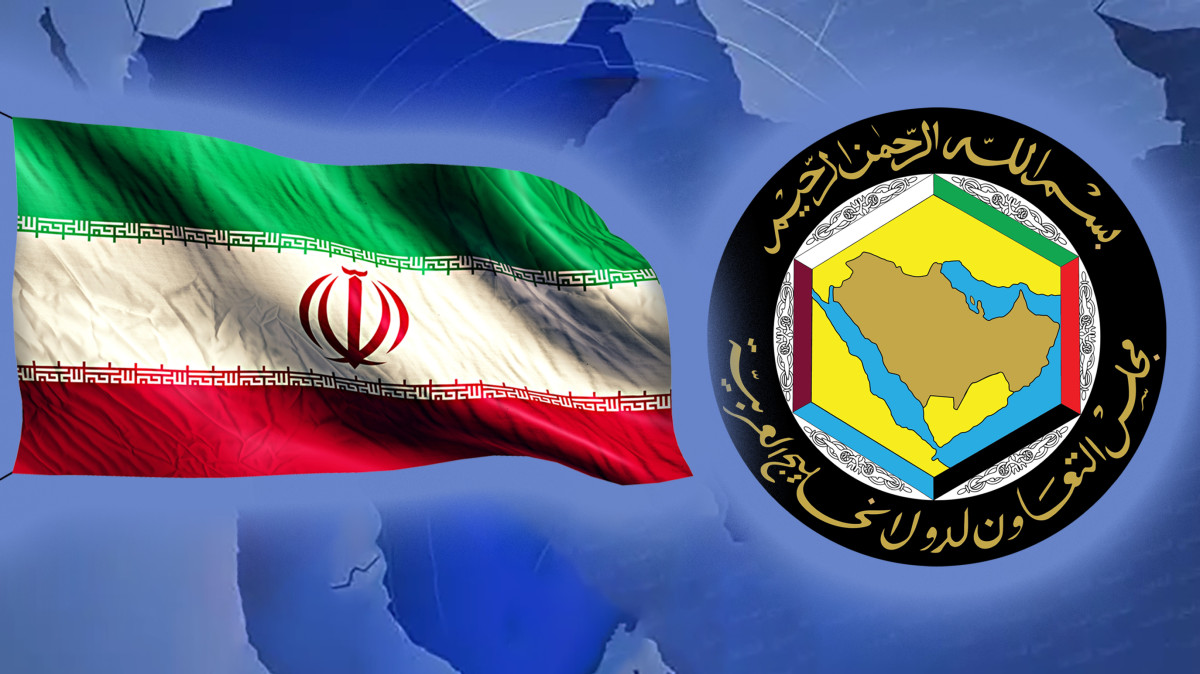
As the American aircraft carrier USS Abraham Lincoln plows through the waters of the Middle East, carrying the omens of a military operation that could be the largest in decades, Gulf capitals are experiencing a state of silent diplomatic mobilization. This mobilization is no longer rooted in anxiety born of weakness, but rather in strategic maturity that recognizes the rules of the game have changed. Gulf capitals perceive that a war, which Washington views as a tactical option to clip Tehran’s wings, appears to Riyadh, Abu Dhabi, and Doha as an existential earthquake.
Smoke Screens
While Gulf states seek clarity in the American position regarding plans to strike Iran, the U.S. administration maneuvers—alternating between leaking information about negotiations with Tehran to resolve nuclear disputes and engaging in military saber-rattling and threats of bombardment.
The smoke screens deployed by Washington to obscure its final decision have become so disorienting that Gulf states feel they are being manipulated. While President Donald Trump declares that his country does not share the details of its Iran plans with its Gulf allies, he justifies this by claiming the truth would have a terrible impact on them.
In an attempt to decipher the situation, Saudi Arabia dispatched its Defense Minister, Prince Khalid bin Salman, to Washington to gauge the Trump administration’s intentions. However, the Minister returned empty-handed, failing to clarify the nature of Washington’s plans.
Amidst this ambiguity, speculation grows that Washington is closer to attacking than retreating. Consequently, Gulf states find themselves forced to intensify their diplomacy to mitigate any potential fallout. In an effort to absolve itself of any involvement in a prospective strike and to avoid Iranian retaliation, Saudi Crown Prince Mohammed bin Salman informed Iranian President Masoud Pezeshkian that Riyadh will not allow its airspace or territory to be used for military operations against Tehran.
Simultaneously, the region has witnessed active diplomatic movements aimed at preventing escalation or emphasizing the Gulf’s refusal to support an American attack. Qatari Emir Sheikh Tamim bin Hamad Al Thani contacted the Iranian President to discuss de-escalation efforts, while his Prime Minister, Mohammed bin Abdulrahman bin Jassim Al Thani, traveled to Tehran for the same purpose. Similarly, UAE President Sheikh Mohammed bin Zayed emphasized, during a call with Pezeshkian, the importance of dialogue and diplomatic solutions to maintain regional security and stability. Among these efforts is the mediation by the Sultanate of Oman, a party trusted by both Tehran and Washington.
A Heavy Price
Gulf states have paid the heaviest price for Iranian games in the region over the past years. Tehran’s support for Shiite militias in Yemen, Iraq, and Lebanon, its incitement against the monarchy in Bahrain, and its unlimited support for Bashar al-Assad’s regime in Syria acted like a sorcerer releasing hidden serpents. This transformed the region into a landscape poisoned by sectarianism and identity wars, damaging regional stability and economic interests.
Saudi Arabia incurred massive costs, forced into military intervention in Yemen after the Iran-backed Houthis seized control, threatening the Kingdom’s security and targeting its oil facilities. Earlier, it intervened in Bahrain when Iran exploited the Arab Spring to incite sectarian unrest against the monarchy.
Furthermore, Iranian support for Nouri al-Maliki’s sectarian government in Iraq and the Assad regime’s massacres in Syria allowed the beasts of ISIS to emerge from the shadows under the pretext of protecting Sunnis. This led to vast territories in Iraq and Syria falling to the group—a nightmare for small Gulf states lacking massive standing armies.
Lebanon, too, became a state governed by the dictates of Hezbollah, funded and supported by Iran. Decisions of war and peace were held by the party, and by extension, Tehran. The Mullah regime used it as a pawn to maneuver against Israel at the expense of Lebanese and regional security. For the uninitiated, the Levant—specifically Syria and Lebanon—represents a strategic priority in Gulf assessments for reasons beyond the scope of this article.
Given the above, combined with Iran’s progress in uranium enrichment bringing it closer to a nuclear weapon, it would seem logical for the Gulf to overwhelmingly support a strike on Iran. However, this is not the case, which may seem counterintuitive.
Hidden Under the Surface
A precise understanding of the Gulf perspective reveals the complex calculations beneath the surface. Many believe Gulf diplomacy is driven by the fear of being the first to pay the price for any confrontation.
According to this immediate security concern, Gulf states fear that if attacked, Iran might resort to an uncontrolled response, targeting Gulf energy facilities and infrastructure either directly or through proxies. This raises the cost of even indirect involvement in a large-scale military conflict.
However, these calculations are only part of a broader strategic picture. The Gulf states fear any shift in the traditional American approach, which is based on a formula of containing Iran while maintaining a regional balance that prevents the hegemony of a single party. To Gulf capitals, a change in this equation weakens the Gulf itself.
Strategically, there is a fear that a U.S. attack leading to the collapse of the Iranian regime would result in absolute Israeli supremacy, creating a dangerous strategic imbalance rather than stability. For this reason, Gulf capitals do not see the fall of the Iranian regime as serving their interests; they see it as a seed for a political and security vacuum they are unprepared to manage. In the best-case scenario, such a fall could lead to a pro-Israel regime that Tel Aviv might use to pressure the Gulf and manipulate its interests.
In anticipation of such scenarios, Gulf capitals have sought to enhance their qualitative defense capabilities, seeking a new balance of deterrence. This became urgent after Israel broke all established norms by bombing Doha months ago, despite Qatar’s strong security ties with the United States.
On this strategic level, Gulf states also fear the catastrophic losses a war would cause in a nation of tens of millions. The spark of war could trigger massive displacement waves and the emergence of decentralized armed groups from South Asia to the heart of the Gulf.
Economics is also a vital factor. Tehran has never hidden that the Strait of Hormuz is a primary tool in its confrontation with the U.S. This intent represents a clear threat to one-fifth of the global oil trade and approximately 35% of LNG trade.
Israeli Hegemony
For these reasons, a strike on Iran would clearly run counter to the interests of Gulf states. They now believe that neutralizing the regime through forced change would translate into an unprecedented Israeli hegemony. These are not exaggerations; the Gulf has already seen miniature proofs in the recent past.
Last year, for example, the Al-Udeid Air Base in Qatar—the largest U.S. base in the Middle East—was targeted by Iranian missiles in response to a U.S.-Israeli strike on Iranian nuclear facilities. Furthermore, U.S. participation with Israel in attacking Iran, and its failure to protect Qatar from Israeli strikes, prompted Riyadh to sign a security agreement with Pakistan.
The critical question remains: Do Gulf states possess the tools to stop these war scenarios?
The Gulf states hold significant economic weight and massive investments in the United States, which could provide leverage to de-escalate tensions if utilized correctly alongside their excellent relations with President Donald Trump. They could also leverage ties with China to mediate with Iran for more nuclear concessions, thereby depriving Washington of a pretext for a strike.
However, despite these strong cards, they are not a foolproof guarantee. These states cannot realistically prevent Washington from using U.S. military bases in the Gulf if it deems a strike necessary for American calculations. Nor can they react if Tehran chooses a suicidal response, such as closing the Strait of Hormuz.
In short, given the lack of practical plans to deal with the fallout of a regime collapse, Gulf states prefer the survival of the current Iranian regime. Despite its problems and aggression, its calculations are understood, and its reactions are predictable.
According to insiders, the Gulf prefers gradual reform of the regime over a sudden collapse, fearing the rise of new extremists with whom no understanding can be reached. They argue that the collapse of the Mullah regime could be more dangerous than the fall of Saddam Hussein in Iraq, given Iran’s ethnic and sectarian complexities and its sprawling militias. Such a fall could turn pro-Tehran militias in Iraq, Lebanon, and Yemen into decentralized terrorist groups, free from the central authority that once controlled them.
Regardless of the possibility of an Iranian-Israeli axis forming post-collapse—a catastrophic scenario for the Gulf—the worst outcome would be the country sliding into a civil war that produces the ultimate nightmare of regional instability.