

UWI author, historian and political scientist Associate Professor Mehmet Perinçek was guest on a live broadcast of Turkish Ulusal Kanal’s right after the attack launched by the US and Israel against Iran on January 28.
Below are the main points of Perinçek’s evaluation in the broadcast.
The basic points
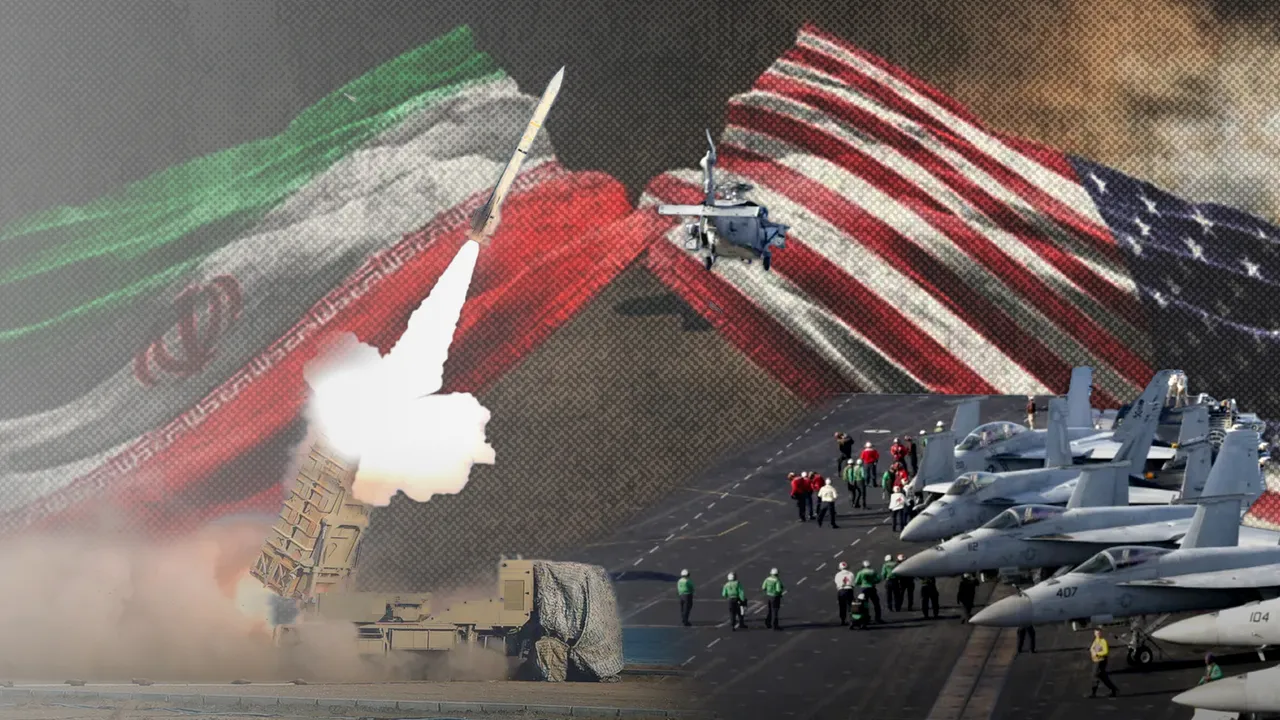
Let’s begin with the most basic point. The simplest question is this: Who are the parties to this war, and who is the aggressor? The war is between the US and Israel on one side and Iran on the other, and the aggressors are the US and Israel.
This war is an assault carried out by the US with Israel, at a time of its own choosing, within the framework of its own strategy against Iran. Why am I underlining these basic points? Because Turkish state officials, including President Erdoğan, can’t even mention the name of the US in their statements. Instead, they try to portray the US as “deceived”, “sabotaged”, “provoked” by Israel. Nowhere do they utter the name of the US as the aggressor, as the country that initiated this war.
Turkish officials condemn also Iran
The second basic point I want to emphasize is the fact that there is an aggressor, and by nature there is a side being attacked in this war. The one being attacked is Iran. Yet the President, Foreign Minister and many other officials of the Turkish state condemn Iran’s operations in the Gulf countries while also condemning Israeli aggression. An approach equating the actions of the aggressor with the defensive actions of a country protecting its independence, its rights, and its people against the aggressor.
To give an example from Türkiye’s War of Independence, this attitude is like saying: “We condemn the British forces, the Greek forces, and others who came to occupy Türkiye, and we also condemn Mustafa Kemal Atatürk who fought against the occupation.” Or in the Second World War: “We condemn Hitler, and we also condemn the Soviet, British, and American armies, because those fighting against Hitler are also resorting to coercion.”
Why the US attacks: The loss of initiative in the region
The third point I want to discuss is why the US undertook this attack. At this stage, the US had seriously lost the initiative in the region. With the Astana process and other regional initiatives, the US had lost the upper hand in Syria and South Caucasus. The regional countries, Iran, Türkiye, Russia, and Azerbaijan had been implementing their own projects to the extent that even Armenia had been drawn to their side.
In Palestine and Lebanon, Hamas and Hezbollah mounted strong resistance, denying Israel any chance of victory and pushing it back on the battlefield. Israel’s genocidal actions were recognized by global public opinion. The Eurasian countries had reached a point where they could take the initiative also on the Palestinian issue.
Trump’s “initiative”, “route” and “peace”,
To reverse this loss of initiative, the US first tried to obstruct the Astana process, and it succeeded. Then, in Syria, they embarked on what is called the “Trump initiative,” which is also verbally accepted by both Turkish and Syrian officials. Afterward, in the South Caucasus, projects run by the regional countries’ own will, such as the Zangezur Corridor and the South Caucasus Platform, were replaced by the “Trump Route” project. In Palestine, the initiative that Palestine and the regional countries were gaining was blocked by the “Trump peace,” which envisages the elimination of Hamas and Hezbollah. Countries under US-Israeli control agreed to deploy troops in Gaza.
In Syria, the “Trump initiative”; in the South Caucasus, the “Trump route”; and in Palestine, “Trump peace”: these three moves have made significant progress in regaining the initiative that the US was losing in the region.
Contraction of resource exploitation
These steps have an economic dimension as well as a political and military one. The loss of initiative in the region would have meant a more just distribution of the region’s resources and wealth among the regional states and for the benefit of the region, and for the US, this would have meant a contraction of exploitation resources. Given that the US economy is in an alarming state, mired in debt, and that the global economic center of gravity is shifting from the Atlantic to the Pacific, this contraction was highly detrimental to them.
Chevron as a litmus test
In this context, special attention should be paid to the Chevron corporation. Chevron today serves as a litmus test for how influential the US is in the region’s countries. The more Chevron makes agreements and conducts business in a country, the more that country falls into the US axis. I also note Chevron’s role in usurping Venezuela’s oil. And now it is striking that Chevron wants to enter Iran and the Iranian Revolutionary Guards have declared that they will treat Chevron as an enemy.
A region in “alignment with Israel”
In addition to the political, military, and economic reasons I have listed, a specific reason is that the US wants to shape the region in accordance with Israel’s objectives. Indeed, one of the most important aspects of the three steps I mentioned is this. The statement by the US Ambassador to Türkiye and Special Envoy for Syria Tom Barrack that Türkiye and the regions should be “in alignment with Israel from the Caspian Sea to the Eastern Mediterranean” also reflects this. In this region in “alignment with Israel”, Iran is an obstacle for the US, and thus a target.
Who are the targets besides Iran?
The target at the moment is Iran. But we must also see that this is not only about Iran. This is also an aggression against Russia, China, and in general, all of Eurasia. The fact that China purchases a significant portion of Iranian oil, Iran’s important position in Russia’s north–south trade routes, and Iran’s importance to Russia in the war in Ukraine, etc. are all well known.
And the attack on Iran is also an attack on Türkiye. The weakening of Iran is a facilitative pre‑step for all future actions against Türkiye. That Turkish state officials in their statements favor the US, portray the US as “deceived” or “provoked” by Israel, and think that their cooperation with Trump can save them is a great mistake.
The war in Iran is part of the overall confrontation in the world. Whatever is happening in Iran today is the same thing that is happening in the Palestinian–Israeli war, in the threat to China over Taiwan, in Russia’s war in Ukraine, in the threats Türkiye faces over the Turkish Republic of Northern Cyprus, the Eastern Mediterranean and Syria, in the US attacks on Venezuela, in the blockade against Cuba, and in attempts of neo-colonization in Africa. Thus, the war in Iran is also the war of Türkiye, Russia, China, and of all Eurasia and, in fact, the war of the whole world excluding the US and Israel and their “half‑hearted” allies.
Who will “change”?
The bar of the goal set by the US, the “regime change” in Iran, is too high. Under the military, economic, and political conditions the US is in, under the circumstances of rising Eurasia and declining Atlantic, it wouldn’t be possible for the US to achieve this. Moreover, the Atlantic front itself is seriously divided internally. We will see whether it is the Iranian state or Trump himself that will “change”.