

by Yunus Emre Özgün
When Washington and Tel-Aviv launched their sudden offensive against Tehran, the shockwaves didn’t just hit the Middle East—they immediately fractured whatever was left of a European consensus. Caught entirely off-guard, European capitals are now scrambling to draft a cohesive response. But in Paris, the calculus is especially brutal. France finds itself juggling an unprecedented military buildup, a radical ideological pivot from its nationalist right, and the ever-ticking time bomb of domestic unrest.
To decode the undercurrents driving French statecraft in this rapidly expanding conflict, we asked Ali Rıza Taşdelen, a veteran journalist and a political analyst who has spent four decades observing the French political establishment and its volatile streets from the inside.
The Élysée’s Caution
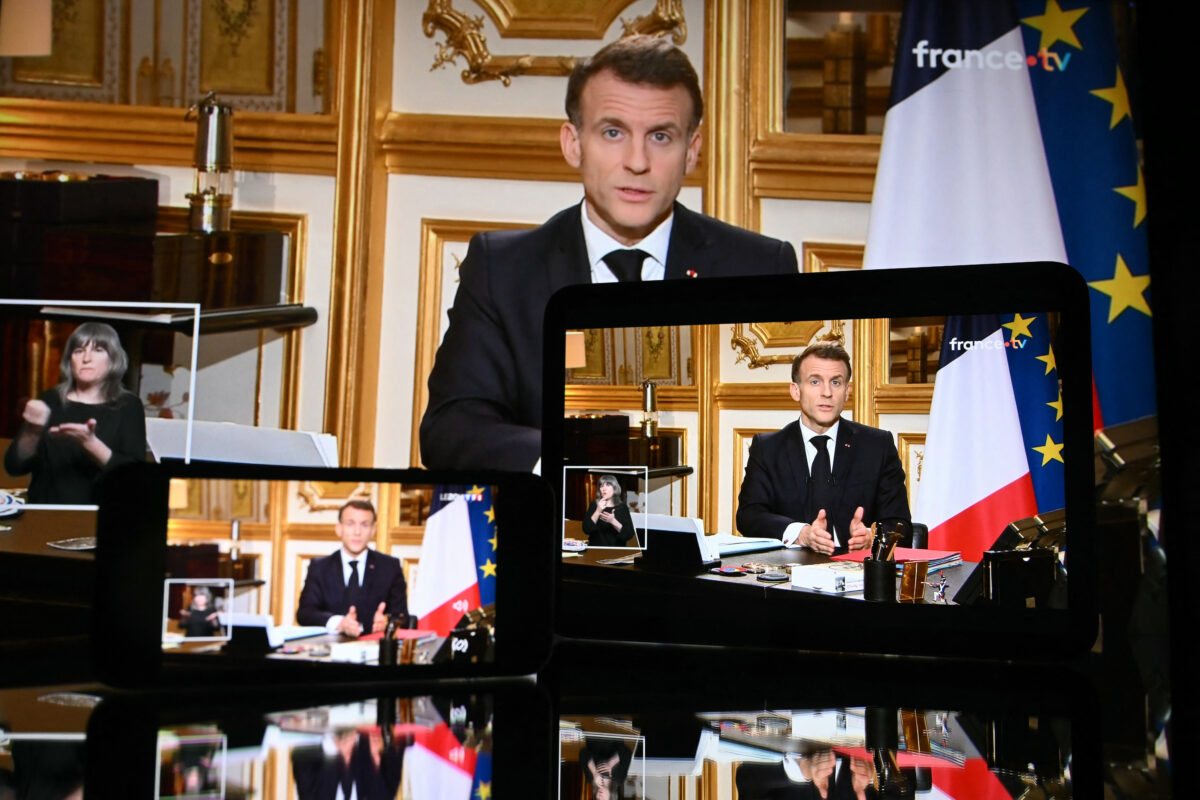
Despite sitting on Europe’s most lethal military and a historic €413 billion defense budget, Emmanuel Macron is playing a surprisingly cautious hand. France’s massive air and naval outposts in the United Arab Emirates and Djibouti place it uncomfortably close to the blast radius. Yet, Macron’s playbook sharply diverges from his European peers.
“Europe was essentially kept in the dark,” Taşdelen told me. “While Germany’s Chancellor Friedrich Merz immediately fell in line with Washington—even mirroring Trump’s talking points at the White House—Macron broke ranks. He explicitly stated these strikes bypass international law and that Paris will not rubber-stamp them.”
This doesn’t mean Paris is shedding tears for the Ayatollahs. The French government has openly cheered the decapitation of Iranian leadership, hoping it might spark regime change. But direct military entanglement is a line Macron seems unwilling to cross. The deployment of the Charles de Gaulle carrier strike group to the Eastern Mediterranean was strictly framed around defending French assets and honoring defense pacts with Gulf allies like Qatar and the UAE.
“France simply doesn’t have the economic bandwidth or the military appetite to act as the vanguard in an all-out US-led Middle Eastern war,” Taşdelen noted.
Le Pen’s Calculated Pro-Israel Shield
While Macron navigates the military fallout, a massive ideological realignment is ripping through the French right. Marine Le Pen’s National Rally (RN)—a party birthed from the anti-Semitic, extreme-right fringes by her father, Jean-Marie Le Pen—is now fiercely championing Israel.
For Taşdelen, this isn’t a sudden ideological awakening; it’s a ruthless calculation for power. “Le Pen realized early on that her real enemies were globalization and neoliberalism—the forces hollowing out the French working class,” he explained. To make the RN palatable for the presidency, she systematically purged the party’s toxic old guard, famously expelling her own father in 2015.
Today, leaning heavily into pro-Israel rhetoric serves a dual purpose. It acts as an impenetrable shield against lingering accusations of anti-Semitism, while simultaneously providing a blunt instrument to batter Jean-Luc Mélenchon’s left-wing France Unbowed (LFI), which has staked its political survival on Palestinian solidarity.
But what happens if Le Pen actually takes the Élysée? Taşdelen suspects the radical rhetoric will quietly evaporate. “The sheer weight of governing would likely snap her back to France’s traditional diplomatic baseline—a balanced approach that historically advocates for a two-state solution.”
Nuclear Grids and the Specter of the Streets
The geopolitical chessboard is one thing; the reality on the French street is another. As the Strait of Hormuz chokepoint threatens a global energy heart attack, France holds a distinct trump card over Berlin.
“Germany is cornered because it gutted its nuclear grid and gambled heavily on Russian gas,” Taşdelen said. “France still pulls about 70% of its power from domestic nuclear plants. The lights will stay on.”
But energy independence won’t insulate French markets from a global supply chain breakdown. With European natural gas futures spiking 53% in a single week and fuel costs jumping up to 30%, the inflation shock is already bleeding into the agricultural and logistics sectors.
For Macron, the true nightmare isn’t in the Middle East; it’s in the banlieues and the rural heartlands. “Remember how the Yellow Vests started eight years ago?” Taşdelen warned. “A mere 15% hike at the pump. With today’s price shocks, inflation is going to bite hard. We are looking at a very high probability of massive social explosions and street protests in the coming weeks.”
The underlying premise of the US-Israeli campaign—a swift, surgical collapse of the Iranian regime—now looks like a catastrophic misjudgment. “The playbook was to bomb for two days, wait for the state to crumble, and back a compliant government,” Taşdelen concluded. “The exact opposite happened. Just like in the 12-Day War, millions of Iranians flooded the streets to defend their country. The decapitation strategy failed, and Europe is now left holding the bag for a protracted, devastating conflict.”