


By Mohammad Reza Moradi, General Director of Mehr News Agency’s Foreign Languages and International News Department, from Tehran / Iran
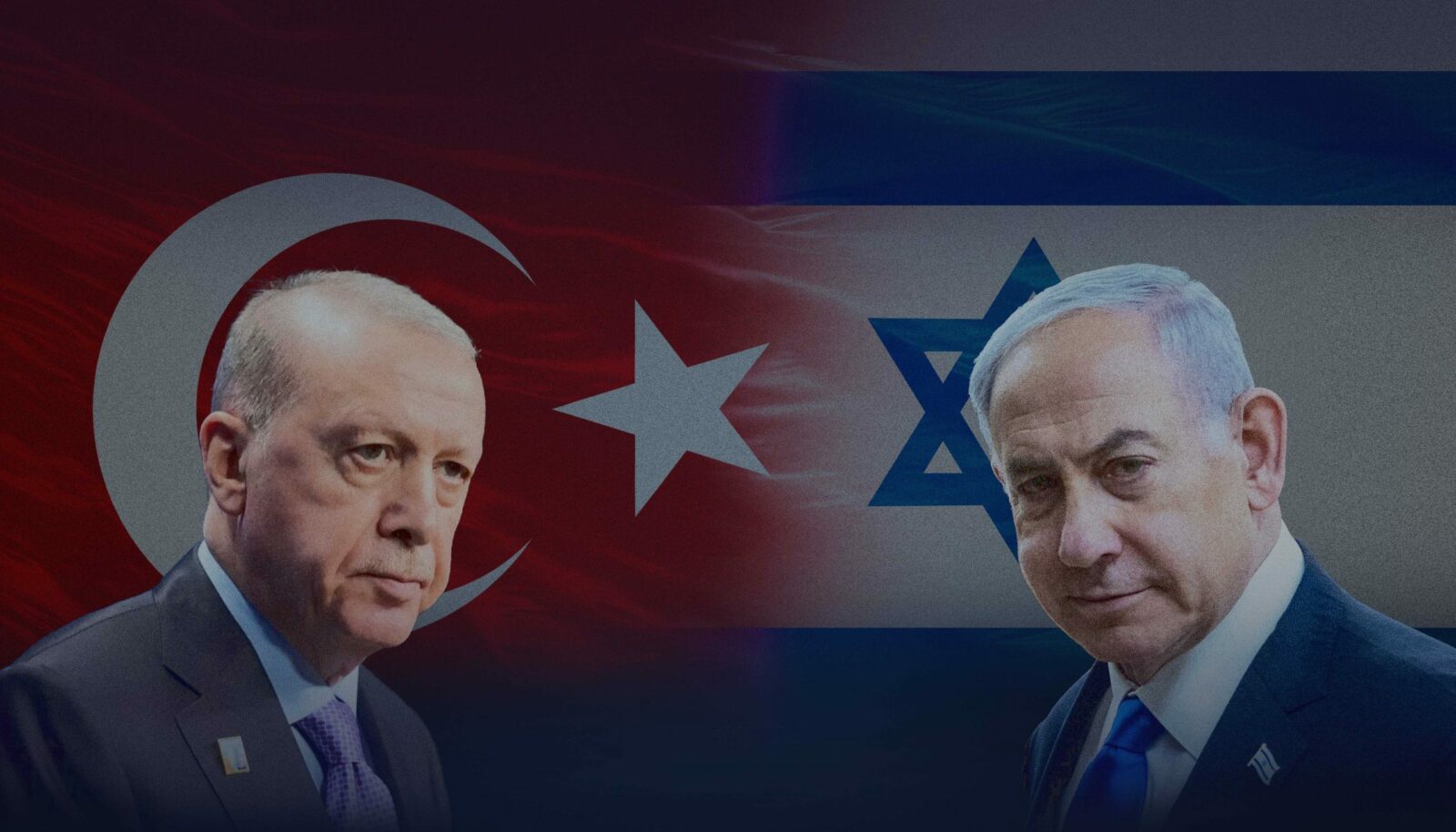
Understanding Israel’s behavior in the Middle East without moving beyond the surface of daily events and reaching deeper strategic layers has consistently led to incomplete and sometimes misleading analyses. What is unfolding in the region today is not merely a collection of isolated reactions, but part of a continuous and purposeful pattern; a pattern in which Israel seeks to redefine its surrounding security environment to consolidate and sustain its strategic superiority. This approach is more proactive than reactive, and in this framework, a threat is defined not only in terms of actual circumstances but also as “potential capacity.”
The Preemptive Logic: Security Through Weakening Others
To understand this logic, two key factors must be considered: first, Israel’s historical and security-oriented nature, rooted in conflict and occupation; and second, the regime’s unique understanding of the concept of survival. In such a framework, survival is not a fixed state, but an ongoing process constantly exposed to potential threats. This perspective has led Israel to define any independent rise of power in its surrounding environment—even if it does not pose an immediate direct threat—as a potential long-term risk.
Accordingly, over the past years, Israel has sought through various tools—from military and security operations to cyber warfare and political pressure—to prevent the emergence or strengthening of independent actors in the region. Its focus on Iran has primarily been due to that country’s high strategic capacity. However, reducing this approach to a mere “reaction to Iran” is analytically flawed. The reality is that Iran represents only one instance of this broader pattern, not its entirety.
This pattern can potentially encompass any actor possessing independent influence. In other words, the issue is not the “behavior of a specific country,” but its “ability to alter the balance of power.” Here, the scope of this approach extends beyond a limited geography to the entire regional balance.
Türkiye’s Entry into the Threat Circle
Within this framework, Türkiye has gradually acquired a distinct position in Israel’s security calculations. As a country with significant military capabilities, a unique geopolitical position, and the capacity to exert influence across multiple spheres—from the Eastern Mediterranean to the Caucasus and the broader Middle East—Türkiye is steadily consolidating its role as an independent regional power.
These characteristics, from the perspective of many Israeli circles, have transformed Türkiye from a complex actor into a “potential challenge.” Evidence of this shift is no longer limited to scattered analyses but is now visible simultaneously at the levels of policymakers, think tanks, and Israeli media.
Former Prime Minister Naftali Bennett, in unprecedented remarks, explicitly stated:
“A new Turkish threat is emerging… we must act simultaneously against Tehran and Ankara.”
He further emphasized: “We must not turn a blind eye to Türkiye… hostility from Ankara exists.”
These statements go beyond ordinary political disagreements. Placing Türkiye alongside Iran as a threat effectively incorporates it into Israel’s security doctrine—a doctrine in which threats are not merely managed but, if necessary, contained and weakened.
This approach is also echoed by Avigdor Lieberman, who asserts:
“Erdoğan is not merely a political problem but a real security threat.”
The shift in terminology—from “political problem” to “security threat”—signals a significant analytical shift. With this change, response options expand from purely diplomatic measures to a broader spectrum of hard and semi-hard tools.
At the analytical level, the Institute for National Security Studies (INSS) warns:
“Türkiye’s policies in the Eastern Mediterranean and its support for Islamist currents could lead to direct confrontation with Israel.”
At the media level, Yedioth Ahronoth stresses:
“Israel must not underestimate the Turkish threat, the same mistake made regarding other regional actors.”
Furthermore, the results of a survey by the Jewish People Policy Institute (JPPI) in the occupied territories indicate a significant shift in public perception of threats; Türkiye is now ranked, after Iran, as the “second-greatest security concern” from the perspective of the Israeli regime.
Collectively, these positions indicate the gradual transformation of Türkiye from a difficult partner into a strategic competitor and eventually into a potential threat.
Normalizing Confrontation: From Discourse to Operational Scenarios
Perhaps the most critical development is not in the statements themselves but in their discursive impact. When an issue is repeatedly emphasized across multiple levels—from politicians to think tanks and media—it gradually shifts from a “remote possibility” to a “conceivable scenario.”
In this context, the statements of Joe Kent, the former director of the Counterterrorism Center under the Trump administration, gain particular significance. He asserts:
“The United States may leave NATO to be able to support Israel in a final Türkiye-Israel conflict.”
Regardless of the practical feasibility of this scenario, its importance lies in “normalizing a potential confrontation.” In other words, what was previously on the periphery of analysis is now entering the mainstream of political and media discourse.
Historical experience shows that many major conflicts are shaped in minds long before they occur on the ground. When terms like “threat,” “necessity of action,” and “potential confrontation” are repeatedly emphasized, a psychological and political foundation is laid for accepting a future conflict.
Conclusion
Stepping back from current developments, a relatively stable pattern emerges: Israel seeks, by identifying and containing independent regional powers, to prevent the formation of any balance that could challenge its dominance. This pattern has been clearly observed with Iran and now shows signs of extending to Türkiye.
In this framework, the issue is not limited to bilateral relations or political disagreements but relates to how “security” is defined within a specific structure—a structure in which survival depends on absolute dominance and the elimination or weakening of rivals.
For regional actors, understanding this reality is vital. Ignoring it can lead to dangerous misperceptions and, ultimately, unforeseen crises. Conversely, accurately comprehending this pattern allows for strategic planning to prevent competition from escalating into confrontation.
Ultimately, the region’s future depends not only on Israel’s behavior but also on the responses and understanding of other regional powers. The central question is whether these actors can manage disputes and create balance to avoid entering a new cycle of attrition—or whether the region will once again witness an expansion of confrontation. The answer to this question lies not in slogans but in the decisions being made today in the capitals of the region.