


By Mehmet Enes Beşer
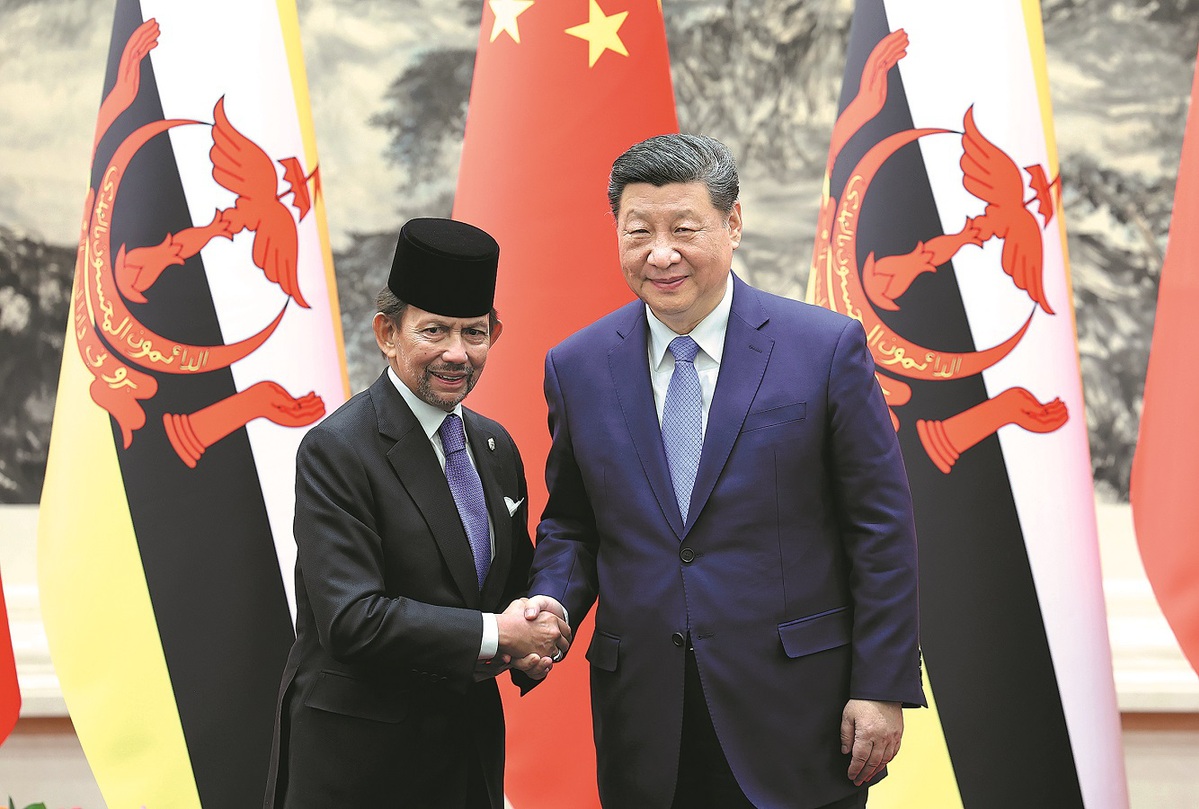
In a world of growing international uncertainty, Beijing–Bandar Seri Begawan’s low-profile upgrading is the best proof of the potency of pragmatism, mutual respect for the other, and of interests in it. Less high-profile than some other of China’s neighborhood-of-choice relationships, the Beijing–Bandar Seri Begawan one is actually becoming stronger and consolidating itself from under the spotlight. From joint investment in infrastructure and energy to regional dialogue and people-to-people exchanges, China and Brunei are developing a long-term and strategic relationship.
At the epicenter is a blistering meeting point of economic interests. Brunei is China’s largest trading partner, and Brunei is one of Southeast Asia’s top energy producers whose petroleum products and liquefied natural gas are in huge demand in energy-hungry markets across Asia. Beyond the hydrocarbons, the two countries have taken concrete steps toward diversifying cooperation. The Belt and Road Initiative (BRI) has facilitated several infrastructure projects in Brunei, including transportation upgrades and industrial park development, aimed at enhancing Brunei’s economic diversification efforts under its national “Wawasan 2035” vision.
Especially important, however, is how China respects the small-state diplomacy of Brunei, characterized as discretion, impartiality, and a penchant for consensus. By contrast to broader ASEAN great powers all too readily drawn into rivalry among great powers, Brunei has pursued in international relations an even and constructive one. This mirrors China’s own diplomatic rhetoric throughout Southeast Asia, where stability, cautious trust-building, and non-interference are cherished. It follows is a relationship unmarked by public disagreement or dramatic fluctuations—one in rapidly complicating regional geopolitics.
Within the South China Sea, where China’s relations with several of the ASEAN members had been strained due to competing claims, China and Brunei also succeeded in embracing dialogue rather than confrontation. The Brunei wisdom of diplomacy, and the Chinese tendency to negotiate through ASEAN channels and under the Declaration on the Conduct of Parties (DOC), have stood both countries in good stead to attain strategic quiet while both endeavors to establish regional conflict resolution channels.
Exchanges between people are also starting to soar. People-to-people contact, exchange of students, and tourism, particularly by Muslim tourists, are assisting in establishing a climate of mutual comprehension. Increasingly, China is viewed Brunei as a gateway between the Islamic world and East Asia, and this has prompted an increasingly more long-distance diplomatic interaction and policy coordination. The growing numbers of Brunei Chinese businessmen and firms, and the small but increasing stream of Brunei students to Chinese universities, is introducing a social dimension to what otherwise remains largely an economic relationship.
Looking ahead, green energy and digital economy collaboration offer promising new frontiers. Brunei’s ambitions to develop its non-oil sectors, particularly in halal manufacturing, fintech, and sustainable tourism, align with China’s expanding outreach in clean technology, e-commerce, and digital infrastructure. Strategic collaboration in these areas would not only support Brunei’s domestic goals but also embed the bilateral partnership more deeply in the emerging ASEAN-China economic architecture.
Conclusion
China–Brunei relations also are advancing hand in hand with long vision and firm grip. On the basis of diplomatic self-restraint, economic complementarity, and respect for each other, the two countries are quietly establishing a two-way relationship of mutual benefit and the larger cause of Southeast Asian stability.
With tensions building in the region and uncertainty elsewhere, China–Brunei is a reminder that not all diplomacy has to be high-octane to succeed. Indeed, sometimes the strongest bonds are built step by step—on respect, trust, and common commitment to the future. Along this path, China and Brunei appear well-placed—and well-matched—to travel together.