

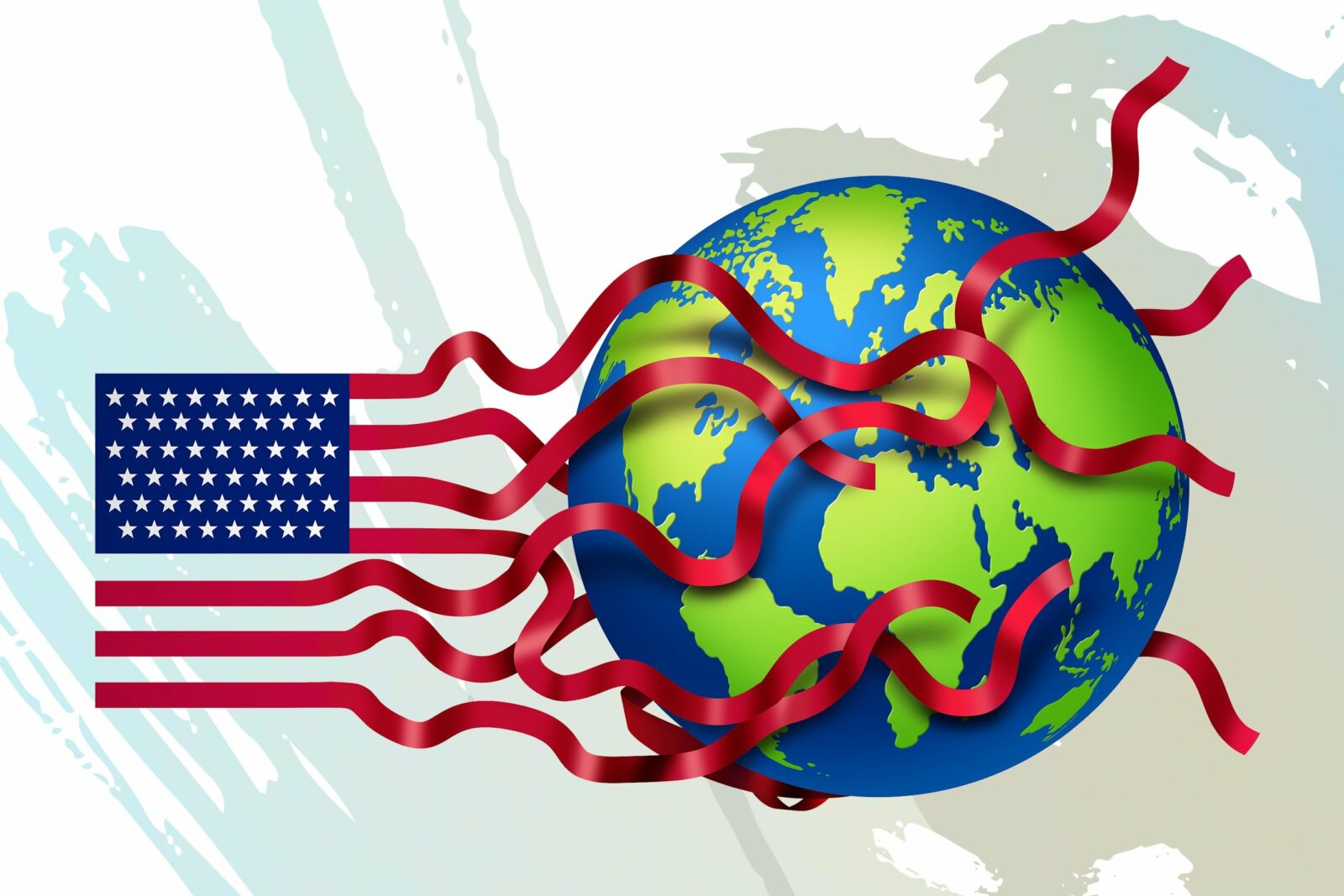
Following the collapse of the Soviet Union, and with it the end of the Cold War and the bipolar world, a debate arose that went beyond the strictly theoretical and conceptual, seeking to establish what type of international system would prevail on the planet. The resolution of this controversy was not immediate. The last decade of the 20th century was chaotic and anarchic, with no clear order being established. Contradictory forces vied for a unipolar world, as advocated by the United States, and a multipolar world, as favored by the vast majority of the world’s countries.
This diatribe—which, as I said before and want to repeat now, goes beyond mere theoretical discussion—was “defined” in favor of the United States on September 11, 2001. In a series of speeches in the days following the attack, President Bush set the guidelines for international relations thanks to the terrorist action from which only the United States benefited, unfortunately at the cost of the lives of almost 3,000 citizens.
In his speech on September 20 of that year, Bush uttered, among other things, that emblematic phrase that defined the limits of the international system: “You’re either with them or you’re with us.” Nobody wanted to be with the terrorists, therefore everyone had to be with the United States. Thus, the unipolar international system was imposed under American leadership.
Everything went well for a few years, but the 2008 economic and financial crisis crippled the United States’ ability to unilaterally control the world, and once again, concerns arose about what would happen next and where we were headed. Those who believed in multipolarity found renewed impetus to revive their proposal after being nearly wiped out in 2001.
However, the situation was now different. Under Vladimir Putin, a relatively unknown former KGB agent, Russia, like a phoenix, had risen from the ashes and was poised to reclaim its place as a power within the international system. Similarly, China was emerging from the 150-year stagnation into which the West had plunged it through the Opium Wars. Sixty years after the founding of the People’s Republic and thirty years after the implementation of the reform and opening-up policy, China had unlocked all the potential it had accumulated during this period, and it too was claiming a leading role in the international system.
A few years after the 2007-2008 financial crisis that shook the capitalist world, in 2012, just six months apart, Vladimir Putin returned to the presidency of Russia and Xi Jinping was appointed general secretary of the Communist Party of China. These two, who coincidentally are only eight months apart in age, set out to restore the global balance of power so that their countries would have the sphere of influence befitting their status as great powers, and it seems they wish to do so together.
The Chinese president made this clear at the end of his visit to Moscow on March 22, 2023. Putin accompanied him to the gate of the Kremlin’s Senate Palace, and before Xi Jinping got into his vehicle, he told his Russian counterpart: “Changes are taking place that we haven’t seen in a hundred years and“We are the ones leading them together.” Putin, surprised, could only manage to say, “I agree. Have a good trip,” to which Xi replied, “Please take care, dear friend.” In terms of both content and form, it became clear that we were witnessing a new way of conducting international relations.
Over the past few years, a great effort was made to make multipolarity a reality. The BRICS group seemed to be the defining expression of this moment. However, the genocide in Palestine, followed by the US and Israeli attack on Iran, and finally the US armed incursion into Venezuela just a few days ago, dashed the hopes of building the desired multipolar world, at least in the short and medium term.
At missile range, the United States and Israel, with the support of Europe and other subordinate countries like Canada, Australia, and Japan, destroyed any possibility of this. No one has the power to prevent the United States from imposing its will on the planet. We have returned to a unipolar world.
In its swift return to this system, the United States swept aside the United Nations (UN) and international law, which in some way regulated the behavior of states and governments. Washington, shielded by its missiles and its veto power in the UN Security Council, tramples over anyone who tries to prevent its absolute hegemony over the planet.
The only limits it faces are those stemming from the nuclear capabilities of some of its adversaries and the will to resist and fight in defense of sovereignty, self-determination, and non-interference by others who are prepared for holocaust rather than allow themselves to be subjugated. Of course, it is valid to aspire to international solidarity, but everyone has their own problems in a world marked by the need for survival as a driving force.
This situation has led some to once again raise the debate about what international system prevails and will prevail in the future. Today, it is clear that unipolarity dominates; otherwise, how can we explain that genocides are occurring before the eyes of the entire world, not only in Palestine, but also in the Central African Republic, Sudan, and here in our region, in Haiti? A similar situation was unfolding in eastern Ukraine, but in this case, it was prevented thanks to the Russian government’s decision to launch a special military operation to avert the massacres.
Unipolarity has also allowed extremist terrorism to seize control of Syria, and the hegemon to authorize the installation of a government led by those who, just months before, were labeled terrorists. The current Syrian leader used to behead people and shamelessly display their heads on television. Thanks to unipolarity, he is now a democratically elected president, accepted in capitals around the world.
Unipolarity allows the President of the United States to intervene and claim electoral victories in Chile, Ecuador, and Honduras (fraudulently in the latter two cases).
Unipolarity allows the president and the secretary of state to threaten the disappearance of Cuba, condemning its eleven million inhabitants to extermination.
Unipolarity allows Washington to threaten Panama with seizing its canal, with the tacit complicity of its government, and also to seize Denmark’s colonial possession of Greenland. Unipolarity allows the United States to militarily attack Venezuela, murder nearly 100 citizens with impunity, and kidnap the president and his wife. There are no responses, beyond declarations and condemnations that are an expression of the world’s incapacity and impotence to stop the resurgence of a Nazi-like government on the planet.
This is not just another Republican administration in history; it’s not Nixon, Reagan, or the Bushes with their trail of death and destruction. It’s much more than that. It’s a government built on the principles of Adolf Hitler’s National Socialist ideology. I’ve said it before, and I’ll say it again: “…Nazi ideology is characterized by ultranationalism and supremacism, which establish the existence of a superior race that must expand through hatred of so-called ‘inferior beings’; totalitarianism, which imposes absolute state control, as Trump intends by minimizing and underestimating Congress, the courts, and other branches of power; and militarism, which entails the exacerbation of…”of military force and aggression as instruments of expansion and war, and finally, the anti-communist and anti-liberal ideology in opposition to socialism and democracy…”. All these elements are present in the current United States government.
But what distinguishes this from the past is that while in the mid-20th century the world united to fight Nazi-fascism, today it is accepted with a degree of complacency and indifference. Hence, we return to the debate about the international system because, although it is desirable and many responsible countries around the world are striving to move towards a multipolar world, we are not in a multipolar world and will not be in the short term. The manifestations of what is happening, rather, point to a trend towards the construction of an international system of balance of power, characterized by the equilibrium between powers that know they cannot destroy their adversary and need them to maintain their power.
It is a grave error to attempt to analyze current reality using the categories of bipolarity that prevailed during the misnamed “Cold War,” which was cold for the superpowers but hot for the countries of the Global South. Today, ideology does not dominate international relations; consequently, the solidarity that existed in the past is absent. Therefore, one cannot expect automatic aid in the face of danger because national interest takes precedence, and even cooperation must be negotiated. There is neither the strength nor the intention to confront the United States militarily because that would lead to the destruction of the planet. For this reason, the struggle for peace today is revolutionary.
Russia and China have their own problems and cannot step in to resolve every conflict that arises around the world—and there are many, by the way—unless their national interests are threatened. Venezuela is far from representing a significant national interest for these powers beyond friendship and shared views on most international issues. Russia went from Assad to Al-Sharaa just as China did last century from Allende to Pinochet. What nations don’t do at home, their neighbors aren’t going to come and solve. Unless a Simón Bolívar or a Fidel Castro emerges, along with peoples like the Venezuelan and Cuban, with an internationalist and solidarity-driven spirit. But as you can see, neither Angola nor Algeria, where Cubans shed their blood for independence, send a single drop of oil to heroic Cuba, burdened by the furious US blockade.
And I don’t question it; I understand it because I’m not bound by the logic of the past and because I understand the primacy of national interest. The Russians, who refer to their homeland as “Mother Russia,” have been forced to defend it not only in Ukraine, but also in its vast surroundings in the Arctic Ocean, Central Asia, and Europe, where the shadowy forces of NATO and Europe are attempting to subjugate it once again.
China, for its part, operates according to principles distinct from those of the West. Its ancient philosophy compels it to seek balance and harmony as a means of coexistence. This also applies to its international relations. The Taiwan issue is central to its agenda, to the point that maintaining relations with Beijing requires acknowledging the existence of “One China.” Many right-wing governments have declared during election campaigns that they will sever ties with China as soon as they take office, but the force of economic necessity forces them back to reality the very day they enter the presidential palace.
The confrontation the United States has initiated against China will be met by Beijing through the pursuit of economic, financial, scientific, and technological superiority, and they will only deploy the military component when they feel threatened. Their red line is the independence of Taiwan; everything else is secondary.
It’s not that the major powers want to agree on respecting spheres of influence, but the balance of power system will lead them to that if they want to survive. In this situation, we enter the realm of subjectivity, and that leads us to assert without a doubt that, in ethical and moral terms, there is an immeasurable distance between Putin and Xi compared to Trump.
Putin and Xi have not threatened anyone, they do not interfere in anyone’s internal affairs, they have not assassinated or kidnapped any president, they have not promoted coups, they have not participated in wars of aggression anywhere in the world, and if Russia developed the special military operation in Ukraine it is because it was compelled by the genocide that was being committed against its compatriots who were being massacred by the Nazi-fascist government of Kyiv.
But that’s one thing, and quite another to assume that, just like during the Cold War, they’re going to come to the aid of another country. We’re not in that world anymore. Without wanting to be destructive, but rather constructive, in April 2013 I presented a book entitled “The Balance of Power: The Reasons for the Equilibrium of the International System,” which caused quite a stir.
The most pronounced reaction from those who read the book was skepticism regarding the proposal. The idea that the world is moving toward a multipolar system has taken root in most citizens. Many research centers, analysts, and decision-makers involved in international relations and foreign policy agree with this assessment, which I disagree with. Certainly, I think that for us, located in the Global South and in Latin America, such an option would be the most desirable, but I don’t believe that’s what the centers of global power are considering.
Several hypotheses have been put forward, but from my point of view, the most likely scenario is the implementation of an international balance of power system in the future. This conviction stems from the observation that, despite the conflict, in recent years there has been a clear limit to the respect for the security zones of the major powers, since their violation is a red line for each one.
Russia’s use of force in Ukraine to prevent NATO’s eastward expansion, China’s massive displays of force around Taiwan as a message in case of independence, and the new US national security strategy that “renounces” the priority of conflict with China and Russia to focus on the Western Hemisphere, which it considers its own, are all expressions of this.
In this sense, it seems to me that future conflicts will be between the United States and the countries of the Global South, never against any other power. For Latin America and the Caribbean, their only chance of progress is through a process of integration that will allow them to survive and have an active presence in the world of tomorrow, characterized by a balance of power among the major powers. My opinion comes from the Global South and for the Global South, from Our America and for Our America, and is—modestly—a warning for the countries of Latin America and the Caribbean.
The task of the people is to displace the oligarchies in power, which are structurally anti-integrationist and subservient to the United States. As long as they remain in power, there will be no possible integration, nor any place for Latin America and the Caribbean in the world of tomorrow.