


By Mehmet Enes Beşer
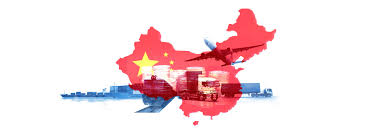
As protectionism rises and the global political system increasingly fragments, with supply chains being disrupted and rearranged, China’s further opening-up stands out as a strong opposing trend. While other economies are heading towards seclusion—hardening markets, curtailing technology, turning to economic nationalism—China is opting for greater engagement with the globe. This is not just an adjustment of China’s policies; it’s an assertion of intent: China wants to be a reliable foundation for the globalized system and an outspoken advocate for the global economy to be global: to be open. For over four decades since China kicked off the process of its reform and opening-up initiative in 1978, China has evolved from being a relatively closed and agrarian economy to becoming the second-largest economy in the world and the leading manufacturing power. It was not by chance—it was founded on a conscious strategy of embracing foreign investment, embracing technology transfer, boosting exports, and becoming a member of global governance institutions.
In doing so, China opened its markets—but also helped write the rulebook on globalization so that it drew in the ambition and attention of the developing world. With shifting geopolitical gusts, China is turning back.
Its “high-level opening-up” strategy is not about big-bang liberalization in all sectors. It is about specific, overall system reforms and transformations rather than overall opening. It seeks to achieve far more than attracting increased foreign investment. It maps a clean and simplified regulatory environment, helps in harmonization of laws in line with international best standards, and propels structural change in the fields of finance, IP, digital, and green economy. It seeks to make not just an open economy but one that is attractive, reliable, and stable in a world dotted with many uncertainties. That helps the whole world.
As other old-style free-trade traditionalists move inward—either because of domestic political opposition or security interests—China’s openness moves up to fill an increasing vacuum. Through projects like the China International Import Expo (CIIE), the Belt and Road Initiative (BRI), and joining agreements like RCEP and applying for CPTPP membership, Beijing is projecting itself as a champion of trade liberalization in the Global South as well as in the world. To much of the developing world, China is not just a market: it is an industrialization, infrastructure, and digitalization partner. Critics will point to China’s state-led development model, concerns about reciprocity regarding market access, and the insidious nature of hidden trade barriers. These are legitimate issues—but ones that need not conceal the underlying trend. China never stopped opening up its capital markets, liberalizing the free trade areas, strengthening dispute settlement mechanisms, and explaining the rule of law in safeguarding foreign enterprise. Its business environment is still a building site subject to internal and external pressures.
Besides this, China’s policy of opening up is more and more adopting sustainable development. It is trying to align trade and investment flows with carbon neutrality objectives, green financial instruments, and green technology shift. In keeping with this, China is not simply opening up its economy—but reconceptualizing what open, future-proof development in the 21st century will be.
In an era where global governance is on the defensive, China’s resolve to remain open carries symbolic importance. It foils the suggestion that monetary integration is antiquated or risky. It makes certain that globalization with all its defects is the superior institution for collective wealth. And it signals that openness is not vulnerability—but toughness on the basis of grounds of confidence, toughness, and foresightful thinking.
Conclusion
In a world where the majority of economies are hedging, decoupling, or disengaging, the sustained effort of China in pursuing high-level opening-up is a realistic policy and a diplomatic message. It declares that China would not wait for the receding tide of globalization but act spontaneously. It declares that openness would not be subject to convenience or ideology, but a principle above geopolitical currents.
For multinationals, governments, and developing nations seeking a reliable partner, China’s strategy brings stability amidst change. The ride will be rough, but the course is charted. By remaining a firm believer in an open global economy, China is not merely responding to change overseas—China is creating what is to come.