


By Meral Akkaya
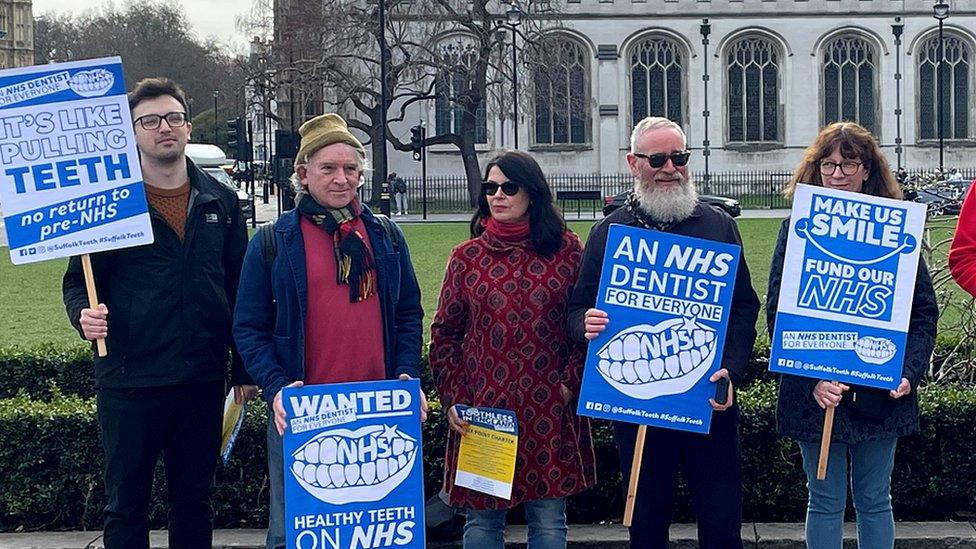
In the UK, access to dental care under the National Health Service (NHS) is becoming increasingly difficult. Due to funding issues within the public system and the contract model, many dentists are turning to the private sector, causing millions of people to struggle to find appointments.
One in three now visits a private dentist. And there has been a marked rise in “do-it-yourself” dentistry with people trying to take out their own teeth. Dr John Puntis, Co-Chair of the British organization Keep Our NHS Public, explains this and more in an interview with Meral Akkaya from “Aydınlık Europe”, the supplement of Turkish Aydınlık newspaper in Europe.
New contract in 2006
Why has access to public dental services in the UK become so difficult? What are the key factors there?
A dentist contracts with the government to work for the NHS. In 2006 the Labour government agreed a new contract that prioritized dental interventions over prevention and specified how much work the dentist could do in a year. If demand increased and more patients were treated than in the contract, the dentist would not be paid. Because of levels of payment it became very difficult for dentists to generate sufficient profit to make their business viable. This has driven them to take up private work and there has been a large increase in dentists working for profit making dental companies rather than owning their own dental practice.
“Level of funding is too low to meet need”
Given the general drive towards use of the private sector in the NHS and a level of funding that is too low to meet need, dental service have been allowed to deteriorate, forcing people to pay for services or go without. Free dentistry available to all was a key feature of the NHS when created in 1948; there was a huge improvement in oral and dental health as a result. What is happening now is an example of a service being ‘squeezed out’ of the NHS. This is one form of privatization and a reflection of the prevailing neoliberal philosophy shared by the main political parties which want to reduce the size of the state and let market forces determine what services are available.
“9 out of 10 dental practices no longer accept NHS patients”
Recent data shows that one in three people is turning to private dentists. Is the system shifting toward the private sector?
Yes, because 9 out of 10 dental practices no longer accept NHS patients and over 50% of all spending on dental care now takes place in the private sector.
“Dental deserts” and “do-it-yourself” dentistry
Low-income households are forced to pay fees even for basic procedures like fillings and tooth extractions. Is this causing hardship for these patients?
Fees for NHS dentistry were introduced in the 1950s and many people regard these as unfair. Tooth decay and oral health problems are more common among poor people. Many cannot afford to pay for private dental care and cannot find an NHS dentist where costs are lower. There are some areas of the country where this is very marked – described as ‘dental deserts’. There has been a marked rise in ‘do-it-yourself’ dentistry with people trying to take out their own teeth when in chronic pain. There has also been a 40% increase in oral cancer which may be related to many patients no longer having routine dental check-ups where signs of disease would be picked up.
It is reported that in many areas, there are no dentists accepting NHS patients. Is this due to funding issues, a shortage of dentists, or structural problems within the system?
The main problem relates to funding issues because it is very difficult for a dentist with their own practice/buildings/equipment/staff to make enough money from working just for the NHS and have therefore been driven to the private sector. This could be addressed by a new contract. Government acknowledges this but so far has been slow to act.
No more privatization
In your opinion, what reforms should be implemented to restore the UK’s public dental health system to full functionality?
NHS dental treatments need to return to being free at the point of use; people should be prioritized before shareholder dividend (no more privatization); hygienists, routine check-ups and preventative treatments (including water fluoridation for prevention in areas with low fluoride levels) must be the core of NHS dentistry. A new contract should promote both quality and equity, with payment to dentists increased to make practices financially viable. Location of dentists with medical teams and a range of community services in health centers would make seeing the dentist easier for patients and improve working conditions for dentists. Overall NHS funding needs to be increases to take into account the level of need. Effective prevention would decrease costs, e.g. admissions to hospital of children for teeth extraction under anesthetic is estimated to cost the NHS around £50 million each year in England.