


By Mehmet Enes Beşer
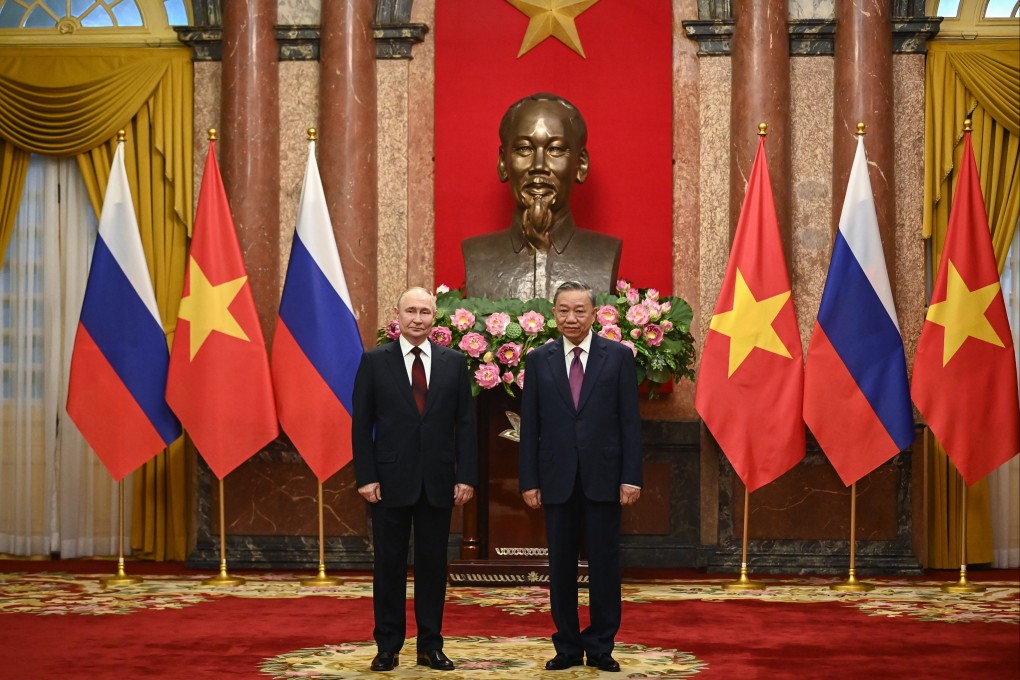
The proposals laid out between Russia and Vietnam for the restoration of Russian instruction as a foreign language within Vietnamese schools has created diplomatic as well as public interest. Framed as part of a broader cultural and strategic partnership, the initiative seeks to revive pre-Cold War relations, when Vietnam’s closest ally was the Soviet Union. Actually, it’s a soft power restoration initiative, an attempt to bring back the Russian language into Vietnamese pedagogical life. But life intervenes. Vietnamese classrooms and daydreams are filled with English—and Chinese rapidly closing the gap.
In the golden age of Soviet-Vietnamese cooperation during the 1970s and 1980s, Russian was a marker of elite education and technicality. Vietnamese students, scholars, and officials numbered in the thousands because they studied in the USSR, and it was necessary to learn Russian to advance in government and state enterprise. This language convergence was not an issue of ideological affinity but pragmatic necessity—modernization in Vietnam, particularly in heavy industry, energy, and defense, was irrevocably tied to Soviet assistance.
But the collapse of the Soviet Union and the Cold War precipitated a rapid Vietnamese foreign policy, economy, and language adjustment. Market opening under Đổi Mới, diplomatic normalization with the United States, and integration into the world economy established English as the new lingua franca of opportunity. English language competence is today a key to the university, international business, and mobility abroad. It has roots that go deep into national policy and English as a required subject in primary grades with publicly advocated presence through state as well as non-state institutions.
In parallel, China’s expanding economic and geostrategic influence has driven Chinese language learning to higher levels of importance. With its greatest trading partner in China and one of its biggest sources of investment and tourism (short of the South China Sea tensions), knowing Chinese is becoming an increasingly useful necessity. Chinese is not just handy in border provinces and in sectors like logistics, trade, and tourism—it is necessary.
In such a situation, the return of Russian is orders of magnitude to catch up. It is fighting for room in classrooms, funding, and student time in an already coordinated system to global competition. Russian does not enjoy the economic utility that English enjoys or the strategic imperative that Chinese currently enjoys. It is also hampered by not having a single teacher, new books, and institutional momentum.
In fact, Russian holds cultural and symbolic value in Vietnam. It continues to be spoken by the older generation, and there is a reservoir of goodwill for the Soviet era. Russian universities continue to offer scholarships to Vietnamese students, particularly in science and engineering. But without a visible economic rationale or inclusion in mainstream policy goals, Russian will no longer be as popular as it once was. Language learning is no longer as much an emotional exercise as a strategic one.
In order to become meaningful for Russian to take off, the revival strategy itself has to be highly concentrated. It could aim at specialized secondary schools, technical schools, or specialized university programs where knowledge of Russian continues to be pertinent—such as nuclear energy, oil and gas, or defense cooperation. Cultural diplomacy and people-to-people exchange can also be a support mechanism to augment formal education in order to create interest among the younger generation.
Vietnam’s Ministry of Education and Training, already facing a growing more complex multilingual policy landscape to manage, will also have to balance costs and benefits. With decreasing budgets and mounting pressure to ready students for the Fourth Industrial Revolution, English and STEM education are still the priority.
Conclusion
The Russian-Vietnamese move to restore Russian language instruction is an emblem of historical friendship—but one that enters a very different linguistic and geopolitical sphere. Modern Vietnam is projecting toward the future, globally integrated, and in fact multilingual. English remains the lingua franca of aspiration, and Chinese ever more apparent on the basis of regional economic dynamics.
Such will be the case where Russian’s fate in Vietnamese classrooms is not in wistful yearnings, but whether it will succeed in staking out an active, productive niche. Detached from the nation’s goals of advancement and returning real dividends to students, Russian will probably remain a legacy language—grudgingly tolerated, but still remembered and honored, but eventually stripped of real place in Vietnam’s classrooms today.